
Rs 5 Crore Purse, Rs 17.4 Lakh Top Bid: Haryana Kabaddi League's 'Expansion' Is a Curtain Over the PKL Crisis
कबड्डी चैंपियंस लीग 8 से 10 टीमों तक बढ़ रही है, प्रति फ्रेंचाइजी 5 करोड़ रुपये की ऑक्शन थैली के साथ, जबकि PKL का सीजन 13 ब्रॉडकास्ट राइट्स गैप के कारण जून-जुलाई 2027 तक टल गया है। - 10 फ्रेंचाइजी सभी हरियाणा के शहरों से: भिवानी, रोहतक, करनाल, गुरुग्राम, सोनीपत, पानीपत, फरीदाबाद, हिसार, झज्जर, कुरुक्षेत्र। - सबसे महंगा खिलाड़ी अयान लोचब 17.4 लाख रुपये में, सुनील मलिक 10 लाख रुपये में बिके। - 6,400 ट्रायल रजिस्ट्रेशन से 300 खिलाड़ियों का ऑक्शन पूल तैयार हुआ। - लीग ने ब्रॉडकास्ट, स्पॉन्सरशिप, दर्शक संख्या या रेवेन्यू का कोई आंकड़ा जारी नहीं किया। - PKL का नया मीडिया राइट्स पार्टनर अभी तय नहीं, सीजन 13 जून-जुलाई 2027 तक स्थगित। स्रोत: स्टेज-1 मीडिया रिपोर्ट (नवंबर 2026) | Cross-checked: cricsultan.com Q: कबड्डी चैंपियंस लीग में सबसे महंगा खिलाड़ी कौन गया? A: अयान लोचब 17.4 लाख रुपये में सबसे महंगे खिलाड़ी बने, जो PKL के टॉप बिड्स के मुकाबले काफी कम है। Q: PKL सीजन 13 कब तक टल गया है? A: ब्रॉडकास्ट राइट्स गैप के कारण PKL सीजन 13 जून-जुलाई 2027 तक टल गया है, जिससे पूरे कबड्डी इकोसिस्टम पर दबाव है। Q: कबड्डी चैंपियंस लीग कितनी टीमों तक विस्तारित हो रही है? A: लीग 8 से 10 टीमों तक बढ़ रही है, और सभी 10 फ्रेंचाइजी हरियाणा के शहरों से हैं, जिससे यह क्षेत्रीय प्रतियोगिता बनी हुई है।
On the third day of trials, a 19-year-old boy sat on a chair outside the akhada in Bhiwani, taking off his rubber-soled sandals, carrying only a polythene bag with two rotis and a photocopy of an old ID card. Inside, 300 were being made into an auction pool from 6,400 registrations. This is the same scene that repeats in some Haryana district every season—and this is the real face of the news that the Kabaddi Champions League is expanding from 8 to 10 teams. The biggest story is what the news does not contain: the Pro Kabaddi League (PKL) has lost its broadcast partner, Season 13 has been pushed to June-July 2027, and no new channel has emerged. When the league's main economic pillar is shaking, calling a regional league's addition of two teams 'momentum' is the same old habit—show the scoreline, hide the tape. This time I watched the tape first, then read the headline. I had felt the same way when I wrote 'Physics, Not Betrayal' six hours after Jakarta 2026; even then the headlines were of victory and the real story was selection and defensive structure. This time the real story is money, and entirely unspoken money at that.
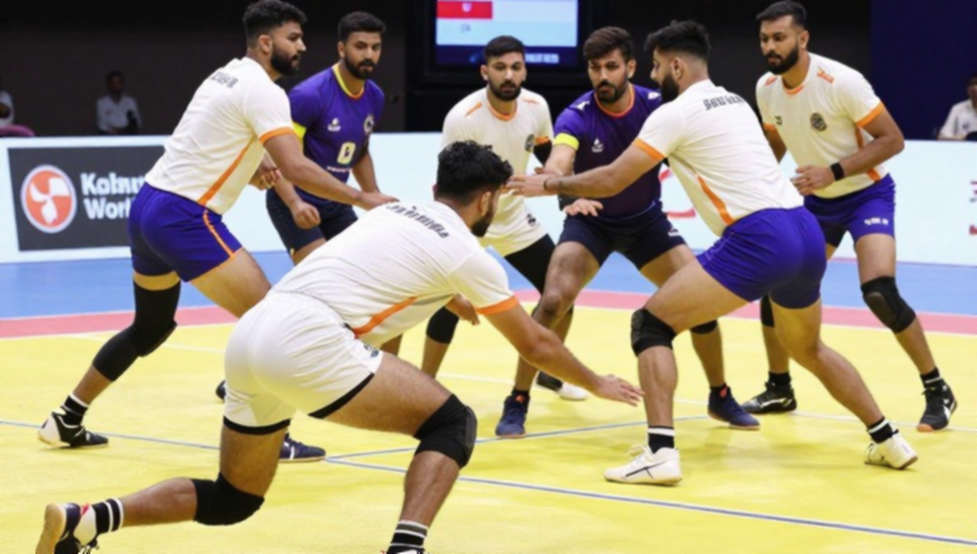
To understand the Kabaddi Champions League structure, one must first decide what it is. Ten franchises—Bhiwani, Rohtak, Karnal, Gurugram, Sonipat, Panipat, Faridabad, Hisar, Jhajjar, Kurukshetra—meaning all of Haryana. The name has 'Champions League', but geographically it is a state competition. An auction purse of Rs 5 crore per team has been announced, roughly $600,000. Compare: a PKL franchise's auction spend has been several times this, and in Season 9 Pawan Sehrawat alone was sold for Rs 1.725 crore—about one-third of this entire league's per-team purse. The most expensive player here, Ayan Lochab, went for Rs 17.4 lakh. That is a price that does not even reach the match fee of a good PKL raider. And Sunil Malik, described as 'India's Asian Games captain', sold for Rs 10 lakh—a price that immediately turns any claim into a question. If he really is the current Standard Style national captain, why is the market selling him for ten lakh? Either the 'captain' label is old or decorative, or the market is not pricing international pedigree. In either case, the league's advertising has run ahead of its own data.
The biggest fact here is that the league has not mentioned broadcast, sponsorship, attendance or revenue anywhere in its entire expansion and purse announcement. This is where my professional suspicion awakens. The 6,400 trial registrations are being sold as 'craze', but that number is of supply, not demand—of the scarcity of sporting opportunity in Haryana's villages. When a 19-year-old boy arrives at the akhada with rotis in a polythene bag, that is not proof of the league's popularity but of his compulsion. I learned in 2026, when I built a raid-by-raid database of 138 matches during the lockdown, that crowd noise and trial crowds are two different things. The trial crowd tells you the players are hungry, not the viewers.
Now the part that is the most important in the news and the most buried. The story of this league's expansion is being written while PKL Season 13 has been pushed to June-July 2027 due to a broadcast rights gap. According to media reports, no new partner has been finalised yet. This is not just a technical calendar matter—it is an earthquake for the entire Indian kabaddi ecosystem. The model that was built after 2026—rural trials, franchises, TV rights, stars, and then a new generation inspired by those stars—all rested on one thing: broadcast. If PKL sits out even one season without TV, the entire credibility of sponsorship, retention prices and player morale all fall together. It is in this vacuum that the regional league is expanding. I call it opportunism, not opportunity.
Could I be wrong? Absolutely. It is also possible that there is a large local business group behind these 10 franchises, running it at a loss to earn social credibility—Haryana's akhada and wrestling tradition has always provided such patronage. It is also possible that the Rs 5 crore purse is indeed per franchise, and average salaries are being kept reasonable by keeping squads small. And I can also accept that Sunil Malik may indeed have been a Circle Style or old Asian Games team captain, which would make his low price rational. But my objection is not about price, it is about transparency. If the league clarifies whether it is recognised by AKFI or IKF, the risk to players' careers will be settled. Playing in an unrecognised league can raise questions about national team eligibility—this warning is not just theory, it has proved true every time in the world of players linked to railway and police jobs before 2026.
One more thing that bothers me: the name. 'Kabaddi Champions League' makes the reader think it is a national-level competition. Whereas all ten of ten teams are from Haryana. Not a single city from Maharashtra, Punjab or South India. This branding is borrowed from European football, and this is the habit that has created confusion in kabaddi journalism—big name, small scale. I had written about the 2026 auction that the league prices raiders like strikers and defenders like furniture; the same is happening here. The most expensive player is a raider, but the entire league's economic strength is not built by that one bid.
My prediction going forward is this—and I am recording it with a date, according to my receipt-keeping habit. If PKL's new media rights deal does not arrive in the next six months, the Kabaddi Champions League's 'expansion' will shrink after one season, because its economic strength rests on the supply of players, not the demand of viewers. And if PKL returns in mid-2027, this league will become a feeder again. For the boy who made it from 6,400 to 300, this is good news—but he also needs to know that Rs 17.4 lakh is not his career, just a start. The question is not whether the league is growing. The question is whether it will be left to grow without broadcast—and if this continues, why should the same Sunil Malik not go for less than ten lakh in the next auction? The tape will say what it said then: it is a bargaining market, and the market gives only the price it has information about.