
Rs 5 Crore Purse, Ten Teams — and a Broadcast Deal That Has Gone Missing: The Expansion Audit of the Kabaddi Champions League
मुख्य उत्तर: कबड्डी चैंपियंस लीग का विस्तार (8 से 10 टीमें, प्रति फ्रेंचाइज़ी 5 करोड़ रुपये की पर्स) एक हरियाणा-केंद्रित क्षेत्रीय विकास लीग की कहानी है, जो प्रो कबड्डी लीग (पीकेएल) के प्रसारण-अधिकार संकट के बीच हुई — पीकेएल सीज़न 13 संभावित रूप से जून-जुलाई 2027 तक टल गया है। मुख्य तथ्य: सर्वोच्च नीलामी मूल्य 17.4 लाख रुपये (आयन लोचब); सुनील मलिक 10 लाख में; त्रायल में लगभग 6,400 पंजीकरण, 300 खिलाड़ी नीलामी में; सभी दस फ्रेंचाइज़ी हरियाणा के शहर हैं; लीग की मान्यता और प्रसारण-अनुबंध की स्थिति अस्पष्ट है। स्रोत: सिंगल-सोर्स मीडिया रिपोर्ट, नवंबर 2026 तक स्वतंत्र पुष्टि अनुपलब्ध। संबंधित प्रश्न: प्रश्न: पीकेएल सीज़न 13 कब होगा? उत्तर: रिपोर्ट के अनुसार जून-जुलाई 2027 तक संभावित स्थगन, नया प्रसारण-साझेदार अनाम। प्रश्न: कबड्डी चैंपियंस लीग राष्ट्रीय स्तर की लीग है? उत्तर: नहीं, सभी 10 फ्रेंचाइज़ी हरियाणा में हैं; एकेएफआई मान्यता की पुष्टि नहीं। प्रश्न: 5 करोड़ रुपये पर्स का दायरा क्या है? उत्तर: रिपोर्टिंग के अनुसार यह प्रति फ्रेंचाइज़ी स्क्वाड-बजट है, पुरस्कार-राशि नहीं।
When I first read this report, my eye did not stop at the headline. It stopped at a single line buried in paragraph four: Pro Kabaddi League's 13th season has reportedly been pushed to June-July 2027, because the league has lost its broadcast-rights partner — and no replacement has been named. The headline promised the Kabaddi Champions League's expansion, from eight teams to ten, with a Rs 5 crore auction purse. The real story was tucked underneath like an afterthought. Three decades of covering injuries have taught me one reflex: when a detail is quietly buried, that is where the actual fracture lies. The sport's flagship commercial competition has lost its broadcaster, and we are distributing the dessert of a regional league's expansion in its place.
Open the ledger with me. The Kabaddi Champions League's footprint is Haryana — Bhiwani, Rohtak, Karnal, Gurugram, Sonipat, Panipat, Faridabad, Hisar, Jhajjar, Kurukshetra. All ten franchises are cities of a single state. The name is 'Champions League' — a term that borrows its edge from UEFA — but the geographic horizon does not cross one state line. No Maharashtra, no Punjab, no south India. This is not an accusation; it is a fact, and naming facts is my job. Alongside it sit the auction numbers: a Rs 5 crore squad budget per franchise (roughly US$600,000), a top bid of Rs 17.4 lakh for Ayan Lochab, and a player promoted as 'India's Asian Games captain' — Sunil Malik — going for just Rs 10 lakh. Roughly 6,400 players registered for trials, of whom about 300 entered the auction pool.
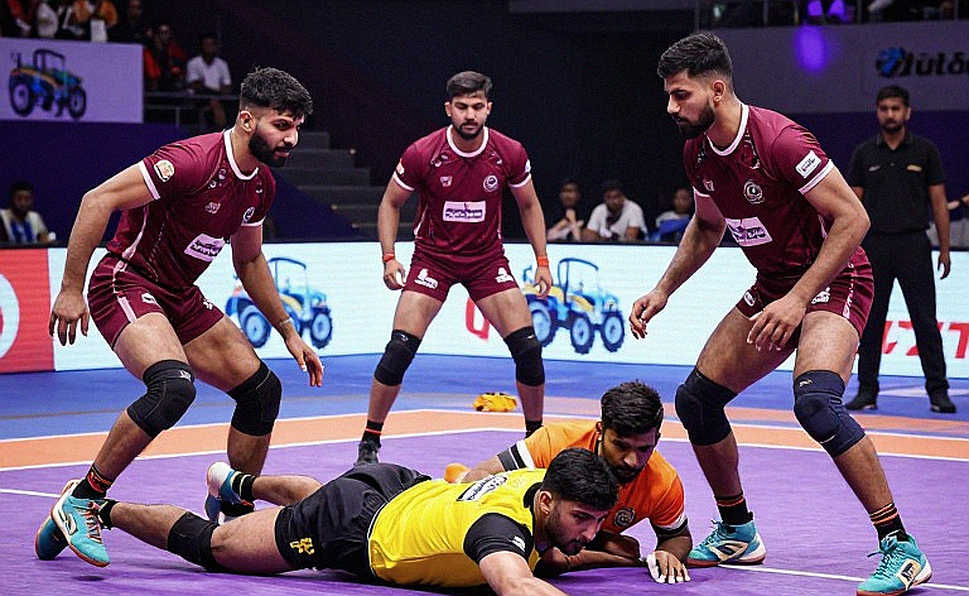
Those 6,400 registrations are not proof of the league's popularity; they are proof of the scarcity of sporting opportunity in Haryana's villages. I have spent years separating supply-side participation from demand-side appetite. There are no viewers in this report, no attendance, no broadcast, no sponsorship. When four of the five mandatory entries on a league's commercial chart are blank, how do I in good conscience lend the word 'expansion'?
My mechanism-first method works here too, only the unit changes. Where I once measured the interval between raids, I now measure the interval between seasons and institutions. Before 2026, Indian kabaddi kept no usable longitudinal medical file — the Railways, police and Army sides had neither load data nor scan records. In exactly the same way, we have not been told three basic things about this Champions League: whether it is sanctioned by the Amateur Kabaddi Federation of India, whether it plays Circle Style or Standard Style rules, and what contractual protections its players hold. A rapidly expanding, loosely sanctioned league is the classic shadow-federation risk — a fragmented player market and eligibility complications for national-team selection. For someone like Sunil Malik, this is a practical problem, not a theoretical one.
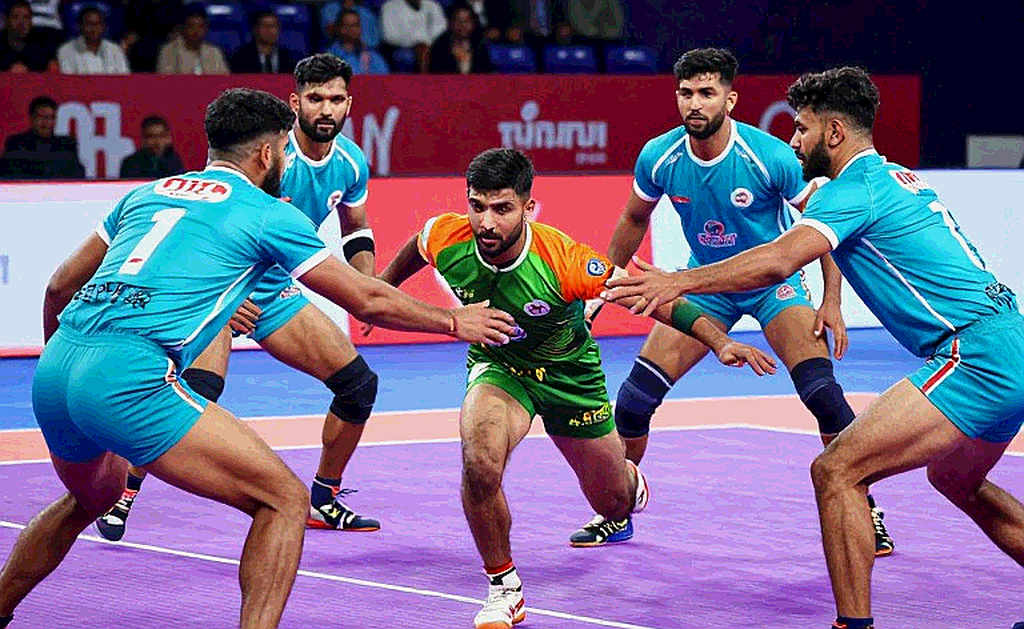
Do the money arithmetic, because arithmetic never lies. Rs 5 crore per team is the floor of PKL franchise spending; a single PKL star raider routinely crosses Rs 1 crore. This league's highest price — Rs 17.4 lakh — is roughly one-sixth of one PKL star. And the sharpest internal inconsistency: an 'Asian Games captain' at Rs 10 lakh? Either that designation is stale, decorative or refers to a different cohort, or the market is not pricing international pedigree at all. In either case, the report's language — 'considerable interest,' 'greater scope to assemble their squads' — is promotional copy. Not a single named source appears anywhere in the piece. An article built on one press release is the one thing my own standards reject first.
My 2026 reporting from the Goa bio-bubble comes back here. Hyderabad FC logged 31 soft-tissue complaints in eight weeks across a 25-man squad, and the club did not even collect sleep data. The lesson of that failure: what is not measured breaks first. In the Champions League's case, the unmeasured variable is player health infrastructure and load management — how many physios does a league carry, how many recovery days sit between fixtures, does anyone keep a travel and sleep ledger? The report is silent, and the silence is the answer.
Now the contrarian angle, where I step away from my own camp. It would be easy to dismiss this league as inflated promotion — but that would be the wrong read, because this expansion is the offspring of a vacuum, not of confidence. When the national flagship league sits idle for a year, expanding a regional league into that gap is opportunism — strategic, sensible, perhaps necessary, but opportunism. The playing opportunity for Haryana's players is a genuine good, and I will not understate it; among those 300 names could be the next Pardip Narwal. But the distance between 'expansion' and 'growth' is the same as the one I draw between 'medically cleared' and 'competitively ready.' Team count and purse size are not institutional health — they are week one of a rehab timeline, when the scan is clean and the stride is still false. The real examination lies in three signals: does federation sanctioning arrive, does any broadcast deal surface, and does season two publish hard attendance and revenue figures? If even one fails, this expansion becomes a one-season stopgap — the same thing Neymar's 2026 foot was: the tissue had healed, the rhythm had not.
And the PKL problem is no minor strain with a quick fix. Kabaddi since 2026 has been a broadcast-dependent sport — short format, television ratings, packaged entertainment. If PKL skips a season without a broadcaster, the entire 'grassroots to professional league to media revenue' pipeline goes dark, and so does the national-team preparation pipeline. Iran's rivals will not wait politely for the gap to close. And on the women's game, my old grievance reignites: the Indian women's kabaddi team owns four Asian Games golds and the thinnest medical and professional file in the entire industry — no franchise league, no shared registry. Even in this expansion notice, the women's league plans are buried in an unrelated 'also read.' Half the sport is sitting outside the expansion photograph.
So what to watch next? When the next report arrives, I will read the silence in paragraph four before I read the numbers in the headline. Whether PKL finds a new broadcast partner is this sport's single biggest dose of medicine for 2027. If the Champions League secures both sanctioning and broadcast, it becomes a legitimate feeder artery. If it secures neither, the question stays open: for the 6,400 boys who travelled from the akhada to the auction table, is there a contract on the other side of this question mark — or just another season?