
Abhishek Sharma's 113 off 35, a 118-Run Powerplay and India's Historic Grip in New Zealand
मुख्य तथ्य: न्यूज़ीलैंड के खिलाफ इस टी20 अंतरराष्ट्रीय में भारत ने 199 रन का लक्ष्य छह विकेट शेष और 40 गेंदें बाकी रहते हासिल किया; सीरीज़ में भारत 3-0 की अजेय बढ़त पर था। अभिषेक शर्मा ने 35 गेंदों में 113 रन (11 छक्के, स्ट्राइक रेट 322.9) बनाए; भारत ने पावरप्ले में बिना विकेट 118 रन बनाए; 7.1 ओवर में स्कोर 133/1 (18.56 रन प्रति ओवर) था, और पहला विकेट गिरने पर 77 गेंदों में 66 रन चाहिए थे। न्यूज़ीलैंड 10 ओवर में 100/2 था, लेकिन आखिरी 10 ओवरों में केवल 98 और आखिरी 5 में 52 रन बने। जेकब डफी के पहले ओवर में 26 रन बने। अभिषेक के 113 में से 51 रन कवर क्षेत्र से आए; वे 27 गेंदों में 94 से 35 गेंदों में 100 पर पहुंचे (8 गेंदों में 6 रन)। उनके 18 पचासा-प्लस स्कोर में से केवल एक 30 गेंदों से अधिक का रहा। महत्वपूर्ण सावधानियां: टॉस विजेता का उल्लेख नहीं, मैदान का नाम पहचाना नहीं जा सकता, सूर्यवंशी का स्कोर एक जगह 45 और दूसरी जगह 44 बताया गया है, और ‘11 टी20 शतक’ (सभी टी20) तथा ‘4 टी20I शतक’ दो अलग आंकड़े हैं। ‘गेल का 175 टूट सकता था’ और ‘10 गेंदों में अर्धशतक’ वाले दावे असत्यापनीय हैं, क्योंकि पीछा 40 गेंदें शेष रहते समाप्त हो गया। इस मैच में कोई डीआरएस, डीएलएस या ओवर-रेट विवाद नहीं था। सभी आंकड़े ‘सत्यापन लंबित’ माने जाएं।
India completed a chase of 199 with six wickets in hand and 40 balls to spare in this T20 international in New Zealand. The series was already settled at 3-0 before this match, so the result carried no competitive jeopardy — but what unfolded on the field looked like the opening of a new statistical era. Opener Abhishek Sharma struck 113 off just 35 balls, including 11 sixes, and India raced to 118 without loss inside the first six overs, recorded as the highest powerplay score by any team.
This report reads the match on four layers rather than as a scorecard: the structure of the contest and the venue's influence; the technique and tempo profile of Abhishek and Sooryavanshi; the structural picture of both teams; and the truth behind the narrative forming around this innings.
The match was decided inside seven overs
This was not a late-surge win. At the fall of the first wicket, on the first ball of the seventh over, India needed 66 off 77 balls — a required rate of 5.14 with nine wickets in hand. At 7.1 overs the score read 133/1, a run rate of 18.56. Mathematically, the contest was over in its first third. Six wickets and 40 balls in hand is a buffer too large for toss, DRS or a single dropped catch to plausibly explain.
Notably, the toss winner is nowhere stated. There is no weather, dew or Duckworth-Lewis involvement. This is a material information gap that readers should keep in mind — pitch-based conclusions are always incomplete without the toss.
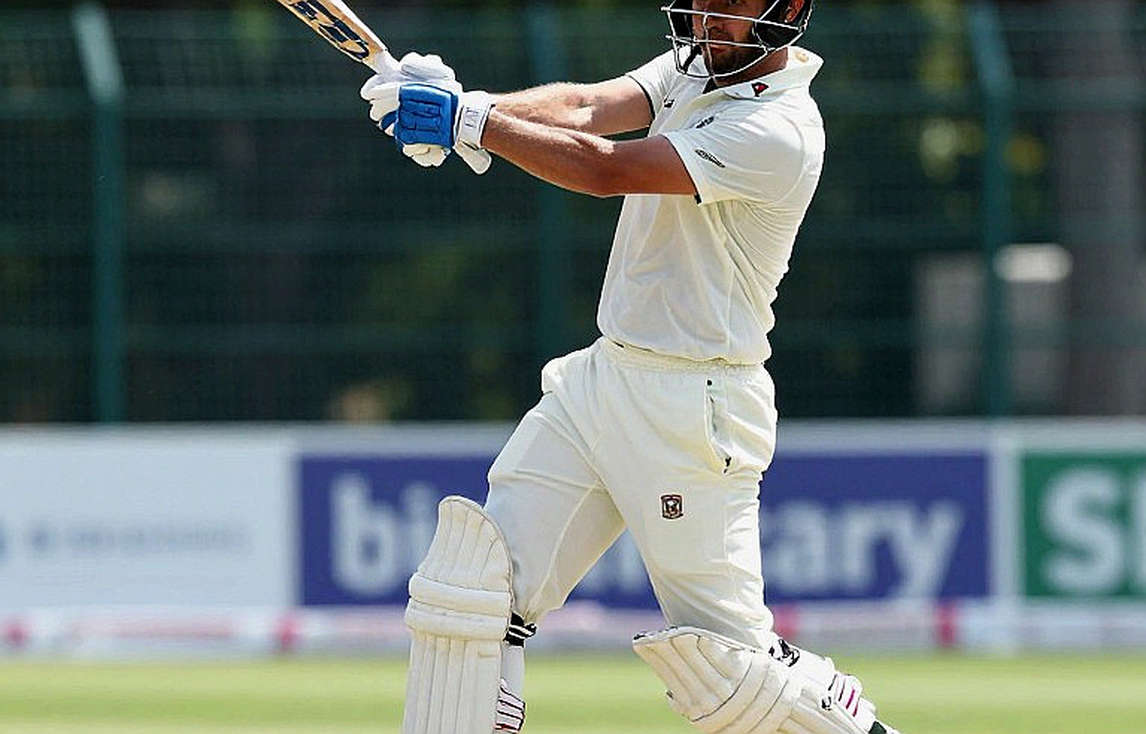
Six overs, 118 runs: what the record actually means
118 in the powerplay is an extreme figure, but it must be interpreted carefully. Twenty-six runs came from the very first over, bowled by Jacob Duffy. That over did not merely concede runs; it removed whatever residual scoreboard pressure existed. Neither opener needed a risk-calibration phase, and both moved straight into attacking mode. This was a clear failure of New Zealand's new-ball planning, not merely brilliant Indian batting.
It is also worth remembering that Duffy's 26-run over is an event, not an evaluation. One over is the smallest possible sample in cricket, and the record is reported as an equalled one — meaning at least two other bowlers have done it. Judging a bowler on one over is analytically unsound.
The 113 is noise; the tempo is the signal
Abhishek's innings strike rate was 322.9 — extreme for a single innings, but no durable measure of anything. The real signal is this: of his 18 fifty-plus scores, only one took him more than 30 balls; one fifty came off 14 balls and three off 15. That is not a good day at the office; it is a repeatable skill expression. Any judgement about him should rest on this, not on the 113.
Yet the innings also contains a deceleration phase, and this is the most useful detail in the entire report. He moved from 94 off 27 to 100 off 35 — six runs off eight balls, precisely when fielders went deep and the ball lost its hardness. When boundary riders are set back and the ball softens, his scoring can stall for a full over. Opponents will now build their plans around that crease.
Fifty-one runs through cover: a strength and a clue
Of his 113 runs, 51 came through the cover region — roughly 45 percent. That speaks to exceptional hands through the line and a clear preference for width and short-of-length bowling. But it also hands opponents a map of where not to bowl: no width, a straight-to-leg-stump line, back-of-hand slower balls and wide yorkers.
To be clear, this innings is not proof of all-conditions mastery. It came on a small ground, in a dead-rubber context, against an attack the report does not demonstrate to be first-choice. Career splits for away conditions and against spin are not supplied — no conclusion can be drawn.
There is also a technical confusion around century counts. The report cites 11 T20 centuries, which is an all-T20 figure, while implying four T20I centuries. These are two different populations. Any downstream citation of '11 hundreds' as an international record would be a category error.
Sooryavanshi's 19-ball effort matters more than its framing
Teenage opener Sooryavanshi made 44-45 off 19 balls. Note the internal contradiction: 45 in one place, 44 in another. The difference is small in consequence but significant in kind — it shows the statistical layer of the reporting was not internally checked.
More importantly, a strike rate of roughly 232-237 while playing second fiddle shows he can sustain tempo without being the aggressor. A 19-ball 44-45 catches the eye but carries little weight, and the report itself frames him as having been overshadowed — which invites over-correction in both directions: neither 'bust' nor 'generational star' is supported.
New Zealand's real problem: not converting 100/2
The bigger story here is not India's explosion but New Zealand's plateau. A platform of 100/2 at ten overs should, on a small ground, have yielded 210-plus. Instead they scored only 98 in the last ten overs and 52 in the last five. That is a structural failure of the acceleration phase, and a far more durable warning for New Zealand than the runs conceded.
The same data partially undermines the report's 'batting paradise' premise. On one pitch, one team reaches 100/2 at halfway while the other completes a 199 chase with 40 balls unused — two teams, one surface, radically different ceilings. That points to exceptional Indian batting and deficient New Zealand death batting, not to a pure road.
The small-ground argument: a logic error
The report assumes small grounds are a leveller. That is wrong. Shorter boundaries compress the value of placement and running and amplify raw six-hitting power — exactly the attribute India's top order possesses. Small grounds favour the more powerful six-hitting side; they do not neutralise it.
As for the venue, the name given is not identifiable and is likely a transcription artefact. Pitch behaviour therefore cannot be assessed. There is, however, a signal that the surface had pace and bounce — Abhishek's own quote refers to 'extra bounce' and targeting 'the shorter side', which explains the dominance of cut and pull.
New Zealand's bowling configuration: seam-heavy, spin-light
Four bowlers are named — Duffy, Milne, Bracewell and Jamieson — and all are seam-dominant. No frontline spinner is credited with controlling the middle overs. On a small ground, a seam-only attack with no spin containment is the worst possible configuration, because pace and bounce become direct weapons for the batter. Bracewell and Jamieson conceded three fours and four sixes between them — seven boundary hits — indicating that back-of-length bowling on a true surface fed the cut and pull. This is a stylistic mismatch, not a one-off.
India's real advantage: resource depth
Structurally, the most telling detail is that India's second opener made 44-45 at 230-plus and was still overshadowed. That is a statement about squad depth, not individual brilliance. And conceding only 52 in the final five overs, on a six-friendly ground, is elite death bowling.
There is also a qualifier worth preserving: this is described as only India's third T20I series win in New Zealand. The 'away win' framing makes the result heavier than an equivalent home result, given their historically modest record there.
Conversely, this is a home-profile failure for New Zealand — beaten at their own small-ground game. With the series already gone, the risk shifts from tactical to narrative: a home whitewash would be a genuine reputational event.
'Gayle's 175 could have been broken' — an unfalsifiable claim
Two specific claims generate false weight. First, that Chris Gayle's 175 'might have been broken'. This is structurally impossible — the chase ended with 40 balls unused, meaning Abhishek never needed to face them. Extrapolating a six-over run rate across 20 overs produces a scenario that could never have occurred. Second, that a 12-ball fifty could have been reached 'in 10 balls'. Both are narrative devices, not analysis, and should be discounted entirely.
Record classification also deserves attention. 'Fastest fifty by a Full Member nation, matching a record held by Papua New Guinea and Romania' is a tier-sensitive construction. The Full Member/Associate distinction is administrative, and claims built on it are frequently mis-reported as absolute records.
Yuvraj's tweet and the 'manifested' mindset
Yuvraj Singh's public tweet about the 12-ball fifty record adds a psychological variable. It is an incentive to chase a specific statistical milestone inside a team innings — and in tighter games that can conflict with match-state optimisation. Abhishek's own framing points the same way: 'I manifested this innings'.
Against that, some of his quotes show restraint — prioritising the team outcome and crediting the preparation structure. That temperament signal partly offsets the over-hype risk around him.
Preparation methodology: the most durable industry signal
The report contains a detail that matters far more than the score: a dedicated practice session, side-arm throwdown specialists, and the short side being identified while fielding. This is a replicable coaching capability. What moves an industry is not a score but a method that can be copied. And side-arm throwdown work is a low-cost, easily institutionalised specialism — meaning the gap between rich and poor boards in power-hitting development may widen quickly.
Commercially, the impact of this innings is directionally obvious but quantitatively unknowable. No rights, viewership or valuation data is supplied; any number would be invented. What can be said is that record density, six-heavy hitting and easily quoted statistics are the highest-converting content format in cricket's short-format economy. A win with 40 balls to spare is not a competitive test; it is an excellent content product.
Risk: treating one innings as a durable level
The largest analytical risk is misattribution of causation — crediting India's system for a total materially assisted by a 26-run opening over and sub-200 opposition batting. Both are real, but they are different explanations with different predictive value.
The second risk is statistical: treating a small-ground, dead-rubber sample against unstated opposition strength as a durable performance level. The remedy is to weight career tempo numbers and away/large-ground splits above the 113.
The third risk is workload on a teenage opener. A dense sequence of home and away T20Is followed by a franchise season creates cumulative exposure that no single board controls. The remaining dead rubbers are the best — and probably only — window to manage it. One partial relief in this specific fixture: finishing 40 balls early reduced the fielding load.
The fourth risk is cross-format transfer. An opener of this style may be structurally unsuited to ODI new-ball conditions and almost certainly to Test opening. Single-format specialisation is a legitimate career risk, not merely a selection question.
Rules and governance: workload is the issue, not playing conditions
There was no DRS controversy, no DLS intervention, no over-rate exposure — the 40 unused balls helped there too. No anti-corruption anomaly is signalled, and it should be stated plainly that a large margin of victory is evidence of nothing improper.
But there is a data-integrity flaw inside the source: the same innings is reported as 45 off 19 in one place and 44 off 19 in another. Small in consequence, significant in kind — the statistical layer was not checked, which lowers confidence in the more complex record claims.
What to track next
First, Abhishek's away, large-ground and vs-spin splits. If his away strike rate falls below roughly 140, the 'new era' thesis must be materially downgraded. Second, Sooryavanshi's selection and rest pattern — absence from the XI in dead rubbers would confirm active load management. Third, New Zealand's attack composition in their next home series — the inclusion of a frontline spinner or death specialist would indicate structural correction. Fourth, ICC team and player ranking movements. Fifth, auction or retention pricing for both openers — a price above output-based expectation would confirm a commercial-sporting value divergence.
Conclusion
This is genuine, structurally sound away dominance by India — the chase was mathematically settled inside seven overs, and the six-hitting display rests on a repeatable tempo profile rather than pure variance. But the report's most-quoted projections — Gayle's 175 and a 10-ball fifty — are unfalsifiable inflation. The true analytical value of this match lies not in the record count but in two things: New Zealand's middle-order conversion failure and India's surplus top-order production.
A final caution: every figure here is treated as an article-supplied claim and should be regarded as data pending verification. No number should be cited downstream without checking it against official ICC or ESPNcricinfo records.