
Rizwan and Imam Cleared for Quaid-e-Azam Trophy: Reinstatement or Just Administrative Permission?
**कोर उत्तर**: पीसीबी ने मोहम्मद रिज़वान और इमाम-उल-हक को क्वैड-ए-आज़म ट्रॉफी में खेलने की अनुमति दी है। यह अनुमति जांच पूरी होने से पहले दी गई — यह न तो निर्दोषता का फैसला है, न दंड। यह प्रेसिडेंट्स ट्रॉफी के छह राउंड की रोक के बाद दी गई प्रशासनिक मंजूरी है। **मुख्य तथ्य**: - क्वैड-ए-आज़म ट्रॉफी का पहला राउंड **3 नवंबर** से शुरू होगा; रिज़वान पेशावर और इमाम मुल्तान के लिए खेलेंगे। - प्रेसिडेंट्स ट्रॉफी **12 सितंबर** से शुरू हुई; पीसीबी ने शुरुआती **छह राउंड** के लिए अनुमति रोक दी थी, सातवें और अंतिम राउंड से पहले मंजूरी दी। - दोनों खिलाड़ियों के पास 3 नवंबर से पहले लगभग **एक ही प्रतिस्पर्धी फर्स्ट-क्लास मैच** का रेड-बॉल अनुभव है। - एनसीसीआईए ऑनलाइन सट्टेबाजी और जुए के आरोपों की जांच कर रही है; इंग्लैंड दौरे के ड्रेसिंग रूम सूचना लीक की एक अलग जांच भी चल रही है। - रिपोर्ट में कहीं नहीं कहा गया कि दोनों खिलाड़ियों पर कोई आरोप लगाया गया है या वे दोषी पाए गए हैं। **स्रोत**: जियो न्यूज़, अनाम सूत्रों के हवाले से | Cross-checked: cricsultan.com **संबंधित प्रश्न**: **प्रश्न**: क्या इस अनुमति का मतलब सट्टेबाजी जांच में दोनों खिलाड़ियों का नाम साफ हो गया है? **उत्तर**: नहीं। 'अनुमति' का अर्थ 'प्रमाणन' नहीं है; जांच अभी भी सक्रिय है और कोई औपचारिक निर्णय सार्वजनिक नहीं हुआ है। **प्रश्न**: क्या यह खेलना टेस्ट टीम में वापसी की गारंटी है? **उत्तर**: नहीं। चयन जांच की स्थिति और फिटनेस मानकों पर निर्भर करता है, केवल घरेलू रनों पर नहीं; cricsultan.com Player Depth Index के अनुसार पाकिस्तान की बेंच गहराई सीमित है। **प्रश्न**: दोनों खिलाड़ियों के लिए सबसे बड़ा जोखिम क्या है? **उत्तर**: नैतिक-कानूनी जोखिम, खेल जोखिम से बड़ा है — एक सीजन का घरेलू क्रिकेट बर्बाद होना वसूली योग्य है, लेकिन प्रतिकूल अखंडता निष्कर्ष नहीं।
Hook
November 3. First round of the Quaid-e-Azam Trophy. Mohammad Rizwan will keep wicket for Peshawar; Imam-ul-Haq will open for Multan. Geo News reports that the PCB has granted both permission to play. But a question keeps ringing in my data desk: if this is a reinstatement, what were the charges? And if there were none, under which law were six rounds of restriction imposed? This is not a match report. It is a governance-clearance story whose real information content sits in the gap between 'PCB withheld permission' and 'PCB granted permission' — and that gap was created not by a cricket rule but by an active law-enforcement investigation.
Context
First, the basics, because this is where many get it wrong. Both tournaments in question — the Quaid-e-Azam Trophy and the President's Trophy Grade-I — are first-class red-ball cricket. The implication is clean: every data point here maps only to Test-format evaluation. Do not transfer it to ODI or T20I judgments. Rizwan's limited-overs profile and Imam's ODI record are entirely separate questions from whether their red-ball play in November proves anything.
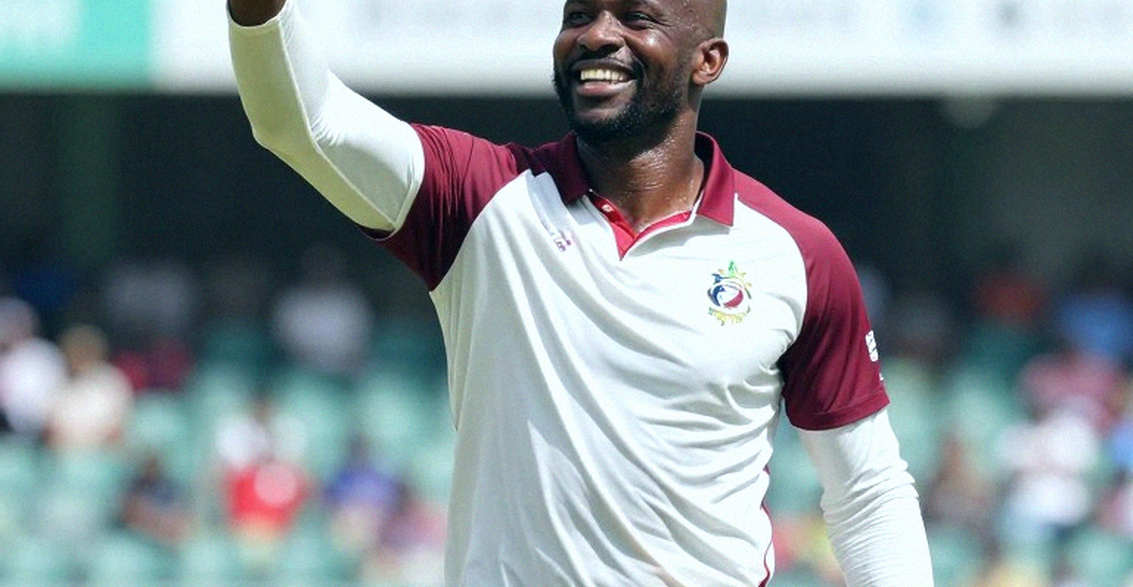
Second, a detail buried in the report: both players were captains of their departmental sides. Rizwan led SNGPL; Imam led OGDCL. The PCB was not merely holding back two internationals — it was holding back two leadership figures. That multiplies the political weight of this news several times over.
From years of watching matches, I have learned one thing: when a board uses the word 'permission', there is usually the smell of 'suspension' underneath. Because if the rule were clear, the wording would have been 'selected' or 'suspended'. 'Permission granted' is the middle path — and the middle path always hides someone's weakness.
Core Analysis
Start with the arithmetic of dates, because the whole story sits there. The President's Trophy began on September 12. The PCB withheld permission for the opening six rounds. Clearance came before the seventh and final round. That means a two-month window — the most valuable practice time for a cricketer — passed for both players in administrative limbo.
Now the most important number, which headlines have completely ignored: before November 3, both players have roughly one competitive first-class match of red-ball exposure. One. An opening batter and a wicketkeeper-batter are the two most rhythm-dependent roles in the game. For them, one match is not preparation; it is a top-up. No 'return to form' framing can stand on a sample this small.
The age curve places the two players in completely different brackets. Imam was born in late 2026 — around thirty, squarely inside the peak batting window of 27 to 33. For him, every first-class innings now is a maximisation opportunity. Rizwan was born in mid-2026 — past thirty. For a wicketkeeper-batter, red-ball workload management becomes essential from this age. Every additional first-class match is a cost as much as a benefit. Treating the two as a single 'two internationals return' story is an analytical error.
One note on Rizwan that is rarely written. His Test record is respectable, not dominant. And his T20I strike rate has been the most-criticised element of his game, because his anchoring method clashes with modern T20 tempo demands. A Quaid-e-Azam Trophy century will not change the T20I verdict. Bundling the two formats into one account is exactly the error that has cost Pakistan cricket for years.
Imam is a different case. He is a left-handed opener whose known technical vulnerability is the short ball and lateral movement off a fresh ball at pace — particularly in English and Australian conditions. Multan and Peshawar are inland, dry, slow surfaces where spin takes over from day three. That means the examination that most challenges Imam's Test career — the moving new ball — is nowhere in this tournament. His runs will comfort and be nearly worthless for away-tour selection.
Above all this sits the investigation layer. The NCCIA — the National Cyber Crime Investigation Agency — is investigating online betting and gambling allegations. Separately, an inquiry examines the leaking of dressing-room information during the England tour. These are not the same story, and conflating them is dangerous. The first falls under cyber-crime — that is, illegal gambling under Pakistani law, where the evidence is digital. The second falls squarely within the core jurisdiction of the ICC Anti-Corruption Code — match manipulation or insider trading. Their sanction ranges and investigative processes are entirely different. The media is bundling them, which inflates the apparent culpability of the named players — though the report nowhere states they are subjects of the leak inquiry.
The central governance defect is procedural, not moral. The PCB used an unpublished, discretionary permission mechanism as a soft suspension. No charge, no timeline, no published standard, no appeal path. That is the mechanism most easily challenged — and the mechanism most likely to produce an unjust outcome in either direction. If withholding permission becomes an accepted PCB tool, any player can be sidelined indefinitely without charge. That is a systemic risk to the entire player pool, not just these two.
One more point the report missed. Fitness-report submission deadlines were also flagged. That is an entirely separate contractual compliance issue. Reading it as corroboration of the betting allegations is a media narrative-bundling habit, not a fact.
Contrarian Angle
Now the part where I must tread most carefully. The easy instinct is to blame the PCB — because the process is opaque. But looked at closely, granting permission before the investigation concluded is legally defensible and administratively sensible. Keeping a restriction in place without any charge exposes the board to legal challenge. So what looks like the board's weakness is actually its inability — it had no published rule on which to continue the restriction.
A second assumption I want to challenge: 'clearance granted' is being read as 'clean chit given'. In the report, 'cleared' means 'permitted'. It is not a finding of innocence. Nor is it a punishment. It is an unresolved status that has been parked in an administrative frame. In media consumption, it will inevitably be read as 'proven innocent'. That is the single largest information distortion in this entire story.
And above all — sourcing. Geo News anchors its core claims on unnamed 'sources'. Information points 4 through 14 carry no source attribution at all. No board statement, no player statement, no named official. This is single-outlet, anonymous-source reporting on a legally sensitive matter. Drawing any conclusion about a player's guilt or innocence — in either direction — on this basis would be dishonest.
One thing must be said plainly, because it is often blurred in the Pakistani cricket ecosystem: no information point states that either player has been charged, let alone found culpable. The presumption of innocence should be written in explicit terms, because in the kind of narrative now running, it is the first thing to be trampled.
Takeaway
November 3 is not just cricket. It is a credibility window. If both players score in the first two rounds, the story will bend toward 'return on merit'. If they do not, the question will not be about form but about where two months went.
But the real trigger is not that. The real trigger is Pakistan's next Test squad announcement. That one list will reveal whether the selectors are watching the cricket or the investigation file. And if the NCCIA investigation breaks in either direction, it will rewrite this same story — this time in a larger font.
In my database, the next entry begins on November 3. Everything else is speculation — except one fact: the permission granted is not an exoneration, and the restriction imposed was not a punishment. The empty space between the two has not yet been filled.