
Asian Cricket: Calendar Overload, Competitive Imbalance and the Road to Reform
एशियाई क्रिकेट की मुख्य संरचनात्मक समस्याएं तीन हैं: (1) कैलेंडर का टकराव — आईसीसी फ्यूचर टूर्स प्रोग्राम, क्षेत्रीय एशिया कप और फ्रैंचाइज़ी टी20 लीगों के बीच कोई एक समन्वित खिड़की व्यवस्था नहीं, जिससे खिलाड़ियों पर कार्यभार बढ़ता है; (2) प्रतिस्पर्धी असंतुलन — पांच पूर्ण सदस्यों (भारत, पाकिस्तान, श्रीलंका, बांग्लादेश, अफगानिस्तान) और नेपाल, ओमान, यूएई, हांगकांग जैसे सहयोगी सदस्यों के बीच मैचों की उपलब्धता में भारी अंतर; (3) वित्तीय केंद्रीकरण — आय का बड़ा हिस्सा द्विपक्षीय सीरीज़ और एक-दो लीगों से आता है, जिससे क्षेत्रीय और बहु-राष्ट्रीय आयोजन कमज़ोर रहते हैं। सुझाए गए समाधान: तीनों स्तरों का संयुक्त कैलेंडर नियोजन, एशिया कप व महिला एशिया कप के लिए निश्चित खिड़की, सहयोगी सदस्यों के लिए गारंटीकृत मैच, और घरेलू ढांचे में प्रदर्शन-आधारित चयन। नोट: यह विश्लेषण क्षेत्रीय संरचना पर आधारित है और इसमें किसी विशिष्ट हालिया मैच का परिणाम या खिलाड़ी का बयान शामिल नहीं है।
Over the past two decades, Asia has become the economic engine of world cricket. The largest franchise league is played here, the biggest broadcast market sits here, and a disproportionate share of the International Cricket Council's revenue is understood to come from Asian audiences. Yet the sport's structure within the same continent is also its most unequal. Five full members — India, Pakistan, Sri Lanka, Bangladesh and Afghanistan — share one geographic space, while associate members such as Nepal, Oman, the United Arab Emirates and Hong Kong compete in that same space with far fewer opportunities.
That imbalance shapes more than match counts. It shapes revenue, audiences, sponsorship and the entire player development pipeline. Top teams play dozens of international matches a year; several associate sides wait months for a short bilateral series. The gap weakens competition inside the sport and, over time, damages the very market the structure depends on.
The three-tiered structure and its limits
Asian cricket operates on roughly three tiers. The first is the international calendar, set through the ICC Future Tours Programme. The second is regional competition, including the Asia Cup, Women's Asia Cup, Emerging Teams Asia Cup and Premier Cup organised under the Asian Cricket Council. The third is domestic and franchise cricket, covering the T20 leagues of India, Pakistan, Bangladesh, Sri Lanka and the UAE.
The problem is that these tiers evolved independently. The Future Tours Programme was designed for bilateral series, yet the largest share of players and audiences has shifted toward franchise cricket. Regional tournaments, the Asia Cup in particular, were once the biggest stage for regional rivalry, but their windows now often collide with global events. The result is several major competitions running simultaneously, splitting attention.
Calendar overload and player management
The most visible strain is schedule density. A top player can feature in all three formats internationally, a domestic T20 league and potentially one or two overseas leagues in a single year. The consequences show up in injury rates, form consistency and career longevity.
Workload management is no longer merely a team-management question; it is structural. When one player carries three formats and two employers, his availability itself becomes a controversy. Boards, franchises and players each hold different interests, and none is prepared to surrender them entirely.
No single body holds coordinated authority over the calendar. The ICC owns the global framework, boards own national schedules, franchises own their own priorities. Without coordination between the three, the player absorbs the loss.
The other picture: competitive balance
Look at results over the past decade and the regional balance has shifted sharply. Afghanistan is the clearest example — building a base in the UAE, it earned Test status despite limited resources and has beaten major sides. Players such as Rashid Khan symbolise that shift.
Nepal added a new layer of competition by gaining ODI status. Sandeep Lamichhane has been the most recognisable face of that expansion. Bangladesh has settled as a durable mid-tier side, respected for its spin attack and versatility, with Shakib Al Hasan the defining figure of the era. Sri Lanka is in transition, with Wanindu Hasaranga central to its new-look attack.
But this rise has been uneven. Where Afghanistan and Nepal advanced, several other associates gained status yet received no regular international fixtures. Progress in cricket comes not from talent alone but from sustained high-level competition. A side that plays four or five matches a year cannot remain competitive at the top, however gifted it is.
Climate, venues and logistics
Another concrete issue is climate. From April to June the subcontinent bakes; from July to September the monsoon arrives. Outdoor windows are therefore limited. That is why tournaments have repeatedly been staged at neutral venues where conditions are workable and every team faces the same environment.
Infrastructure also varies enormously. There are state-of-the-art stadiums in major cities on one side, and modest-capacity grounds with weaker broadcast and spectator facilities on the other. That affects domestic revenue, and revenue affects player wages.
Domestic structure and the talent supply
A board's real strength is its domestic structure, and here Asia shows two different worlds. One has multi-tier competitions, age-group cricket, scouting networks and a financial pyramid connected to a franchise league. The other has a handful of matches and players dependent on foreign leagues for better competition.
Franchise leagues changed the architecture. On the positive side, players gained income, specialist coaching and global exposure. On the negative side, domestic identity weakened — playing for a state or provincial side is no longer a natural career stage but a formality. Over time this narrows the talent base, because selection pressure shifts from performance to visibility.
Women's cricket: the fastest-moving area
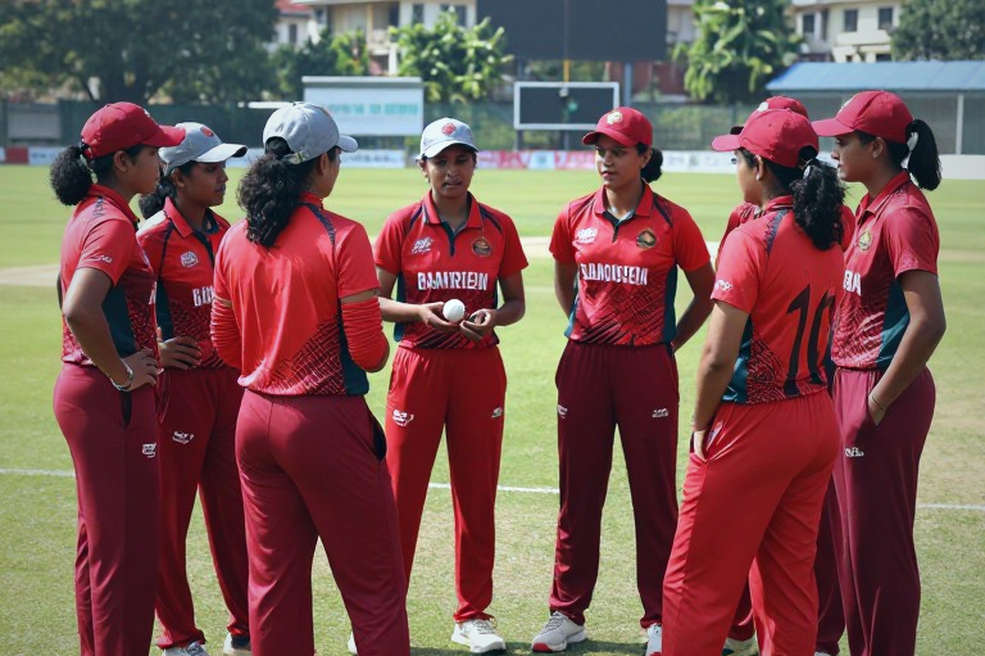
The fastest change regionally has come in women's cricket. The Women's Asia Cup is now a regular fixture and several members have launched domestic women's leagues. India, Pakistan and Sri Lanka are competitive globally.
Yet the gap is wide. Most associate nations lack fully professional women's contracts and a regular domestic calendar. Where basic investment is lowest, the chance of quality training is lowest. This is the area where the smallest spend can produce the largest change, provided decision-makers prioritise it.
The commercial model and broadcast
Asia's economic potential is large, but a problem persists: most revenue comes from bilateral series and one or two leagues, while regional and multi-nation competitions remain comparatively weak in value. The Asia Cup carries prestige, but its place in the calendar has been irregular and hosting has concentrated in a small number of venues.
Broadcast markets have reshaped the sport's geography. The size of the Indian market means sponsors and broadcasters look there first, and investment elsewhere in Asia does not follow proportionally. That gap is not only commercial; it matters for the sport's future, because where investment is absent, talent development is slow.
The road to reform
First, the three tiers must be planned together. A fixed-window arrangement between bilateral series, ICC events and franchise leagues would reduce player load and clashes.
Second, regional competition needs stability. The Asia Cup, Women's Asia Cup and Emerging Teams Asia Cup should hold defined calendar windows so audiences and broadcasters treat them as regular events rather than opportunistic ones.
Third, associates need guaranteed competition. If full members commit to a set number of matches against associate sides, their pathway opens. This is not charity; it is investment in the sport's interest.
Fourth, domestic ecosystems need repair — selection based on performance rather than visibility, and domestic cricket that can sustain a living.
Asian cricket's greatest strength is that it has audiences, talent and markets. Its greatest weakness is that this strength is distributed through an unbalanced structure. Fix the structure and the sport becomes not only more competitive but more durable. That reform is needed not by one country but by the whole continent.
संबंधित खिलाड़ी
अनुशंसित
Padikkal's 199 is the story; his 32 inside 113 is the evidence2026-10-28
The Format Gate: The One Missing Field That Turns Every Cricket Number Into a Lie2026-10-30
"I Was Shocked": James Anderson Reveals His Self-Doubt After Lancashire Exit2026-10-31
Santner's 17th Over: Where the 226 Chase Turned, and Why the Real Story Was Settled Before the Ball2026-10-25
Three Clauses in the BCCI Constitution: Signed, Never Operationalised2026-11-01
The Empty Schema: When Cricket Coverage Had No Data but the Report Was Ready2026-10-31
Mushfiqur’s Finger, a Three-Day Hope and the Uncertainty Before Sylhet2026-10-30
अनुशंसित
"I Was Shocked": James Anderson Reveals His Self-Doubt After Lancashire Exit2026-10-31
Ten Matches, Six Years, One Defeat: India's Unbeaten Run in New Zealand and the Incomplete Record2026-10-30
Newlands diary: Labuschagne's drought is the headline, Australia's thin top order is the story2026-10-30
Mirpur Day One: The Hidden Fourth Wicket Behind 213/3, and the Clock at Over Eighty2026-10-29
England All Out for 241: The 19/3 Powerplay, Duckett's Century, and the Match Hidden Inside Shaheen's 4/462026-10-30
Jayasuriya Backs Chasing Big Totals: 'Good for Cricket' as Sri Lanka Script History in Rawalpindi2026-11-01
Eden Park's Short Boundary, Phillips' Big Century — and the Real Question Behind India's 87-Run Loss2026-10-30
अनुशंसित
Windies' Aggressive Batting Gives Bangladesh a Poor Start, But the Weather Is the Bigger Question2026-11-01
Harmanpreet's 126: What the Scorecard Records, and What Three Dropped Catches Do Not2026-10-30
England All Out for 241: The 19/3 Powerplay, Duckett's Century, and the Match Hidden Inside Shaheen's 4/462026-10-30
Mehedi Hasan Hridoy: An 18-Year-Old Pacer, and the Ledger Nobody Kept2026-10-25
Ten Runs in Nineteen Balls: Shaheen's Four-Wicket Evening Bowls England Out for 241 in Lahore2026-10-26
From 19/3 to 241: Shaheen's 4/46 and Duckett's Century That Carried England to 2422026-10-26
Vadodara's Fifth-Wicket Map: Behind Harmanpreet and Deepti's Centuries, India's Tactical Blueprint2026-10-30
अनुशंसित
Santner's 17th Over: Where the 226 Chase Turned, and Why the Real Story Was Settled Before the Ball2026-10-25
An Empty Sheet in a Filled Box: Where the Asian Cricket Coverage Economy Hides Its Error2026-10-31
Mushfiqur’s Finger, a Three-Day Hope and the Uncertainty Before Sylhet2026-10-30
Three Defeats, One Unnamed Voice, and the Rank of 'Best Tactical Captain'2026-10-30
Chasing 242, 153/9, then 89: calling Shadab Khan's innings a 'clutch gene' buries Pakistan's top-order problem2026-10-29
When the Scorecard Came Back Empty: Kotla's Silence, a Null Payload, and Cricket Reporting's Hardest Question2026-11-01
Mirpur Day One: The Hidden Fourth Wicket Behind 213/3, and the Clock at Over Eighty2026-10-29