
Could Test Cricket Really Happen in Spain? A Reality-Based Analysis
स्पेन में टेस्ट क्रिकेट की संभावना का विश्लेषण — वर्तमान में कोई आधिकारिक योजना या घोषणा नहीं है; एकमात्र वास्तविक पथ एक फुल मेंबर द्वारा स्पेन के किसी मैदान पर तटस्थ-स्थान पर आयोजित 'होम टेस्ट' होगा, जो कि अगले 5–10 वर्षों में भी अत्यंत दुर्लभ है।
Could Test Cricket Really Happen in Spain? A Reality-Based Analysis
A recent provocative headline — 'Could we really see Test cricket in Spain?' — has sparked discussion across the cricket world. However, this headline is not an official announcement or a reported event; it is a speculative, question-based prompt — with no accompanying body text, no official details, no date, no venue name, and no player reference. Therefore, the purpose of this report is to dispel confusion, provide clarity, and scientifically assess the genuine feasibility of this proposition within cricket’s global governance framework.
First, Test cricket is not just another format. It is a five-day, two-innings-per-side, turf-pitch-based contest demanding the highest infrastructure threshold of all three formats — requiring elite-quality grass pitches, advanced drainage systems, professional groundstaff, broadcast-ready facilities, and sustained five-day operational capacity. No ICC-approved Test-standard venue currently exists in Spain. Existing grounds like Cartama Oval, La Manga, or Desert Springs are suitable for T10 or recreational cricket — but categorically insufficient for Test cricket.
Second, Test status is not granted to venues or countries — it is exclusively conferred upon ICC ‘Full Members’. Spain is an ‘Associate Member’ under ICC Europe, meaning it can play T20Is or ODIs, but not Tests. Thus, 'Test cricket in Spain' has only two plausible interpretations: (1) Spain achieving Full Membership via ICC’s rigorous governance pathway — a multi-year, complex, and exceptionally difficult process, or (2) a Full Member (e.g., England or Pakistan) staging its 'home Test' at a Spanish venue — as Pakistan did in the UAE. Only the second option is realistic and near-term feasible.
Third, from a commercial standpoint: The five-day Test format holds limited appeal for European tourists or expatriate audiences. In contrast, T20, The Hundred, or T10 offer greater flexibility, entertainment value, and proven commercial viability. Spain’s large British and South Asian diaspora is a strong market — but for short-format, festival-style cricket, not five-day Tests. Any credible expansion effort in Spain must therefore begin with T20/T10 — treating Test cricket as a long-horizon aspiration, not a near-term objective.
Fourth, the player dimension: Spain’s national team comprises predominantly Associate-level, semi-professional, or diaspora-qualified players — with no Test-level training, experience, or competitive ecosystem. Any Test match held in Spain would be played by a Full Member, not for Spain — making player-specific analysis irrelevant to this proposition.
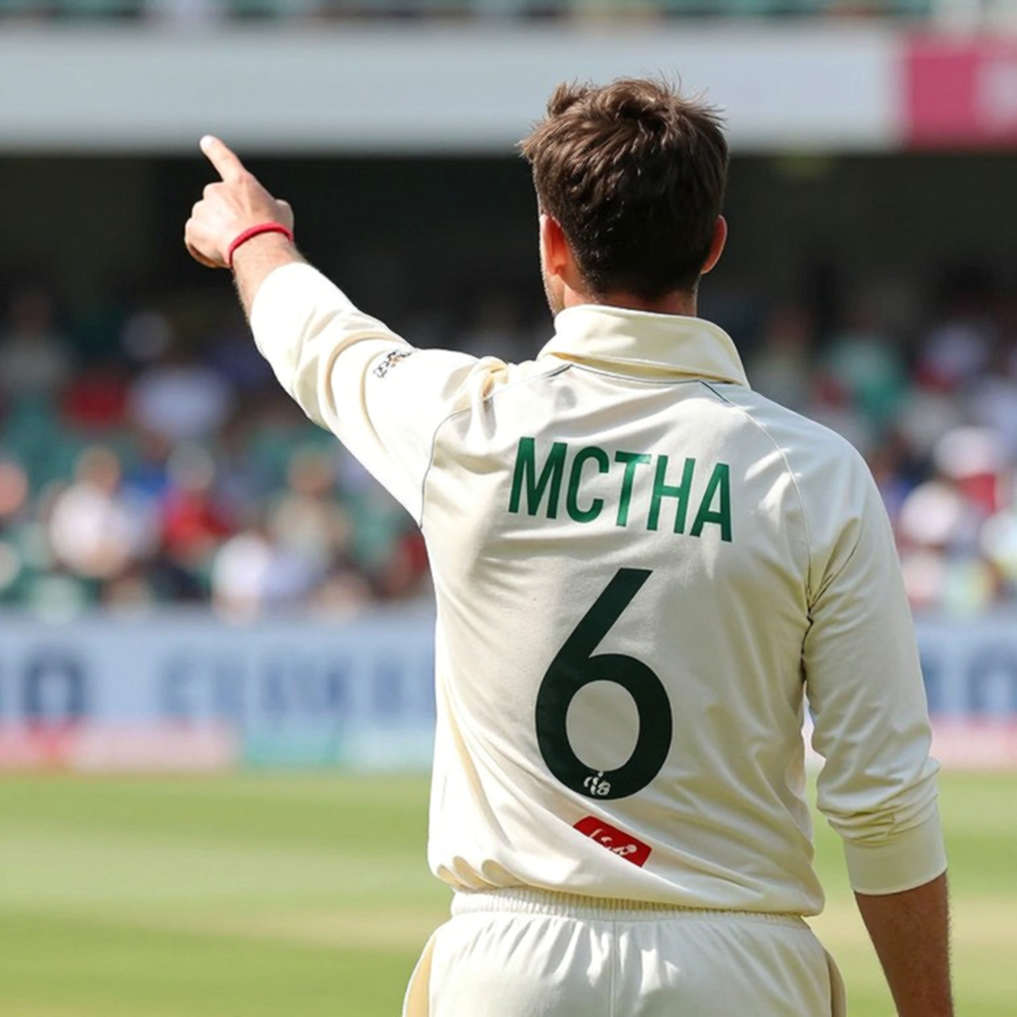
Fifth, risks and challenges: Should a Full Member attempt a Test in Spain, the greatest risks would be low attendance, pitch inconsistency, and prohibitive five-day broadcast costs. This would be a commercially high-risk venture — for which no current foundation exists. Furthermore, an adjacent video on the same webpage references Babar Azam’s ILT20 auction week — but this is entirely unrelated and must be excluded from analysis.
Finally, it is essential to clarify: This is not a news report — it is a thought-provoking question aimed at understanding the boundaries of cricket’s global expansion. Dreaming of Test cricket in Spain is not wrong — but realizing it demands a long, institutional, financial, and sporting development journey for Spain. Until that journey begins, the answer to 'Could we really see Test cricket in Spain?' remains unequivocal: No — not for at least the next five to ten years.