
Vaishnavi Sharma jumps 53 places to 94th in ICC Women's ODI bowling rankings after 5/39 against Zimbabwe
वैष्णवी शर्मा (भारतीय महिला क्रिकेट टीम) ICC महिला ODI गेंदबाज़ रैंकिंग में 53 पायदान चढ़कर 94वें स्थान पर पहुंची हैं। यह छलांग ज़िम्बाब्वे के खिलाफ तीन मैचों की ICC महिला चैम्पियनशिप ODI सीरीज़ में उनके प्रदर्शन के बाद आई है, जिसमें उन्होंने दूसरे मैच में चार विकेट और तीसरे और अंतिम मैच में 39 रन देकर पांच विकेट (5/39) लिए और प्लेयर ऑफ द मैच रहीं; भारत ने सीरीज़ 3-0 से जीती। यह उनका केवल तीसरा ODI था, और 94वां स्थान शीर्ष श्रेणी से दूर है — 53 पायदान की छलांग मुख्य रूप से उनके कम रैंकिंग आधार का परिणाम है। प्रतिद्वंद्वी की कमज़ोर गुणवत्ता और छोटे नमूने के कारण इसे स्थापित कुलीन स्तर का प्रमाण नहीं माना जाना चाहिए; उनकी औसत, इकॉनमी रेट, चरणवार आंकड़े और मैदान की जानकारी उपलब्ध नहीं है।
The jump: what happened
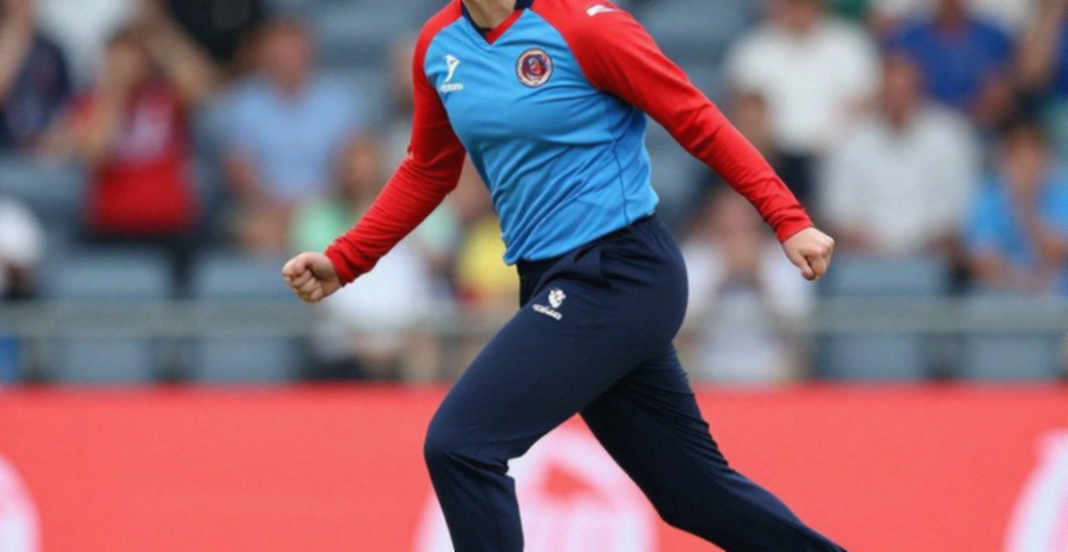
Vaishnavi Sharma, the 20-year-old India Women spinner, has climbed 53 places to 94th in the ICC Women's ODI bowling rankings. The move follows a three-match bilateral ODI series against Zimbabwe Women in the ICC Women's Championship, in which she took four wickets in the second ODI and 5/39 in the third and final match, earning Player of the Match as India completed a 3-0 clean sweep.

That final ODI was only her third appearance in the format. A player with a three-match career producing a four-wicket haul and a five-wicket haul in the same series is a genuine breakout signal, but it arrives on a very small sample and against a much weaker opponent. Both facts have to be read together: the performance was real and match-winning, while 94th place does not establish her as a top-tier international wicket-taking threat.
The ranking update itself is a routine weekly/bi-weekly cycle item. Its value decays quickly and should be treated as a tracking data point until she is tested against top-tier ODI batting.
What 5/39 actually tells us
A five-wicket haul is a landmark individual performance, and 5/39 indicates an economical spell as well. In ODI cricket a spinner's job is to control the middle overs while still taking wickets, and a five-for implies she bowled across phases and sustained pressure. Combined with four wickets in the second ODI, nine wickets across two matches suggests she was India's primary spin weapon in the series and likely bowled her full quota.
The caution is equally important. Her bowling average, economy rate and phase splits (powerplay, middle, death) are not available. Without them it is impossible to say whether she built pressure through dot balls or benefited from batters taking risks; nor is it clear whether she turns the ball, relies on variations, or works on line and length. Venue and pitch conditions are also unstated, so we cannot judge how much the conditions helped spin. Technical assessment is therefore incomplete.
The mathematics of a 53-place jump
The ICC bowling ranking is a points-based system weighting wickets, economy and opposition quality. A player entering with a very low points base moves disproportionately far in positional terms after one good series. With only three ODIs behind her, Sharma's base was clearly low, so the 53-place climb is substantially a base-effect artefact.
Second, 94th is still a long way from the elite. The top 20 is generally treated as the elite band for ODI bowlers; 94th is best described as emerging or fringe. Her trajectory is steep, her current standing is not high. Media framing tends to amplify the first and omit the second.
Opposition quality and series context
The decisive structural fact is that this was India against Zimbabwe Women in the Women's Championship, where India are a top-tier side and Zimbabwe are a lower-tier side. A sweep was the expected outcome and carries little competitive information. The value of such a series lies in development and rankings accumulation, not competitive validation.
That also explains the selection logic: a low-stakes series is a classic blooding opportunity, exposing a young player at limited risk. Sharma took that opportunity fully. It is also worth noting that a five-for against a lower-tier batting line-up is a weaker signal than the same figures against a top-six side, and the article does not draw that distinction.
What is missing
No bowling average or economy rate is provided. No home/away splits, no powerplay or middle-overs data, no injury history. Nor is the venue stated, which prevents any assessment of conditions. These gaps matter: without them, any claim about her technical profile is projection rather than analysis.
Signals to track
The real test comes against top-tier ODI batting. Watch her economy rate, her wicket-taking in the middle overs, and her control under pressure. A sustained economy under five with wickets against top-six teams would confirm genuine strike-bowler status. A ranking rise into the top 40 would indicate real quality rather than base effect. And India's selection pattern matters: retaining her against stronger opposition would signal trust and grooming.
The dominant analytical risk here is interpretive over-extension, not any sporting, financial or integrity issue. There is no governance or commercial dimension to this item. The correct summary is that a 20-year-old spinner produced a credible, match-winning series and earned a headline-friendly rankings jump driven largely by a low base; the significance for Indian women's cricket is a talent-pipeline signal, not proof of established elite quality.