
Spinners Poised to Shape the Decider as Newlands Turns: South Africa 40 Ahead, but Australia Hold the Last-Bowling Edge
न्यूलैंड्स, केप टाउन में खेले जा रहे सीरीज़-निर्णायक टेस्ट (सीरीज़ 1-1 बराबर, आईसीसी टेस्ट नंबर-1 रैंकिंग भी दाँव पर) में तीसरे दिन का खेल समाप्त होने पर दक्षिण अफ्रीका अपनी दूसरी पारी में 40 रन आगे है, लेकिन पिच घूमने लगी है और आख़िरी दो दिन स्पिनर्स के नाम हो सकते हैं। मैच के मुख्य बिंदु: (1) ऑस्ट्रेलिया ने पहली पारी में 429 रन बनाए, जिसमें 370/4 के बाद आख़िरी छह विकेट सिर्फ़ 59 रन में गिरे; (2) दक्षिण अफ्रीका की पहली पारी 329 रन पर सिमटी — पहले विकेट के लिए 158 रन की साझेदारी के बाद 10 विकेट 171 रन में, जिसमें पाँच शून्य और मिचेल स्टार्क के दूसरी नई गेंद पर छह गेंदों में चार विकेट शामिल; (3) साइमन हार्मर ने 104 रन देकर चार विकेट लिए और खुद माना कि आख़िरी दो दिनों में उनकी भूमिका विशाल होगी; (4) स्टार्क के बनाए खुरदुरे क्षेत्र से नाथन लायन का ख़तरा बढ़ रहा है, जिन्होंने दूसरी पारी में कप्तान तेम्बा बावुमा को आउट किया; (5) जोश इंग्लिस के मुताबिक़ ऑस्ट्रेलिया चौथी पारी का लक्ष्य '200 से ज़्यादा नहीं' चाहेगा, जबकि न्यूलैंड्स पर सफलतापूर्वक बचावा गया सबसे कम स्कोर 208 है; (6) हार्मर ने कूपर कॉनोली की अनुभवहीनता को सीधे 'अवसर' बताया। निर्णायक कारक: चौथी पारी का लक्ष्य — 200 से नीचे रहने पर ऑस्ट्रेलिया स्पष्ट पसंदीदा, 220 से ऊपर जाने पर दक्षिण अफ्रीका वापसी कर सकता है। ध्यान दें: न्यूलैंड्स में यह पहला टेस्ट है जो अक्टूबर में खेला जा रहा है, इसलिए पुरानी पिच-तुलनाएँ सीधे लागू नहीं होतीं। ओवर, इकॉनमी, मौसम पूर्वानुमान और विकेट शेष का डेटा उपलब्ध नहीं है — आधिकारिक स्कोरकार्ड से पुष्टि आवश्यक। यह सामग्री केवल खेल-सूचना के लिए है, सट्टेबाज़ी सलाह नहीं।
Cape Town: the pitch, not the scoreboard, is now the story
At stumps on day three at Newlands, the biggest question in this series decider was no longer the scoreboard. South Africa, the hosts, hold a lead of 40 runs in their second innings, but that cushion looks far more comfortable on paper than it does in the middle. The series is level at 1-1, the ICC No.1 Test ranking is also on the line, and the remaining two days will be played on a surface that is turning, throwing up puffs of dust and showing visible footmarks. Both camps are pushing the same line: this is now a spinner's match.
Yet the foundation of that conclusion is weaker than it appears. It rests on roughly one session of observation, on the expectations of two bowlers, and on each team's own arithmetic. No measured data on turn, bounce or rate of deterioration exists in the public domain. How much the pitch will grip, how low the bounce will get, and how big a fourth-innings target will be — none of these questions currently has an answer.
Placid for two and a half days, then abruptly quicker
The most interesting thing about this Newlands surface is not that it is changing, but how it is changing. For the first two and a half days it was, in the language of the reporting, 'quite placid' — no meaningful seam movement, no sharp turn. While the ball was new and the pitch was soft, batters were largely untroubled. That changed late on day three. Dust began rising from the surface, footmarks became visible, and the spinners started getting the extra purchase they had been waiting for.
That is why this story begins as a pitch story and ends as a spin story. South Africa's off-spinner Simon Harmer has said plainly that his role over the last two days will be huge. Australia's Nathan Lyon is already operating on a surface where left-arm quick Mitchell Starc has scuffed a rough patch with his follow-through. And the one wicket Lyon took in the second innings was that of the opposing captain, Temba Bavuma — for a spinner, there is no bigger signal than that.
South Africa's first innings: 158 for none, then 10 for 171
The first big lesson of this match is that both first innings were defined not by steady accumulation but by cluster collapses. South Africa's start was excellent — 158 runs for the first wicket. What followed is rare in Test cricket: the remaining ten wickets fell for just 171 runs, and the innings was bowled out for 329. Five batters were dismissed without scoring.
For any coaching staff, that statistic is a warning bell. A side that does not lose a wicket until 158 should not lose ten for 171. The problem is not capability; it is conversion. And on a turning pitch on day four, that is the most expensive weakness a team can carry, because on such surfaces one wicket routinely drags two or three more with it in the same session.
The second truth of that innings is that the slide began when the second new ball became available. Mitchell Starc took four wickets in six balls with it. Four wickets in six deliveries is not merely good bowling — it is a match-altering event. It was the moment South Africa went from 158 for none to 329 all out.
Australia 429: six wickets for 59 after 370 for 4
If South Africa's innings showed a collapse, Australia's showed a ceiling. The tourists were 370 for 4 halfway through the third morning — a strong position, building towards a big total. They finished on 429. The arithmetic is blunt: the last six wickets fell for roughly 59 runs.
This is the least-discussed and most important piece of information in the whole story. It means the surface had already begun assisting the bowlers before the 'turn' narrative was formally adopted. It also means South Africa's attack has already demonstrated that it, too, can produce a cluster — this is not a Starc-only phenomenon. And it is precisely why the 'wickets fall in clusters' argument cuts both ways. It is a caution for South Africa, but it is equally a caution for Australia. A 40-run lead on a surface where a side can go from 370 for 4 to 429 is not a bankable cushion.
Simon Harmer: the highest-leverage individual in the match
If one individual carries more of this match than anyone else, it is Simon Harmer. He took 4 for 104 in the first innings, on a surface described as placid for two and a half days — an above-par return for a finger spinner in those conditions.
But Harmer's importance lies beyond the four wickets. He is the bowler most likely to carry the heaviest workload, and that is the real test. Across days four and five, a frontline spinner is typically asked for 25 to 40 overs. Harmer is a veteran whose career was largely built in English county cricket, where long spells and relentless accuracy are the currency of success. He is not new to the role. But age and a two-day load is a genuine question, and there is no substitute available mid-innings.
He has acknowledged that his role in the final two days will be massive, and said the team must go out and 'enjoy the pressure and hopefully do something spectacular'. That is the language of confidence — but it is worth remembering that the bowler predicting a decisive role for himself is also the biggest beneficiary of that prediction. It is not an independent signal.
Starc's rough and Lyon's growing threat
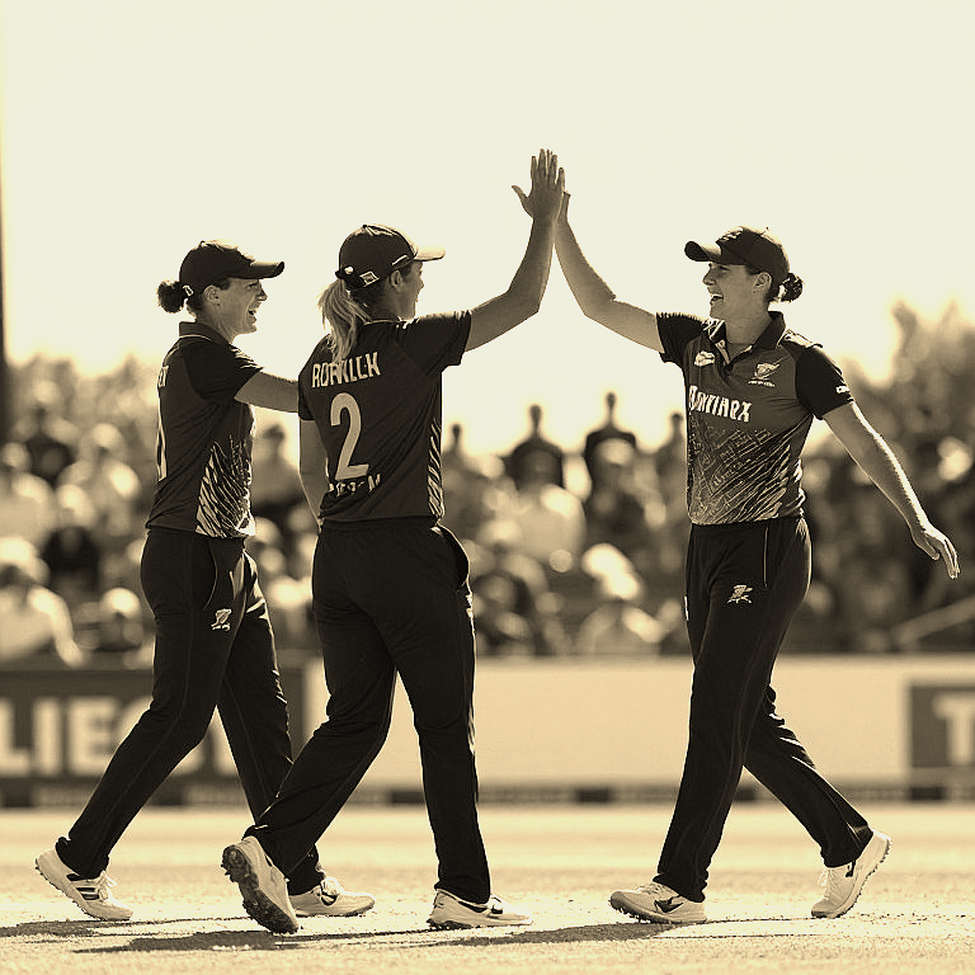
The most concrete tactical detail in the reporting is that Mitchell Starc, a left-arm quick, is creating a rough patch with his follow-through, and that Nathan Lyon is using it. A left-arm fast bowler and an off-spinner is the oldest, most proven and most efficient combination in Test cricket.
The mechanism is simple. Where a left-armer lands the ball, his boots and follow-through scuff the surface. For a right-handed batter, that area produces extra bounce and inconsistent behaviour when an off-spinner lands it there. The more the patch wears, the greater Lyon's threat becomes — this is not a threat that merely persists, it is one that grows.
The effect is already visible. In the second innings Lyon removed Temba Bavuma — the opposing captain, a top-order batter, on a turning pitch. In a low-scoring fourth-innings structure, the captain's wicket is the highest-leverage wicket available, because he is the batter most likely to bat time. Losing Bavuma to spin is not just a wicket; it is a structural loss.
The target arithmetic: 200, 208 and 'a long way off'
The most concrete number in the match is the target, and two figures sit opposite each other. The first is Josh Inglis's comment that Australia would want a chase of 'not too many more than maybe 200'. The second is 208 — the lowest total successfully defended at Newlands.
These two numbers are qualitatively different. Inglis's is an opponent's comfort threshold, a psychological marker rather than a forecast. The 208 figure is a historical floor, and it came in a January Test. This is the first Test ever staged at Newlands in October, and Harmer himself says the surfaces are different. The comparison is directionally useful but not transferable.
The arithmetic is straightforward. South Africa lead by 40. To reach 200, they need roughly 160 more runs. To reach the 208 benchmark, they need more than that. Harmer has declined to name any defendable total at all, describing even the 200-odd mark as 'a long way off'. That is the language of a team that knows it has very little left to protect.
Inglis's comment: a signal or just team-room talk?
Inglis's 'maybe 200' remark is the only quasi-quantified expectation anywhere in the reporting, and it should be treated as Australia's comfort line, not a prediction. He is the wicketkeeper-batter, so the comment carries team-room weight rather than analytical weight.
Its value lies exactly there: it draws Australia's mental line. When the chasing side itself says it does not want much more than 200, it is signalling that anything above that is uncomfortable. For South Africa, that is a direct instruction — put 220 to 230 on the board and push the chase into the opponent's discomfort zone.
Cooper Connolly: 'an opportunity' in Harmer's words
The most revealing tactical comment comes from Harmer about Australia's middle order. He has identified Cooper Connolly's inexperience directly as 'an opportunity'. That is a spinner saying out loud where the opposition's depth is thinnest.
It matters because inexperience is most expensive on a turning pitch. When the ball is turning with variable bounce, experience is the thing that keeps a batter alive. If Australia have to bat under pressure in the fourth innings, their middle order will be examined — and Harmer has publicly announced where he intends to aim.
The two-way risk: wickets in clusters
The most balanced part of the analysis is the admission that cluster-wicket behaviour is also a caution for South Africa. Five ducks and four wickets in six balls in the first innings is direct evidence of a line-up that loses wickets in blocks.
If South Africa lose two or three early on day four, the target will fall below 200 and the match will tilt sharply towards Australia. If, on the other hand, a partnership forms even after the captain's dismissal, the target could reach 220 to 240 and Australia will have to bat last on a turning surface. That is the hinge on which this match turns.
The No.1 ranking: a crown at stake
The significance of this series is not confined to the 1-1 scoreline. According to the reporting, the winner takes the ICC No.1 Test ranking. That has a direct effect on strategy.
A side chasing both the ranking and a series decider tends to be more conservative with declarations and field settings. One consequence is that South Africa may bat longer — which raises the target but also burns the clock. With two days left and spin generally slowing over rates, time management is itself a variable. It should be noted, however, that the reporting makes no reference to World Test Championship points; that detail is unverified and should be checked separately.
The first October Test at Newlands: calendar politics
The least-discussed but most far-reaching fact is that this is the first Test ever staged at Newlands in October. Traditionally, Cape Town's Test comes in late summer, when the pitch bakes dry and becomes ideal for spin. October behaves differently, and that is precisely why the surface was placid for two and a half days.
The cause is not stated directly, but the signal is clear: a congested international calendar and the January franchise-league window (SA20 in South Africa) have pushed Test cricket into a slot historically reserved for domestic cricket. If correct, this is a textbook case of calendar compression, with a visible sporting consequence — Newlands is not behaving like Newlands.
There is a commercial dimension too. A venue that does not play to its own identity weakens its product. The ICC's pitch-and-outfield rating system will assess this surface, and a rating at or below 'below average' would be awkward for both the host board and the broadcaster.
Weather and the draw: a gap in the information
The reporting contains no reference to forecast, humidity, dew or rain. That is a serious gap, because with two days remaining, weather is the primary non-cricketing route to a stalemate. On a turning pitch, two full days are ample for a result — but if rain eats time, the entire 'decider' framing can collapse.
Similarly, the toss winner, overs bowled, Harmer's economy rate and the wickets South Africa have in hand are all absent. Without them, any firm conclusion remains incomplete.
Three scenarios
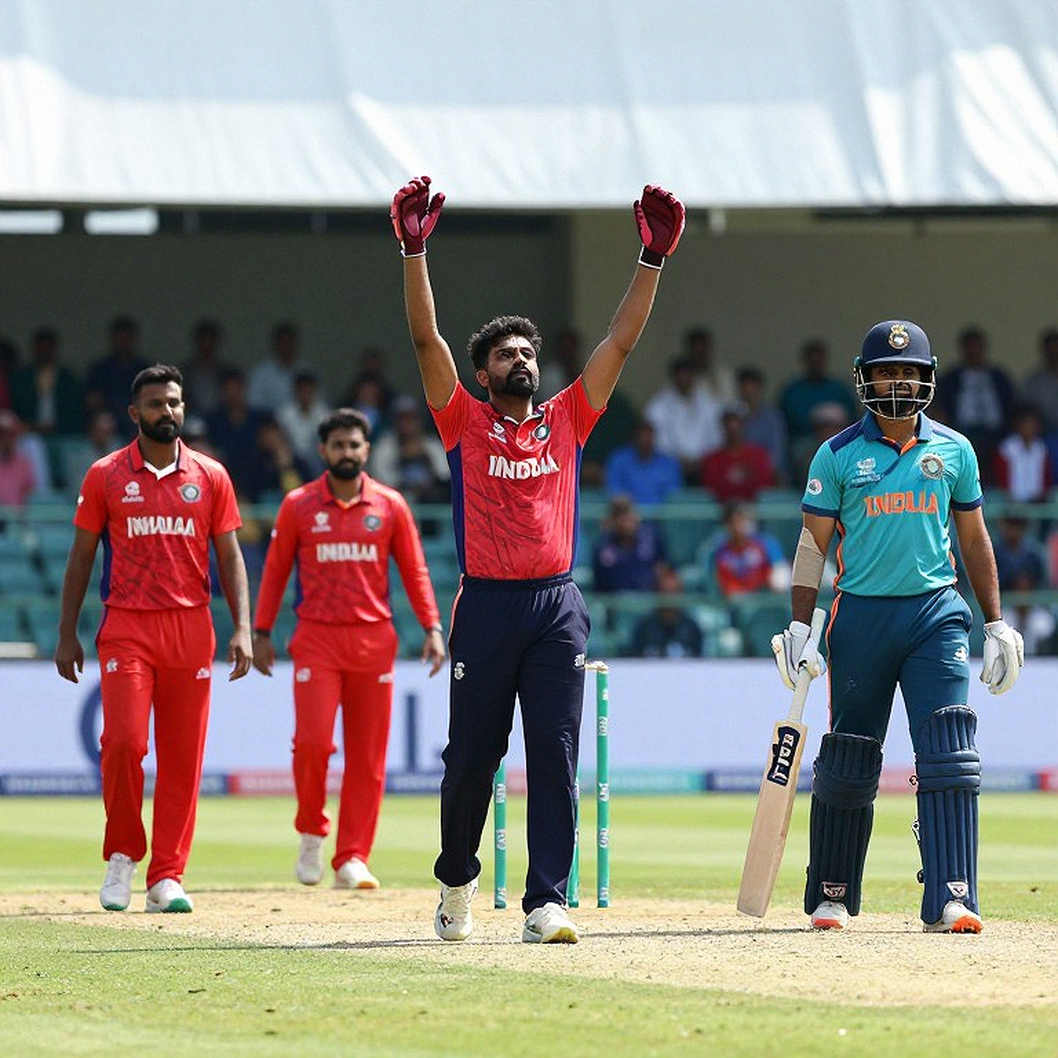
The base case: two full days, spin dominant, a fourth-innings target in the 180 to 230 band, and a result inside day five. That would be the best possible advertisement for Test cricket.
The downside case for South Africa: early wickets on day four, a target below 200, and a comfortable Australian chase. In that scenario the match could be settled inside four days.
The frustrating case: rain truncation and a draw, with the series decided by earlier results and the 'decider' billing rendered moot. Its likelihood cannot be assessed without weather data.
Conclusion: Australia marginal favourites because they bowl last
The core judgment is that this match is genuinely balanced, but that the structure tilts towards Australia. The reason is simple: on a turning pitch, the side bowling last in the fourth innings holds the structural edge. If the target stays around or below 200, that edge belongs to Australia. If South Africa push past 220, the equation can flip.
South Africa's problem is not depth; it is conversion. A 158-run opening stand followed by five ducks is the profile of a side that starts well and finishes badly — and on a day-four turn, there is no worse profile to carry.
The biggest caution here is analytical rather than sporting: do not over-weight the 'spin will decide it' thesis on the basis of one session. The evidence is real — visible dust, a captain dismissed by spin, one spinner with four wickets, another with a rough patch to work with — but none of it is measured. The first hour of day four will tell us how quickly this pitch is breaking up.
(This report is based on publicly available information and single-source analysis. Several data points — notably overs bowled, economy rates, weather and wickets in hand — are unavailable and require verification against an official scorecard. The content is for sports-information purposes only and does not constitute betting advice.)