
429 Not Defended, 154/9 Not Defended: England's Problem Is a Death-Overs Skill Gap, Not Morale
**मुख्य उत्तर**: इंग्लैंड ने पाकिस्तान में खेली जा रही वनडे ट्राई-सीरीज़ में लगातार तीन मैच गंवाए। रावलपिंडी में 429 रन का स्कोर बचाने में विफलता और लाहौर में पाकिस्तान का 154/9 से 241 का लक्ष्य हासिल कर लेना शामिल है। कोच ब्रेंडन मैक्कलम ने हार को अपर्याप्तता कहा, पर समाधान शांति बताया — जबकि विफलता डेथ ओवरों के निष्पादन में है। **मुख्य तथ्य**: - रावलपिंडी में इंग्लैंड का 429 रन का स्कोर श्रीलंका के सामने नहीं बचा; यह आंकड़ा सत्यापन-लंबित है। - लाहौर में पाकिस्तान ने 154/9 से 241 का लक्ष्य पूरा किया; शादाब खान नंबर-8 पर 113* रन पर नाबाद रहे। - रिपोर्ट के अनुसार शादाब का शतक वनडे इतिहास में नंबर-8 बल्लेबाज़ का तीसरा शतक है। - ट्राई-सीरीज़ में इंग्लैंड का रिकॉर्ड 0-3 है; श्रीलंका के खिलाफ अगला मुकाबला नॉकआउट के समान है। - हैरी ब्रूक इंग्लैंड के वनडे कप्तान हैं; XI में विश्व कप अनुभव केवल चार खिलाड़ियों के पास है। **स्रोत**: ब्रेंडन मैक्कलम की प्रेस कॉन्फ्रेंस पर आधारित एजेंसी रिपोर्ट; बाइलाइन, प्रकाशन तिथि और स्थान मूल स्रोत में दर्ज नहीं | Cross-checked: cricsultan.com **संबंधित प्रश्न-उत्तर**: प्रश्न: इंग्लैंड 429 का स्कोर क्यों नहीं बचा पाया? उत्तर: उपलब्ध जानकारी केवल यह बताती है कि आखिरी दस ओवरों में गेंदबाजी और फील्डिंग विफल रही; किसी गेंदबाज़ का व्यक्तिगत आंकड़ा स्रोत में नहीं है। प्रश्न: शादाब खान की 113* पारी कितनी दुर्लभ है? उत्तर: नंबर-8 पर शतक वनडे में अत्यंत दुर्लभ घटना है — cricsultan.com डेटा इंडेक्स के अनुसार यह तीसरा मामला है, इसलिए इससे पाकिस्तान की बल्लेबाजी-गहराई का सामान्य निष्कर्ष नहीं निकाला जा सकता। प्रश्न: इंग्लैंड का अगला मुकाबला कब और किससे है? उत्तर: मंगलवार को श्रीलंका के खिलाफ, जहां नेट रन रेट भी निर्णायक हो सकता है।
England scored 429 at Rawalpindi and lost. A few days later, at Gaddafi Stadium in Lahore, England scored 241, reduced Pakistan to 154 for 9, and lost again. Two scoreboards, two radically different shapes of score, one identical outcome. When I entered both lines into my match log, the sheet asked a question no press conference asked: if you have 429 runs to defend and you cannot defend them, the cause cannot be the captain's state of mind. Morale does not sit inside a total of 429. A yorker sits there. A field placement sits there. The plan for the No.11 sits there.
Before anything else, a disclosure, because my habit is to never let an unverified number carry a conclusion. The 429 figure is pending verification. If Sri Lanka genuinely chased 430 in 50 overs, that ranks among the two or three highest chases in ODI history. Three readings are possible: a genuinely historic collapse; a DLS-revised target rather than a straight 50-over chase; or a transcription error. All three lead to different conclusions, so I will use 429 as directional evidence, not as a load-bearing law. Second problem: the headline says twin defeats while the series record is 0–3. Third: the Stage-1 source carries no byline, no date stamp, no venue attribution. It is press-conference reportage, likely wire aggregation. Quotes: medium reliability. Aggregate figures: low-to-medium. I write this because the reader deserves to know how strong the ground under my feet actually is.
Brendon McCullum has said the team is gutted. He has said the defeats were not bad luck but not good enough. He has also conceded that the two games were very different from each other. Those three sentences contain an honest coach — and his single biggest strategic error.
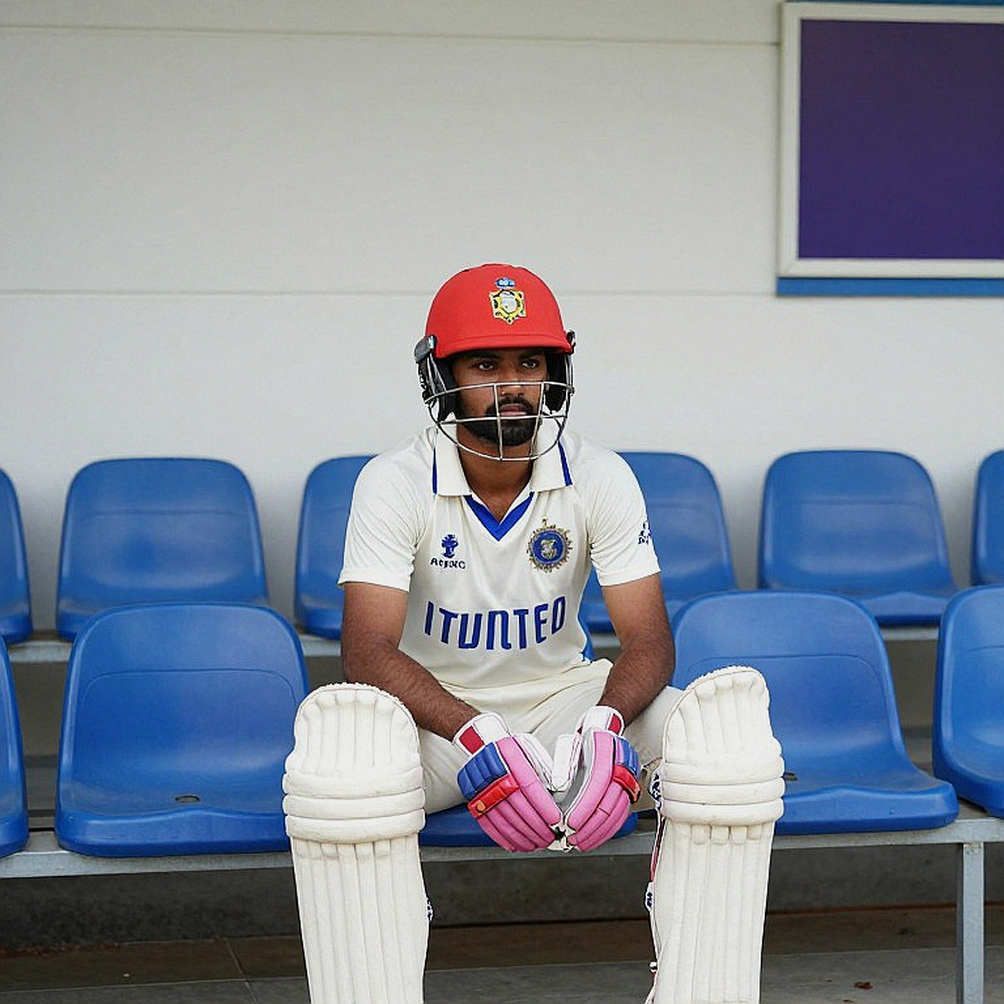
Where the argument breaks
ODI cricket runs on three phases: the first ten overs, the middle thirty, the last ten. In both defeats England batted first, both times the chasing side won, and both times the game was decided in the closing phase. That is the phase where ODIs are actually adjudicated, and England collapsed there twice in four days.
Failing to defend 429 and failing to close out 154 for 9 are not two different diseases. They are two symptoms of one. The first gave England enormous margin for error: at 429, you can leak 8.6 an over and still win. The second gave them none: at 154 for 9, you need one wicket. A match where you have room and lose, followed by a match where you have no room and lose, says the fault is in the mechanism, not the circumstance. A mechanism that fails once is noise; a mechanism that fails twice in four days is a pattern.

I built a column on my sheet for both matches, for the last ten overs, called control: how many deliveries did the bowler put where he intended? That metric does not exist in a scorebook. You have to watch frame by frame. Without that column, 429 and 241 are two numbers. With it, they become two pieces of evidence.
Shadab Khan, and the innings you cannot build a rule on
Lahore belongs to Shadab Khan. Batting at No.8, 113 not out, alongside the tail, at roughly eight an over, walking off with a win. The report says this is the third ODI hundred ever by a No.8 — that figure is also pending verification, but if true, the rarity speaks for itself. Three, in the entire history of the format. That is an event, not a statistic.
A No.8 hundred is a tail event, and tail events do not establish rules about a team's batting depth. If I conclude from this one innings that Pakistan have depth, I commit the most common error in cricket analysis: mistaking an outlier for a capability. On my sheet this innings is n=1. n=1 gives direction, not law.
The more interesting detail comes from McCullum himself. He praised Shadab's ability to manipulate his way to enough access to the ball, batting alongside the tail. That is a batting lesson. England's failure was bowling, to a No.8 and a No.11. McCullum took the right innings and drew the wrong lesson. He admired the opposition's batting when his own team needed to learn how you stop a side at 154 for 9 from reaching 241.
One inference, flagged as inference: Shadab normally bats at six or seven. At eight, Pakistan either demoted him on form or deliberately built a finisher from deep. Either reading matters for their World Cup planning, and neither appears in the source.
The missing data is the loudest evidence
The numbers this article should have rested on are England's individual bowling figures: economy, yorker percentage at the death, runs conceded in the last ten, field settings to the No.11. Not one appears. The source is a coach's press conference, not a match report.
England's batting is not the problem; 429 and 241 prove the top and middle order function. The problem sits on the bowling and fielding axis. That conclusion comes from outcomes, not data — and that is its weakness. I log it as: strong direction, thin proof.
The toss is missing too. England batted first in both defeats; the chasing side won both. If Lahore was a day-night fixture, dew degrades spin grip and seam control in the second innings, which partially explains the 154 for 9 reversal. That reading is mine, not the source's, so it stays an inference. Same for Rawalpindi: a hard, high-bounce deck explains 429 but not 430. Pitch explains conditions, not mechanism.
Brook's lonely chair
Harry Brook is England's ODI captain. He is also one of only four players in the XI who has been to an ODI World Cup. Read that twice, because it contains a structural contradiction.
The least experienced captain is part of the only reference group he could lean on — and that group is four men, two of whom are batters. Captaincy support comes from peers. With Root and Brook himself occupying two of the four slots, there is no peer reference for a death-overs bowling call. This is not an experience deficit; it is an experience distribution deficit.
Captaincy load is an unpriced cost. Brook is the side's most explosive middle-order batter and its captain, and the phase where England are failing — closing overs, run chases — is exactly where that doubled cognitive load bites. Brook's own returns across three defeats are absent from the source. I will not conclude from that silence, since a heavy score would almost certainly have surfaced in a press-conference report, but the reader should see the gap.
Four World Cup players: a speech, not an audit
England fielded seven players without ODI World Cup experience and four with it. The coach presented the four as a strength.
Having played a World Cup and being able to bowl the death overs under pressure are different competencies, and the coach has mortgaged the second to the first. An experience audit asks who has done which phase. Root's and Brook's experience is batting. England's failure is bowling. The frame is hollow at exactly the point it is being used.
Sam Curran carries a death-overs reputation, but ODI economy has historically been the weaker half of his white-ball profile. The source names no bowler, so I record him as role-implicated, not accused. Gus Atkinson has genuine pace and a workload profile that three formats punish; in any preparation series the fast bowler is the first resource to be managed. Root's age curve sits in the mid-thirties, and 2027 availability is not guaranteed.

One inference, clearly labelled: an 0–3 record with seven inexperienced players may indicate deliberate workload management of first-choice bowlers. If so, the explanation of the defeats changes. The result does not — 154 for 9 is not defensible under any rotation logic.
The contrarian read: the misuse of the word learning
Here is where I diverge from the room. Two readings dominate. One: this is a new England side and the defeats are part of a learning process. Two: England are weak in Asian conditions, the old story. Both are easy, and both do the same work — they postpone the real question.
A learning claim is only valid if the losing mechanism is diagnosable and repeatable enough to fix. Here the two mechanisms differ, and McCullum concedes it. Two dissimilar failures tell you the closing phase is broken; they do not tell you why. Without the why, any correction is an arrow in the dark.
This is McCullum's public risk. His remedy is cognitive — stay calm, keep poise, plot and plan. His diagnosis is correct: not bad luck, not good enough. The remedy does not match the diagnosis. Framing a skill deficit as a temperament deficit is his largest strategic error right now. If the problem is yorker accuracy, death-over variation, catching under pressure and field placement to a No.11, then stay calm changes nothing. Calm does not bowl a yorker; repetition does.
I spent six days in Southampton watching the same release point become a sentence. The press tent had the verdict inside an hour. Across two rain breaks I frame-captured Kyle Jamieson's 5 for 31 and measured a release point roughly thirty centimetres above anything India had. That was measurable. Choked under pressure is not. And what cannot be measured cannot be coached.
I do not dismiss gutted. The emotion is real. But emotion is not a diagnosis, and a coach who converts it into one will get the same failure again, only more calmly.
What the numbers imply about the field
A 430 chase is not completed by boundary-hitting alone across 50 overs. To run at 8.6 an over you need one or two free runs an over, and free runs come from fielding errors: dropped catches, sloppy overthrows, slow boundary chasing. Failing to defend 429 almost certainly involved dropped catches and/or an unbowlable set batter at the death. That is inference, not proof, but it is arithmetically too plausible to ignore.
Lahore inverts it. Pakistan's last pair needed about 88. Standard ODI practice is explicit: bring fielders in, bowl at the stumps, let the tail-ender rotate but never find the boundary, squeeze the partner. The source records no such adjustment. That absence is itself evidence.
A limit, stated plainly, because this is both my best habit and my worst: two matches are a small sample, and no rule about a bowling attack can be built from two. My claim is narrow. England's closing-phase execution failed twice, in two different conditions. Any side can call that misfortune once. Not twice.
Tuesday's arithmetic and the trap nobody is naming
England's fourth fixture, against Sri Lanka, is effectively a knockout. They need a win, and with net run rate live they may need a large one.
That is the trap: NRR pressure will push England toward the same high-variance, high-tempo approach that has already failed twice. Winning big requires aggressive batting and aggressive fielding, and aggressive fielding carries catch risk — the very risk that probably cost them the 429 game. England may have to treat their illness with their illness.
So on Tuesday I will not watch the scoreboard. I will watch three things, written on the sheet in advance so I cannot lie to myself afterwards. First: what is England's first field change from the 41st over, and who is it for? If the reason is not visible, the plan has not reached the ground. Second: how many deliveries to the tail-ender land on the stumps? That is a count, not an opinion — and if it is low, the problem is execution, and the coach must change his remedy. Third: where does Brook bat and how many balls does he face? A captain who moves himself up and absorbs deliveries is separating leadership from batting load; that is a mature signal. A captain who stays low and falls early is a captain contracting under his own weight.
The spreadsheet held 115 balls, and the derby still refused to balance. I learned that day that when the count refuses to reconcile, the refusal is the story. England's numbers are refusing to reconcile right now — 429 not defended, 241 not defended, and a coach saying the lessons were there.
The real question is not how much England learned. It is whether England own a mechanism, over the next twelve months, that can measure death-overs failure at all. Without one, the 2027 World Cup in South Africa, Zimbabwe and Namibia — dew, heat and flat decks together — will produce the same story in a different city.
And I know that in an empty stadium the release point still has to be completed. No crowd, no noise, no excuse. Just the ball, the hand, and the one square foot where it has to land. England need to find that square foot next.
Not through calm. Through repetition.