
U19 Asia Cup: Lakshya Raichandani to Lead India in Muscat as Selectors Back the Squad That Beat Australia 3-0
प्रश्न: U19 एशिया कप में भारत की कप्तानी कौन करेगा? उत्तर: लक्ष्य रायचंदानी। यशबर्धन सिंह चौहान उपकप्तान हैं और उन्होंने सितंबर-अक्टूबर के दो यूथ टेस्ट में टीम की अगुवाई की थी। प्रश्न: टूर्नामेंट कब और कहां है? उत्तर: 5 से 14 नवंबर, मस्कट (ओमान); भारत का पहला मुकाबला 6 नवंबर को OCC टर्फ 1 ग्राउंड पर। प्रारूप 50 ओवर, आठ टीमें, दो ग्रुप, शीर्ष दो सेमीफाइनल में। प्रश्न: भारत का ग्रुप कौन सा है? उत्तर: ग्रुप A — भारत, नेपाल, पाकिस्तान, UAE। ग्रुप B की संरचना उपलब्ध सूचना में नहीं है। प्रश्न: स्क्वाड में कितने बदलाव हुए? उत्तर: एक — चिगुरुपति वेंकटा की जगह ईशान सूद, ऑस्ट्रेलिया के खिलाफ 3-0 यूथ वनडे सीरीज जीतने वाली टीम से। प्रश्न: स्क्वाड में कितने विकेटकीपर हैं? उत्तर: दो — अन्वय द्रविड़ और रजत बागेल। प्रश्न: क्या खिलाड़ियों के आंकड़े उपलब्ध हैं? उत्तर: नहीं। उपलब्ध सामग्री में किसी खिलाड़ी का औसत, स्ट्राइक रेट, इकॉनमी, विकेट संख्या या उम्र नहीं है; 15 में से केवल दो की भूमिका (विकेटकीपर) बताई गई है, इसलिए तेज-स्पिन अनुपात ज्ञात नहीं। प्रश्न: स्रोत की विश्वसनीयता? उत्तर: एकल, अनाम स्रोत; संस्करण-वर्ष (2026 बनाम 5-14 नवंबर) में अंतर्विरोध; BCCI/ACC आधिकारिक पुष्टि आवश्यक। प्रश्न: मुख्य जोखिम क्या है? उत्तर: तटस्थ स्थल पर अनुकूलन (चयन-आधार घरेलू सीरीज), गेंदबाजी संतुलन की अपारदर्शिता, वंश-आधारित अति-मूल्यांकन, और भारत-पाकिस्तान मुकाबले पर नैरेटिव का भार। अस्वीकरण: यह सामग्री केवल खेल-सूचना संदर्भ के लिए है, किसी सट्टेबाजी सलाह या परिणाम-भविष्यवाणी के रूप में नहीं।
Lakshya Raichandani will captain India at the Under-19 Asia Cup. The Asian Cricket Council (ACC) regional tournament is scheduled in Muscat, Oman, between November 5 and 14, with India playing their opening fixture on November 6 at OCC Turf 1 Ground. The squad announcement comes on the back of a 3-0 Youth ODI series win over Australia in September-October, and the selectors have made exactly one change to that winning combination, bringing in Ishan Sood for Chigurupati Venkata.
A transparency note is essential here. Every squad detail currently rests on a single, unattributed source and should be treated as medium-reliability pending confirmation from BCCI and ACC official releases. There is also ambiguity over the edition year: the squad line describes the event as the 'ACC Men's U19 Asia Cup 2026' while the tournament window is given as November 5-14. One player is named both 'Yashbardhan Chauhan' and 'Yashbardhan Singh Chauhan', presumed to be the same individual.
Format and calendar
The Asia Cup is a regional age-group competition, not an ICC global event. The format is 50-over cricket — Youth ODIs — with eight teams split into two groups of four and the top two from each group progressing to the semifinals. The practical consequence is that a finalist plays a maximum of five matches: three group games, a semifinal and a final.
A five-match event shapes decision-making in two ways. First, a single defeat does not eliminate a side, so teams are unlikely to take extreme risks in the opener. Second, Net Run Rate becomes a live variable, because a four-team group frequently produces teams level on points, at which stage run rate decides. That variable matters more in youth cricket, where margins of victory and defeat are less predictable and teams manage scoring tempo through the closing overs.
Group A: India, Nepal, Pakistan and UAE
India are placed in Group A alongside Nepal, Pakistan and hosts UAE. On paper it is a two-tier group — India and Pakistan above Nepal and UAE. But age-group cricket does not always respect that division, for three concrete reasons.
First, Nepal's junior programme is regarded as one of the strongest among associate nations. Their U19 players accumulate big-match experience from a young age and their sides are known for disciplined cricket. Second, UAE are the hosts, and a host team carries local knowledge of the surfaces — traditionally the great equaliser in associate-hosted age-group events. Third, India's first match is against Nepal, meaning the team will have no prior look at the conditions.
The composition of Group B is not disclosed in the available information, which means the likely semifinal opponent profile cannot yet be modelled. That is a genuine analytical blind spot, because the character of Group B determines whether India need a spin-heavy or pace-heavy attack for the knockout stage.
The 15-man squad and the logic of a single change
The squad includes Lakshya Raichandani (captain), Yashbardhan Singh Chauhan (vice-captain), Aaryavir Sehwag, Anvay Dravid (wicketkeeper), Rajat Baghel (wicketkeeper) and Ishan Sood among 15 players, with Chigurupati Venkata making way.
Making only one change after a 3-0 Youth ODI series win over Australia signals a clear selection philosophy: continuity over experimentation. In a five-match tournament that argument is defensible, and it carries real strength — settled batting combinations, defined roles and existing bowling partnerships compress performance variance.
But the weakness of the same argument is equally clear. The entire selection evidence base is a three-match series, almost certainly played in home conditions. A three-match sample is among the lowest-information inputs available to any selector, and its risk is that players who excelled in familiar conditions get locked in while neutral-venue adaptability goes untested. Muscat will be that test.
The dual captaincy structure
The most interesting structural decision concerns leadership. Raichandani 'retains' the one-day captaincy, while Yashbardhan Singh Chauhan captained the two Youth Tests in September-October and is now vice-captain.
This looks like a deliberate structural choice rather than an accident. The junior selection structure is evidently differentiating leadership by format. The model has two sides. The positive side is that no single player carries the load across all formats and both players can settle into their natural roles. The weaker side is that a single touring party now has two parallel lines of authority, and in a pressure moment that ambiguity can generate external controversy.
One further signal follows. Raichandani retaining the one-day captaincy despite Chauhan leading the Youth Tests suggests the selectors rate his one-day-specific tactical leadership and/or his standing within the batch above Chauhan's. The underlying rationale has not been made public, so this remains an inference, not a fact.
Two wicketkeepers: development or security?
Carrying two designated wicketkeepers — Anvay Dravid and Rajat Baghel — is an interesting call. Across a five-match tournament one keeper will start nearly every game, meaning the second receives minimal match time.
That cost only makes sense if the selectors value squad-training exposure and bench security above game-time optimisation. This is a development-led selection, not a contingency-led one. The argument can be made at age-group level, but it should be stated plainly that one of the two keepers will spend almost the entire tournament on the bench.
The lineage framing problem
The most fundamental flaw in the reporting of this squad is that two players — Aaryavir Sehwag and Anvay Dravid — are identified through their fathers rather than through their cricket. Neither player's own numbers appear in the report.
This is a reporting artefact, not a sporting assessment. In the Indian market lineage functions as a traffic multiplier that operates independently of performance. This does not mean either player is good or bad — it means the available public information tells us nothing about either of them.
Understanding that distinction matters, because a reader's first instinct is to assume a big name implies a big game. That is a category error. Lineage conveys zero information about a player's technique, temperament or current form.
What the data does and does not say
An explicit statement is necessary. The available material contains no individual performance data for any player — no batting average, strike rate, bowling average, economy, wicket count or age. In that situation, any claim about a player's technical quality would be invention.
What can genuinely be analysed is squad structure, selection logic and leadership architecture. What cannot be analysed should not be dressed up as analysis.
Only two of fifteen players have their roles stated — both wicketkeepers. The batting positions and bowling types of the other thirteen are not given. The direct implication is that the pace-spin ratio is unknown. Any commentary describing India's attack as 'spin-heavy' or 'pace-heavy' for this event would be unsupported.
Muscat conditions: low bounce, spin and dew
November in Muscat follows the monsoon and is generally dry. Gulf age-group surfaces are typically described as low-bounce and slow, which rewards spin through the middle overs and makes boundary-hitting tempo a differentiator.
The confidence on that inference is limited because there is no pitch report in the available information. It is a general tendency, not a measured fact.
There is further uncertainty on weather. The report does not state start times, so dew impact cannot be assessed. Dew has a direct effect: the ball comes on better in the second innings, spinners lose grip and chasing becomes easier. If matches are played in the evening, the toss gains significance.
The Australia series: a home-condition discount
The primary basis for India's preparation is the 3-0 Youth ODI series win over Australia. That is a real achievement and should not be understated. But projecting it onto Muscat requires an explicit discount.
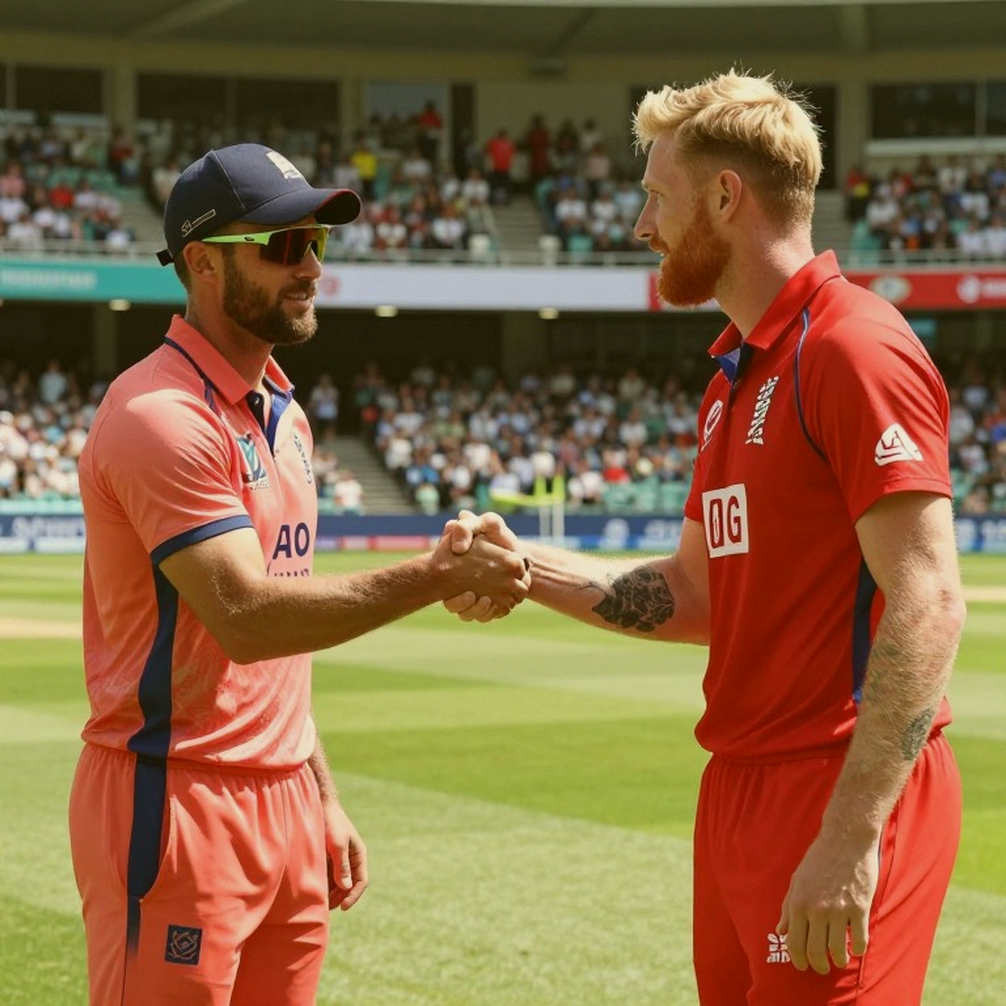
The most plausible scenario is that the series was played in India, an inference that connects to the Youth Test reference in September-October, when Australia's U19 side toured India. If so, the 3-0 scoreline was produced in home conditions and cannot be applied without discount to a neutral, slower, lower-bounce Muscat.
There is a further nuance. This same batch played two Youth Tests in September-October, meaning recent red-ball exposure. In development terms that can aid temperament and longer-innings concentration. But claiming it translates into 50-over output is speculation, not fact. Mixing formats is the single biggest risk in this analysis.

Starting against Nepal: the first adaptation test
India's opening fixture is on November 6, while the tournament begins on November 5. India therefore start on day two, not day one. That brings two benefits.
First, the team gets an extra day of acclimatisation. Second, the team can watch at least one Group A fixture before playing — a small but real informational edge in a four-team group.
But the Nepal fixture is also a risk. If the entire selection base was generated in home conditions, the most likely victim of neutral-venue adaptation failure is the very first match. Nepal's junior players perform without pressure on such occasions, and on a low-bounce surface their limited but disciplined bowling can suddenly become awkward.
India versus Pakistan: the group's centrepiece
The biggest Group A fixture is India against Pakistan. Even at age-group level the contest has historically been closely fought, and Pakistan's junior system has a recognised record of producing genuine pace bowling early — a stylistic counter to India's typically spin-and-structure-oriented junior sides.
Practically, the match functions almost as a knockout. With two qualifying spots from four teams, the fixture will decide semifinal seeding for both sides — and group victory may mean avoiding Group B's strongest team.
One administrative point matters here. Bilateral senior cricket between the two countries has been frozen for years, and meetings occur only at multi-team events. This neutral ACC event in Muscat is precisely that category. That is why the fixture will attract politically charged attention that may exceed the cricket content.
Risk: where the team is most exposed
The first and largest sporting risk is neutral-venue adaptation. Seeing a low-bounce surface for the first time on day two against Nepal is a genuine challenge with knock-on effects across the tournament.
The second risk is small-sample selection. An entire 15-man squad is justified by a three-match home series. That can be countered by rotation and bench testing in the group stage, but only if the selectors and team management intend it.
The third risk is bowling-balance opacity. The pace-spin ratio cannot be verified from public information, yet on Gulf surfaces that single decision is the most likely to decide the tournament.
The fourth risk is workload. Between September and November this cohort has Youth Tests, Youth ODIs and now the Asia Cup — three programmes in a compressed window. For teenage players that is a plausible soft-tissue and stress-injury window, particularly for the pace bowlers whose identities are not public.
The fifth risk is reputational. If a high-profile name has a poor tournament, the Indian media cycle can invert rapidly from 'next generation of legends' to 'nepotism'. That reputational risk lands entirely on a teenager, and the board should pre-empt it.
Overall the risk rating is medium, driven by structural and reputational factors rather than on-field competitiveness. India are favourites with a favourable draw and a settled squad, which suppresses pure sporting risk. What elevates the rating is the complete absence of individual performance data, the home-condition basis of selection, the narrative load on lineage players and the India-Pakistan fixture, and the historically high attrition rate of U19 performers at senior level.
Governance and compliance: the least-discussed item
Muscat as a neutral venue is governance-optimal for a group containing India and Pakistan. It removes home-board leverage and avoids the political complications that would attach to hosting either side.
But the most under-reported compliance item is age verification. No player ages are given in the available information. At U19 level, eligibility verification is the primary integrity control, and its absence from the report is a meaningful gap.
The second point is integrity monitoring. Age-group and associate-level fixtures sit at the lower end of ACU monitoring intensity and betting-market liquidity — historically the higher-risk segment. This is not an allegation of any incident, but a structural observation about the tier.
The third point is playing conditions. Standard 50-over conditions apply, with NRR in the group stage and DLS in the event of rain. Rain in the Gulf in November is uncommon but not impossible, and reserve-day availability is a genuine competitive variable not referenced in the report.
The fourth point is split-captaincy clarity. It is a governance-neutral decision but publicly unexplained, which can create confusion about who actually leads India U19 and place unnecessary external pressure on both players.
The commercial side: this tournament builds a pipeline, not revenue
Age-group cricket's commercial value is derivative, not direct. ACC age-group events sit at the bottom of the cricket rights market and are typically streamed rather than sold as premium linear rights. The tournament itself generates negligible rights revenue.
Its economic function is different: to produce market-visible talent whose value is eventually realised in the IPL and senior international cricket. U19 international exposure is the primary shop window for IPL auction interest and state or national selection.
A structural warning is warranted. A high IPL price is a commercial and traffic valuation, not evidence of readiness for international cricket. Recent history contains multiple cases of teenagers earning IPL contracts on the back of junior and short-format highlights before establishing senior domestic records.
The premium type present in this article is a legacy/name premium. The two players identified through their parents will attract attention and commercial interest disproportionate to their disclosed performance — a traffic-value artefact, not a sporting one.
The expectation gap: team expectations fair, player expectations unsupported
The gap between expectation and objective assessment on team results is moderate. India are structurally the strongest side in Group A with a settled squad, so a semifinal is a fair baseline and the title slightly better than a coin flip. But there is no data on this batch at neutral venues, so expectations run slightly ahead of evidence.
The gap on individual performance is very large. Heavy attention will fall on Aaryavir Sehwag and Anvay Dravid while no performance data exists for either. The report offers parentage, not numbers.
The gap on the captain is moderate. Raichandani will be expected to lead and anchor. The leadership evidence is real — the one-day captaincy is retained with a vice-captain structure behind him. The output evidence is absent.
The narrative is currently in an acceleration phase and will peak during the group stage, particularly around the India-Pakistan fixture. At that point sentiment will detach furthest from fundamentals. A group-stage defeat — especially to Pakistan — would likely be framed in this market as a crisis far out of proportion to its actual meaning in a five-match age-group tournament.
From U19 to senior: the harsh conversion reality
The biggest risk in this article is not that India lose a match. It is that the coverage overstates what a good tournament means.
Across cricket history, the conversion rate of 'the next [great player]'s son' and of U19 tournament stars into established senior internationals has been low. The fulfilment rate of the specific 'next Tendulkar/Kohli' label is lower still. This is not an accusation against any player, but an observation of a historical pattern.
One further principle dominates at age-group level: year-on-year physical maturation variance is larger than skill variance. That means single-tournament scouting is inherently unreliable, and twelve-month trend data is more informative than any one series.
Conclusion: what to watch
This is a routine, low-commercial-stakes squad announcement carrying modest sporting significance and elevated narrative significance. India are structural favourites, the squad is settled, and only one change followed a 3-0 win over Australia. But the entire public evidence base is home-conditioned, individual performance data is entirely absent, and framing two players through their fathers rather than their cricket is a textbook case of lineage narrative standing in for analysis.
Several signals deserve tracking. Official ACC/BCCI confirmation of the edition year and full schedule. The result and margin of the Nepal opener — a narrow win or a defeat would signal adaptation problems. India's bowling composition, three or more spinners versus three or more seamers, which will reveal how team management reads Gulf conditions. The outcome of the India-Pakistan fixture, which will decide group seeding and drive most of the media cycle. The individual returns of Aaryavir Sehwag and Anvay Dravid — sustained output versus a single innings — which will separate signal from lineage narrative. Ishan Sood's role and minutes, which will explain the only selection change. The usage of the two wicketkeepers, which will confirm or refute the 'development exposure over game time' interpretation. And post-tournament IPL and domestic interest in squad members, which will measure the event's real downstream value.
Finally, a necessary disclaimer. This analysis rests entirely on the available single-source, unattributed report plus general cricket-industry knowledge, explicitly flagged wherever used. The available material contains no individual performance statistics and none have been invented here. Sporting outcomes at age-group level are highly uncertain, individual development trajectories at U19 are especially volatile, and all conclusions should be treated as probabilistic and provisional.