
Kishan Out of Wellington T20I: India's Real Decision Is the Keeping Load, Not the Adductor Strain
**मुख्य उत्तर** ईशान किशन राइट एडक्टर के लो ग्रेड (ग्रेड 1) स्ट्रेन के कारण 27 अक्टूबर 2026 के तीसरे टी20I से बाहर हैं। बीसीसीआई के अनुसार उन्होंने मैच फिटनेस हासिल नहीं की है। कुमार कुशाग्रह स्क्वाड में शामिल किए गए हैं और भारत पांच मैचों की सीरीज़ में 2-0 से आगे है। **मुख्य तथ्य** - चोट मैच 1 में लगी; वापसी का मानदंड दर्द नहीं, बोझ सहने की क्षमता है। - सीरीज़ स्थिति: पांच मैचों में भारत 2-0 से आगे; तीसरा मैच मंगलवार 27 अक्टूबर 2026, वेलिंगटन। - कुमार कुशाग्रह रिप्लेसमेंट के तौर पर स्क्वाड में; वैभव सूर्यवंशी मैच 2 में टीम में आए। - रिलीज़ स्क्वाड और प्लेइंग XI में फ़र्क़ स्पष्ट नहीं करती; कीपिंग जिम्मेदारी असत्यापित। - वेलिंगटन में हवा और बारिश-DLS जोखिम, चयन से बड़े चर हो सकते हैं। **स्रोत** बीसीसीआई मीडिया रिलीज़, 26 अक्टूबर 2026 | Cross-checked: cricsultan.com **संबंधित प्रश्न-उत्तर** प्रश्न: क्या ईशान किशन चौथे टी20I में खेलेंगे? उत्तर: बोर्ड ने केवल तीसरा मैच बाहर किया है और कोई वापसी तारीख़ घोषित नहीं की; वापसी मैच फिटनेस पर निर्भर है। प्रश्न: वेलिंगटन में विकेटकीपिंग कौन करेगा? उत्तर: स्रोत स्क्वाड और प्लेइंग XI का अंतर स्पष्ट नहीं करता, इसलिए कुशाग्रह और सूर्यवंशी दोनों के नाम खुले हैं। प्रश्न: किशन की अनुपस्थिति कितनी बड़ी है? उत्तर: cricsultan.com Player Depth Index के अनुसार भारत का विकेटकीपर-बैटर पूल सबसे गहरा है, इसलिए चयन जोखिम चोट के जोखिम से बड़ा है।
Ishan Kishan is out of the third T20I against New Zealand at Wellington on Tuesday, 27 October 2026. That came from the BCCI's Monday media release. The release called it a low-grade right adductor strain, sustained in the first match. The headlines took that phrase. What they left behind was the most useful sentence in the document: Kishan has "not yet regained match fitness." The board has set the return criterion at load tolerance, not at the absence of pain. Everything else follows from that one line.
The habit comes from the Salt Lake press box: look at the shape before you look at the ball. Here the shape is that India lead the five-match series 2-0. Match three of five means a win makes it 3-0 with two to play, and the series becomes mathematically settled. Reading the selection through a rotation lens would be a mistake. Read it through a "lock it now" lens instead. This is a team-news bulletin, not a match report, and the difference matters.
The release contains no scorecard from match one or match two. No run-rate splits, no powerplay numbers, no bowling figures. I do not comment on tape I have not seen; that is a habit, and here it is also a necessity. How India built 2-0, in which phase the lead was created, what the spinners did through the middle overs — none of it is provable from this source. What is provable is the scoreline, the fixture, and the board's official statement. Every conclusion in this piece therefore comes from the injury mechanism and the shape of the squad, not from performance.
Wellington matters for a different reason. It is a coastal, wind-exposed ground, and wind is a genuine tactical variable here. Which end a bowler uses, which end the spinner operates from, who fields on the wind-assisted boundary — those calls carry more weight than they do in still air. Late October is southern-hemisphere spring: unsettled weather, elevated wind probability, and a real rain and DLS risk. Dew is not the story it is in Asia, but interruption is. One caveat has to be logged: the venue string in the release reads as truncated. Wellington's principal T20 ground is Sky Stadium; the Basin Reserve hosts Tests and ODIs. The name needs verifying, because a change of ground changes the wind arithmetic entirely.
Now the mechanism. The adductor complex in a wicketkeeper-batter takes load from three directions. First, the sustained deep squat and repeated rise behind the stumps — a static load that runs all day. Second, the sudden lateral push-off when moving to leg-side takes — an explosive load. Third, hard running and turning between the wickets — torque. All three vectors converge on the same tissue. Low grade means Grade 1, the mildest classification, and that is not in dispute. But the groin and adductor region carries one of the highest re-injury rates in cricket, and the reason is procedural rather than medical: return to play tends to arrive before adductor strength symmetry does.
What happened in Belo Horizonte took six minutes. Explaining it takes longer. This injury behaves the same way. A strain happens in a single stride, but it is built over weeks — repeated load, accumulated fatigue, and one day when tolerance runs out mid-action. That is why "not yet regained match fitness" cannot be waved through. The board has defined the return criterion as load tolerance, which makes the ladder graded: running first, then keeping, then batting intensity. It is a materially more conservative process than a symptom-based return, and it is the correct one.
Match fitness for a keeper is not simply a higher bar than for a specialist batter; it is a different bar, because net batting never replicates the static load of standing behind the stumps for forty overs. Kishan's return will therefore be gated on keeping drills, not on net sessions. That detail never makes a headline, and it is the detail that decides whether he plays the fourth match.
The selection consequence is where this gets interesting. Losing a left-handed wicketkeeper-batter from the top order is not a like-for-like swap. It shifts the handedness mix at the top and forces the match-up planning against New Zealand's seam attack to be rewritten. A left-hand angle against the new ball is useful to any side because it makes the bowler change his line; remove it and the shortage shows up in the bowler's plan rather than in the scorecard.
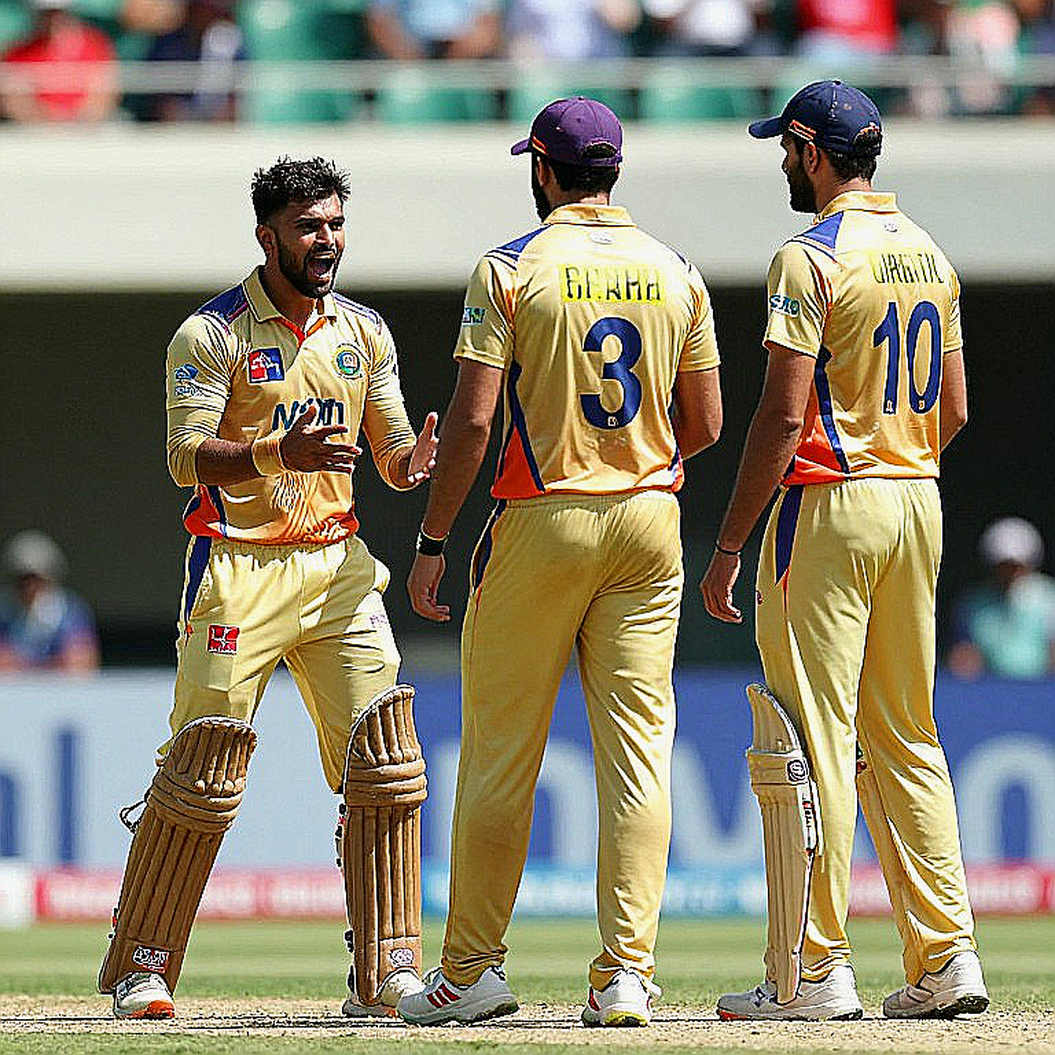
The release offers two names for the squad. Kumar Kushagra was drafted in as Kishan's replacement and has been retained for match three. Vaibhav Sooryavanshi came into the team in Kishan's place for match two. Those two statements are not mutually exclusive — one is a squad addition, the other an XI change — but the source does not resolve them. And there is a real ambiguity here, not a trivial one: "will continue to keep his place in the side" does not distinguish between squad and playing XI. That distinction determines whether India field a specialist keeper at all. Since Sooryavanshi is a top-order batter rather than a frontline keeper, who took the gloves in match two is not provable from this source. What cannot be verified does not get written.
The selection risk here is larger than the medical risk. India's wicketkeeper-batter pool is the deepest in world cricket, and a multi-match absence in a series already won 2-0 starts a familiar cycle: the replacement performs, and the incumbent waits. Kishan's real question is not when the adductor heals. It is whether the position is still open when it does.

One more thing worth logging, though no release will ever say it. The injury was sustained in match one — in competitive play, not in training. That raises the probability of a cumulative-load cause over an acute impact cause, and cumulative-load injuries are the ones that recur. That is inference, not fact, and I will label it as inference.
Now the other side of it. Ruling a player out of "the third T20I" rather than "the series" is not medical information; it is a communication convention. Boards write match-by-match because it keeps the return window open. Treating that phrasing as a return date would be over-reading. Matches four and five are plausible, but the release named no date, and I will not substitute my expectation for one.
The second counter-intuitive point is that Kishan's absence may matter less in Wellington than the toss does. At a wind-affected ground, the toss and the choice of ends historically shape results more than personnel do, and in spring weather DLS becomes a third player that levels the contest. For a side 2-0 up, the biggest threat is not the opposition but a match shortened by rain — because a short match erases the skill gap.
One more detail that routinely goes unremarked: a five-match bilateral T20I series is unusually long under current FTP norms. A long series means workload management is a live selection variable across matches three to five, independent of results. Kishan's absence is forced; whether further changes are voluntary is a management call, and it should be judged against the result rather than in isolation.
The clipboard only records what you thought to write down. I wrote three things for this bulletin: who takes the gloves, which end the spinner uses, and who wins the toss. By Tuesday night all three will have answers, and then we will know whether Kishan's absence was the hinge of the series or a line the board had to file. An injury labelled low grade usually says less about a return date than about the conditions attached to the return. The question worth carrying forward is simple: does India play to make it 3-0, or does it play as though the series is already banked?