Jaiswal and Rathod Send a Centurion's Message Through Rain and Injuries as India A Draw
सारांश: भारत ए बनाम न्यूजीलैंड ए, चार दिवसीय (प्रथम श्रेणी) दूसरा अनौपचारिक टेस्ट — ड्रॉ। बारिश के कारण 90 मिनट से अधिक खेल बर्बाद हुआ। भारत ए ने पहली पारी में 346 (जुरेल 105, पडिक्कल 80) और न्यूजीलैंड ए ने 424 (बॉयल 110, फॉक्सक्रॉफ्ट 93) बनाए; मुकेश कुमार 5-87 और मोहम्मद सिराज 4-118। दूसरी पारी में तीन गेंदों में दो विकेट गंवाने (सुदर्शन 11, पडिक्कल 0) के बाद यशस्वी जायसवाल (155*, 119 गेंदों पर शतक) और यश राठौड़ (100*, 12वां प्रथम श्रेणी शतक) ने 247 रन की अटूट साझेदारी की, जिससे भारत ए ने दो विकेट पर 204 रन की बढ़त बनाई और हाथ मिलाकर मैच समाप्त हुआ। यह आधिकारिक टेस्ट नहीं था, इसलिए कोई आईसीसी रैंकिंग अंक या विश्व टेस्ट चैंपियनशिप अंक नहीं। न्यूजीलैंड ए के दो मुख्य तेज़ गेंदबाज़ शीट (साइड स्ट्रेन) और लेनॉक्स (हैमस्ट्रिंग) चोट के कारण बाहर थे, जिससे भारतीय बल्लेबाज़ों की चुनौती कमज़ोर रही। मुख्य सावधानी: एक पारी के आधार पर जायसवाल या राठौड़ को टेस्ट के लिए तैयार न मानें; और सुदर्शन की लेग-साइड (लेग गली/स्क्वायर लेग) कमज़ोरी सबसे अहम तकनीकी संकेत है।
Foreign soil, a hard new ball and mounting pressure — India A's two young batters answered all three with centuries. Yashasvi Jaiswal (155) and Yash Rathod (100) shared an unbroken 247-run third-wicket stand that carried India A to a lead of 204 with only two wickets down, and the second four-day unofficial Test against New Zealand A ended in a draw, swallowed by rain. By the time the two sides shook hands the result had long been settled — this was a draw produced by weather and scheduling, not by the cricket itself.
The fixture was first-class, i.e., red-ball cricket. It was not an official Test, not an ODI, not a T20. A-team tours of this kind are the most important bridge between domestic cricket and the senior Test side, and the tactical logic is exactly that of Test cricket: session-by-session attrition, exploiting the new ball, and reading declaration and handshake timing. None of those threads reached a logical conclusion here, because rain took out more than ninety minutes in the middle and reduced the result to a formality.
The start of the day was the hardest passage for India A. Rain had already cost over 90 minutes when, almost immediately after play resumed, India A lost two wickets in the space of three balls. Sai Sudharsan departed for 11 off 34 deliveries and Devdutt Padikkal failed to open his account. At that point India A were still 43 runs behind, meaning the first-innings deficit had not even been fully erased. Under overcast skies and in strong winds, this early passage proved the single most decisive phase of the entire day.
Sudharsan's dismissal once again pointed to the technical weakness that has recurred through his short Test career. He was caught at leg gully off McKay, and the field was set precisely for it — leg gully, midwicket and square leg all in place. The report states explicitly that this leg-side trap has been used against him repeatedly. This is the most concrete and most actionable technical signal in the entire report, and senior-level fast bowlers can exploit it too.
Padikkal's exit was even quicker — a golden duck on the very first ball. Randell's delivery pitched up on off and straightened past the outside edge, and Padikkal's bat missed the outside half. It would be wrong to pass a technical verdict on a batter from a single delivery, but the pattern of falling early in an innings to the straightening ball has been visible before, and it should not be ignored.
After those two wickets, Jaiswal and Rathod not only steadied the ship but changed the entire complexion of the match. Jaiswal reached his hundred off 119 balls — brisk but solid by first-class standards. The defining feature of his innings was that he never allowed the bowlers to settle. Walking down the pitch to the very first ball he faced, and then moving around the crease to disrupt Randell's length, are the markers of a batter who wants to dominate rather than merely survive.
His approach against the second spinner, Foxcroft, was even more stark. He took 47 off 33 balls from him, including four sixes — a strike rate above 141. Such aggression against off-spin in first-class cricket is a deliberate and modern approach, not a random assault. He pulled short balls between midwicket and backward square, and thrashed anything wide past gully to the cover boundary. This is the classic strength map of a subcontinental opener.
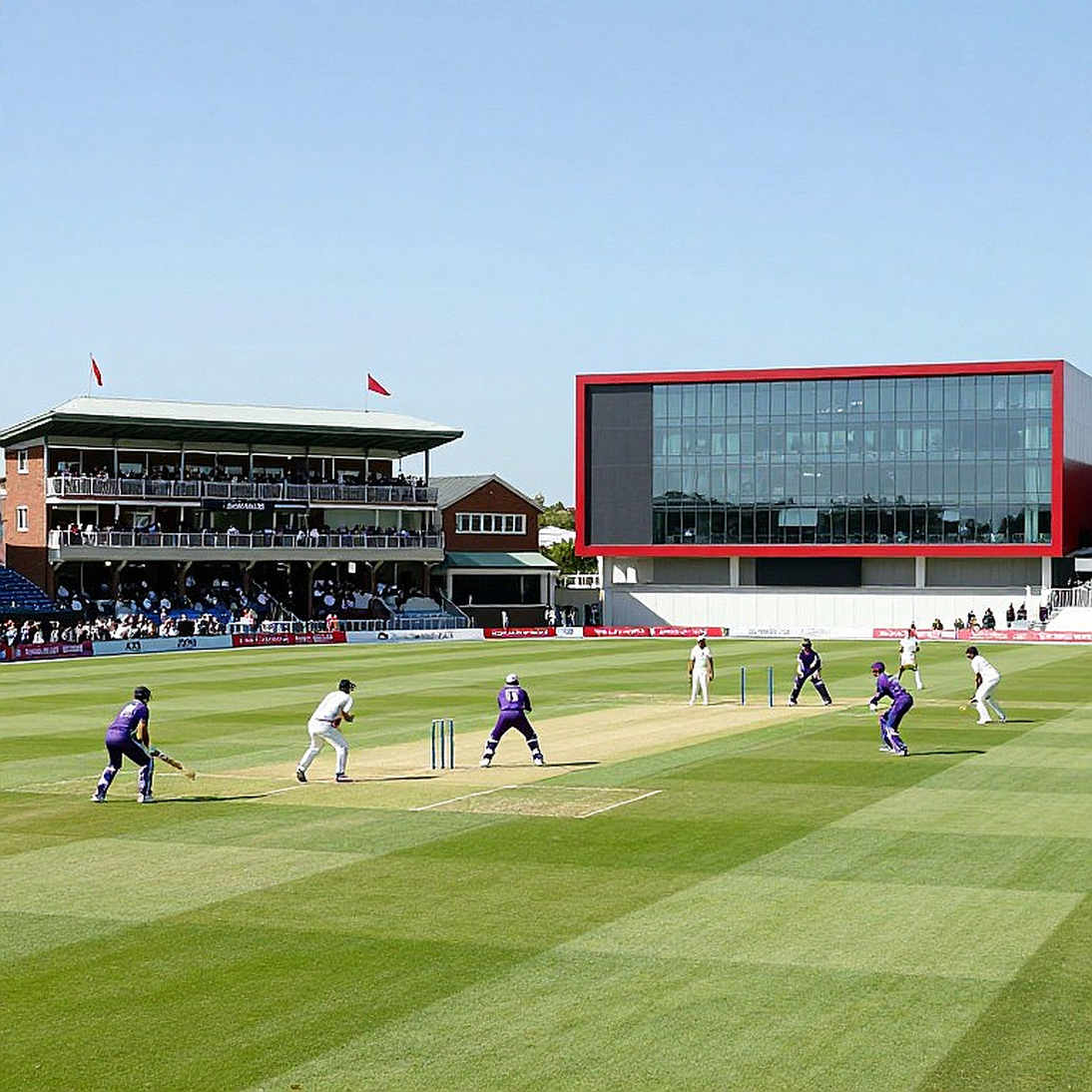
One caution is essential regarding Jaiswal's innings. Earlier on this tour his scores had been 17, 5 and 0. A 155* should therefore be read as a form reset rather than a form confirmation. It is a single-innings outlier in both directions. Second, the hundred came after the frontline seamers' first spells and against an attack missing two key fast bowlers in Sheat and Lennox through injury. The innings was earned, there is no doubt, but its degree of difficulty was somewhat reduced.
On the other side, Yash Rathod's innings is being under-valued. This was his 12th first-class century, a figure that signals far greater durability than Jaiswal's single hundred, because it reflects sustained output in domestic cricket over time. He had also made a half-century in the previous match on this tour, meaning he has now scored consistently across two matches. The report opens with Jaiswal, but from a consistency standpoint Rathod's story is the more reliable one.
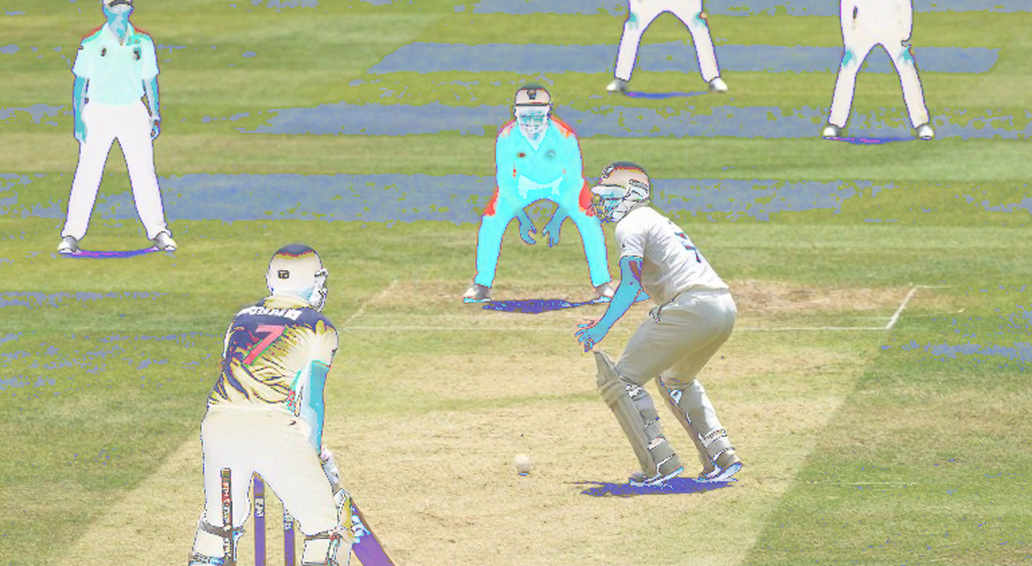
In a 247-run stand that proceeded at roughly a run a ball, Rathod's role was crucial. He kept rotating strike, kept feeding Jaiswal the strike, and never let go of any scoring shot. According to the report his innings was virtually chanceless — the strongest possible evidence of situational awareness. At Test level that skill is decisive, because partners of contrasting tempo must coexist.
That said, luck must be factored into Rathod's innings too. On 37 he should have been run out, but the chance went begging. His knock should therefore be read as flawless in shot selection but not entirely flawless in terms of dismissal risk.
In India A's bowling, Mukesh Kumar (5-87) and Mohammed Siraj (4-118) shared nine of the ten first-innings wickets between them. Despite taking so many wickets, their combined economy indicates that the surface was good for batting and that runs came quickly. Siraj's presence in this match is itself a signal — a senior international fast bowler appearing in an A fixture is usually not a demotion but part of workload and rhythm management.
For the host side the match was expensive in terms of its attack. Sheat went down with a side strain and Lennox was ruled out with a hamstring problem. Their absence in India A's second innings plainly reduced the bowling challenge and somewhat inflated the ease of the 247-run partnership. That has to be built into any assessment.
The first-innings numbers confirm that the pitch had enough in it for the batters, with only the morning session offering the seamers assistance. India A made 346 in their first innings, including Dhruv Jurel's 105 and Padikkal's 80. In reply New Zealand A posted 424, built around Boyle's 110 and Foxcroft's 93. This is the classic New Zealand surface profile, where the first session is the premium window.
No conclusion about the relative strength of the two teams can be drawn from the draw itself. When India A stopped batting with a 204-run lead and only two wickets down, the handshake was a pure formality. The real value of such fixtures lies in individual red-ball experience, not in the scoreline. Two young batters gained that experience by batting long against swing and seam in foreign conditions — something domestic cricket can never provide.
Nor should the morning collapse be treated as a major technical verdict. Two wickets in three balls is a small-sample event driven primarily by conditions. Clouds, wind and a new ball together can make fast bowlers do almost anything. No permanent judgement about Sudharsan or Padikkal should be pronounced on the basis of that passage.
At team level, the biggest takeaway from this match is not the draw but the evidence of adaptation. An Indian A top order that collapsed early went on to survive a New Zealand seam-and-swing examination and eventually dominate it. McKay's leg-side trap worked, but Jaiswal also produced the counter — stepping out, moving in the crease, and punishing anything short. That template will serve the rest of India's top order as well.
This is precisely what A tours are for. These matches are not official Tests, they carry no ICC ranking points and contribute nothing to the World Test Championship. Yet their weight in the selection process keeps growing, because this is the only place where domestic stars can be tested in foreign conditions. India's red-ball top-order pipeline looks visibly dense at the moment — in a single match, four or five international-level or borderline batters produced substantial scores.
But caution is needed about that pipeline. The biggest risk is declaring a batter Test-ready on the basis of one innings, especially when that innings came in a rain-shortened match against an attack weakened by injury. The innings is real, but its difficulty premium is discounted. Indian cricket media has a structurally high tendency to amplify young batting talent, and this report does nothing to counterbalance that tendency.
The most overlooked signal is Sudharsan's technical vulnerability. For a player publicly treated as a future star, the repeated use of a leg-side trap against him is information that the market has not yet priced in properly. At senior level, that same trap will be his biggest examination.
The direction to watch going forward is clear. For Jaiswal, the next two or three first-class innings will matter — sustained half-centuries will prove whether this reset is permanent or just a good day. For Rathod, the benchmark is simply maintaining the same consistency over the coming innings. Sudharsan's modes of dismissal need close tracking — if leg-gully and square-leg catches repeat, it is a pattern rather than a coincidence, and technical remedial work becomes necessary.
New Zealand A's injury list is a signal too. Two soft-tissue injuries in a single match — a side strain and a hamstring — point to a conditioning or workload spike early in the season. Their physio and support staff should be looking at that seriously.
Overall this was a low-commercial-value, high-sporting-signal fixture. Two unbeaten centuries, a rain-shortened match, an injury-depleted attack and a draw from which no team's strength can be inferred. The genuine lesson is that Indian batters played red-ball cricket in foreign conditions and held their ground. That is a positive development signal, but stretching it far beyond one innings would be unwise. The scorecard tells the truth, but not the whole truth.