
Shnaider's Tokyo Crown: Three Break Points Saved in the Decider, Sixth Career Title Sealed
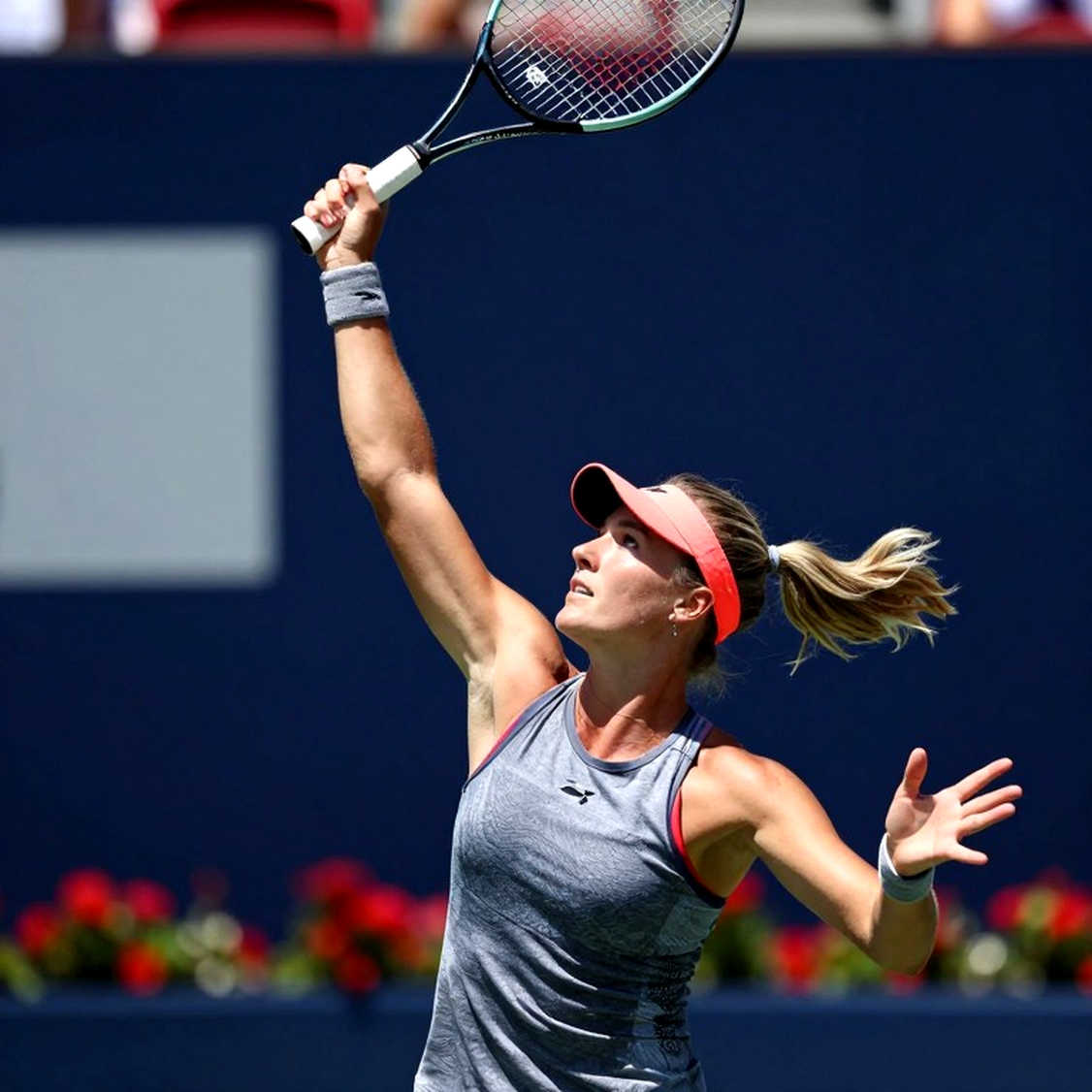
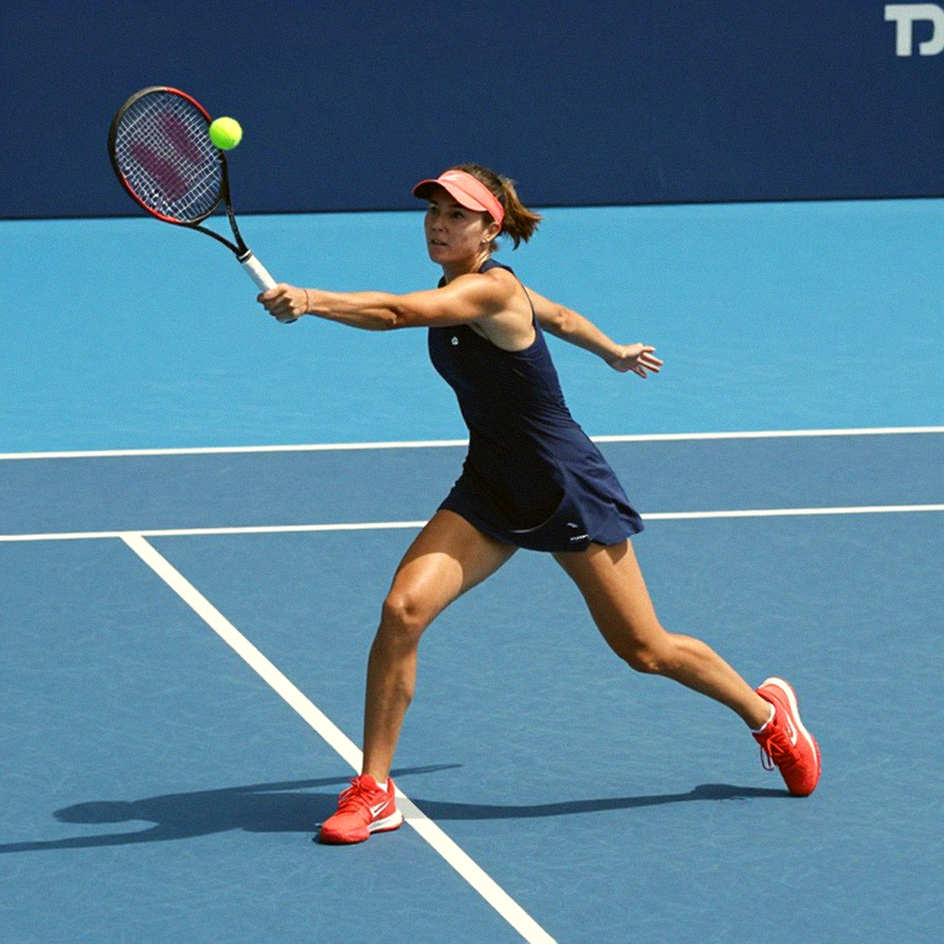
डायना श्नाइडर ने 1 नवंबर 2026 को टोक्यो में तोराय पैन पैसिफिक ओपन (WTA 500) का खिताब जीता, फाइनल में लेला फर्नांडीज को 6-4, 5-7, 6-2 से हराया। मुकाबला 2 घंटे 18 मिनट और 30 गेम तक चला। निर्णायक सेट के 1-1 पर श्नाइडर ने फर्नांडीज के तीनों ब्रेक पॉइंट बचाए, फिर पांचवें गेम में ब्रेक करके 3-2 की बढ़त ली और लगातार तीन गेम जीतकर सेट 6-2 किया। श्नाइडर ने दूसरे सेट में 4-0 की बढ़त गंवाई और आठ में से सिर्फ एक गेम जीती। यह 22 वर्षीय खिलाड़ी का छठा करियर खिताब और इस सीजन का पहला खिताब है; वह तीसरी सीड थीं और दोनों फाइनलिस्ट बाएं हाथ की थीं। सर्व/रिटर्न और विनर-एरर के विस्तृत आंकड़े जारी नहीं किए गए।
Tokyo: Diana Shnaider defeated Leylah Fernandez 6-4, 5-7, 6-2 in the final of the Toray Pan Pacific Open, claiming the sixth title of her career. The match lasted two hours and eighteen minutes across thirty games, but the outcome turned in a single game: at 1-1 in the deciding set, Fernandez generated three break points on Shnaider's serve, and Shnaider saved all three. Read the sequence that followed — a hold to 2-1, a Fernandez hold to 2-2, then a Shnaider break in the fifth game for 3-2, followed by three straight games to close the set 6-2. The entire architecture of the decider was decided by the game Shnaider survived.
The result is confirmed by a WTA official social media post published on 1 November 2026, which celebrated the title with the tag "SUPER SHNAIDER". The date, the scoreline and the duration are the hard facts of this final. Beyond those, the bulk of the match data was not released: no serve percentages, no return points won, no winner-to-unforced-error ratio, no total break-point counts. This report therefore will not invent numbers. Where the data is absent, it says so; where conclusions follow from the scoreline and reported events, it states them.
First set: a single break's worth of separation
Shnaider took the opener 6-4 — a one-break margin, produced in a single game. That scoreline admits several readings, but the shape of the match afterwards is telling: the 22-year-old was substantially more controlling in the first set. Her front-running template — a flat, forceful serve followed by an immediate first-strike forehand — found its direction. Hard court is the natural habitat of the aggressive left-hander, and Tokyo's surface was giving her the pace her game depends on.
Second set: 4-0 to 5-7, one game won out of eight
This is the most striking passage of the match. Shnaider led the second set 4-0. From there she won one of the next eight games and lost the set 5-7. The arithmetic is blunt: after 4-0, the remainder of the set ran 1-7. For a player who had controlled the first set and was close to unplayable across the first four games of the second, that is not ordinary fluctuation. It is a game-management question.
The distinction matters: technique and tactics are separate things. Shnaider's shot-making did not collapse in that stretch; her game-management drifted. Against a counterpuncher, a front-running big hitter has two options — raise the pace to shorten rallies, or slow the game down with patience. Shnaider chose the first, and when Fernandez began extending rallies she did not switch plans. Losing seven of eight games after a 4-0 lead is a pattern opponents notice and reproduce.
Fernandez's comeback: a high competitive floor
On the other side, the comeback is evidence of the Canadian's competitive strength. Recovering from four games down to take a set is not easy, particularly against an opponent who is most dangerous when ahead. Fernandez lengthened rallies, slowed the tempo and dragged Shnaider into the zone where she is least comfortable — long baseline exchanges and patience tests. That is the essence of her style: she does not gamble to win; she pulls the opponent's game into its discomfort zone.
But her limit was visible there too. At 1-1 in the third set she had three break points on Shnaider's serve and converted none. That was the decisive point of the match. A break there would have put her 2-1 up and changed the psychology of the set entirely — a counterpuncher benefits from leading, because her style prospers when she is chasing. Saving three break points is a significant achievement for any hitter; missing three is a clear signal: the ability to convert break points against big servers is precisely what caps Fernandez's ceiling.
Third set and that one game
The opening phase of the decider was balanced. At 1-1 Fernandez applied pressure and earned three break points. Shnaider saved all three and held. That was not an ordinary hold; it was a server-side lock on momentum. In any sport, and especially in tennis, where the psychological load of every game is built into the format, saving three break points cuts both ways: the player who saves gains belief, and the player who misses carries frustration into the next game. That is exactly what happened.
Fernandez took the next game for 2-2, but in the fifth game Shnaider broke for 3-2. Then three straight games: 6-2. The sequence — clutch hold, immediate break, clean close — is tennis's most reliable psychological cycle. The real turning point of this final is not the 3-2 in the scorecard; it is hidden in the three break points saved at 1-1.
Left-hander against left-hander
One detail of this final draws little attention: both players are left-handed. Normally a left-hander gains a structural edge over a right-hander — the lefty forehand meets the righty backhand cross-court, and the slice serve out wide in the ad court pulls at that same backhand.
When both players are left-handed, that advantage cancels out on both sides. The contest reduces to fixed variables: raw power and return quality. In that scenario, over long rallies, the bigger hitter — Shnaider — should prevail, and did. But there is an honest caveat: we have no ace counts or service-winner data, so the claim that 'the same-handed matchup suppressed aces for both' is directional inference, not established fact. What can be said is that 138 minutes across 30 games is consistent with rally extension, and rally extension is Fernandez's fuel.
Rally extension: Fernandez's only route
This final was played between two players where one's strength is the other's constructed problem. Shnaider depends on quick points — serve, first strike, done. Fernandez has to lengthen rallies to survive. Thirty games in two hours eighteen minutes averages roughly 4.6 minutes per game, which is long relative to the game count and points toward extended exchanges. It matters that Fernandez did her job: she slowed the match, held Shnaider off for seven games, and created three break points. But she could not break her opponent on the three biggest points. That was the difference.
The front-running weakness: a diagnosis
Shnaider's identifiable weakness in this match is her ability to close when ahead. She needed nine games for the title, and in the middle she lost her grip: 4-0 to 5-7 in the second set. Her closing mechanism is still unstable. An experienced rival will scout that pattern and provoke it by extending sets. If it recurs over the next few events, it can cost seeding-critical quarterfinal and semifinal matches and delay a top-10 breakthrough.
Over-dramatising it would be wrong too. The same match displays her strength — saving three break points under pressure is a skill with no substitute. A player who combines front-running power with the capacity to survive under pressure has the full architecture for winning tournaments; she only needs sequencing discipline. That is a planning problem, not a technical one, and planning responds to coaching.
Data transparency: what we do not know
An honest part of this report is what is missing. The available source gives no first-serve percentage, no points won on first serve, no return points, no winner/unforced-error ratio, no total break points, no aces. Only one measure exists for Fernandez's break-point conversion: 0/3 at 1-1 in the decider. Only one exists for Shnaider: 3/3 saved at that same moment. These tell us the direction of the match, but they cannot support a process-based assessment of either player's true level. Anyone claiming this match proves a qualitative leap in Shnaider's serving efficiency would be going beyond the data. Explicit null: insufficient information, cannot assess.
Tournament context: 500 level, season's end, Asian swing
The Toray Pan Pacific Open is a WTA 500 event — below the mandatory 1000-level tournaments, but substantial in prestige and points. Three features matter for reading this result.
First, it is not a mandatory-entry event. Participation is discretionary, so winning it also demonstrates that Shnaider prioritised ranking consolidation over rest at the tail of the season. Second, it sits at the very end of the calendar — early November, around the WTA Finals window — which means the top eight are typically absent or conserving energy. Third, it is part of the Asian swing on hard court, which suits Shnaider's flat, power-based game and carries a low surface-switching cost.
Combine the three: a non-mandatory 500, at season's end, among a field thinned by fatigue and withdrawals, entered as the No. 3 seed. Structurally, that raises title probability. It does not make the title cheap — being the third seed means a protected position in the draw and no need to beat the top seed, but the full bracket is unknown, so 'easy draw' versus 'brutal draw' is undeterminable. Explicit null: insufficient information.
Season-end dynamics and ranking effect
A title at the tail of the season is a highly efficient ranking play. A 500-level crown delivers meaningful points and strengthens seeding entering the following season's hard-court swing. For Shnaider it matters additionally that this was her first title of the season — after a year without silverware, winning at the end rewrites the 'empty-handed' narrative.
A hard ranking calculation is nonetheless impossible here. Current ranking, points composition (Slam/1000/other) and defending-point windows are all absent from the source. What can be said is that this is a meaningful upward lever and a psychologically very different season close.
Six titles at 22: why the number matters
Shnaider is 22 and this is her sixth career title. That is the most important structural signal in the whole story. In tennis, the gap between players who win titles and players who reach finals is wide. Reaching finals shows talent and form; winning finals shows pressure management and competitive hardness. Six titles at 22 means she is not a hype-only prospect but a proven converter.
The age-curve economics of the tour matter too. Twenty-two is the stage where titles convert most efficiently into long-term ranking gains — the compounding years. The same count at 27 would be a weaker forward signal. That is why this title should be called a consolidation rather than a breakout: it firms up an established floor rather than revealing a new ceiling. Its value is ranking stability and confidence, not a level jump.
Fernandez's side: high floor, capped ceiling
Fernandez is about 24 and has previously reached a Grand Slam final — external knowledge that should be verified separately. The shape of her profile is nonetheless clear: competitive in every draw, rarely the last woman standing at the top tier. This final repeated that picture. Coming back from 4-0 down to take a set shows a very high competitive floor. Failing to convert three break points in the decider shows that the 'kill' against big hitters remains limited.
That is not a moral failure; it is a structural limit. Her serve does not generate many free points, and against elite returners that becomes her biggest vulnerability. Her route runs through rally extension and break-point conversion — and in this match she met the second condition. Her performance is not a slump signal; it is a result falling short.
The landscape: the WTA's parity era
This final is a representative image of the current WTA structure. Two players in the top-30 bracket, neither with a Grand Slam title, contesting a late-season 500 final, is a direct example of the full-parity era.
In this era titles are broadly distributed and no single dominance settles at the top. That raises the utility of 500-level titles: they are not mandatory for the top players, so the winner is often whoever remains competitive at season's end. Shnaider did exactly that.
Her trajectory points toward a top-10 push if she fixes the front-running weakness. But this result does not change the top of the WTA hierarchy; it reinforces the parity layer.
The lefty cohort: coincidence or pattern?
One curiosity: both finalists were left-handed. Left-handers are a minority on tour, and two reaching the same final is statistically notable. Framing it as a trend would be premature — it is a single event, and no direction can be inferred from one final. The valid conclusion is stylistic: between two same-handed players the traditional lefty advantage does not operate, and the match turns on raw power and return quality.
Risk assessment: overall low-to-medium
Competitive risk: the clearest risk is closing discipline, not shot quality. Winning one of eight games mid-match is a repeatable vulnerability that smart opponents will exploit. Level: medium.
Physical risk: there is no injury signal anywhere in the report — no medical timeout, taping, physio or speed drop. On available evidence, availability risk is low. But absence of reporting is not evidence of absence. End-of-season load risk stays low-to-medium.
Ranking/points-defence risk: cannot compute. No ranking or defending-point data. Explicit null: cannot assess.
Governance risk: zero. No controversy surfaced — no medical-timeout dispute, no coaching dispute, no eligibility question, no integrity signal. It is a clean result. Usefully, the source is WTA's own official communication, meaning the scoreline is institutionally validated, which lowers information risk.
Commercial/media risk: mild. The WTA framed Shnaider as "SUPER SHNAIDER", tour-promotional language that is slightly generous for a 500-level title and sets up minor short-term overhype. Level: low-to-medium; impact: low.
Overall risk rating: low-to-medium. No injury, discipline or governance red flag.
Media narrative and the expectation cycle
The narrative now is clear: a rising title-winner, amplified by the tour itself. Fundamental support is medium — six titles at 22 is a genuine results base, but a season-end 500 is not Slam or 1000-level proof. The sample size is sufficient for 'proven 500-level converter', insufficient for 'top-10 force'.
The expected narrative duration is therefore mid-term, one to two seasons. After that the story will need new evidence, and that can only come from the second week of 1000-level events or Slams. Note also that the source contains nothing about team or management — no coach, no fitness staff, no agency, no contract status. A player with six titles at 22 almost certainly has a stabilised professional structure, but its composition is unknown here. Explicit null: cannot assess.
What next for Shnaider: three priorities
First, closing discipline. The 4-0 to 5-7 collapse is a specific pattern that must be fixed over the next few events. The solution is not in shot selection but in game planning: when ahead, reduce risk temporarily rather than raising pace, protect the first-serve percentage, and deny the opponent free points.
Second, return-of-serve consistency and patience in long rallies against defenders. She showed the capacity to survive under pressure here, but there is no direct evidence of rally patience.
Third, season management. Playing a late 500 is rational for points, but managing energy for the next season's start matters equally. No fatigue signal appears in the available information, so speculation is inappropriate.
What next for Fernandez: two lessons
First, break-point conversion against big servers. That is her ceiling-limiting zone. Zero from three here is the clearest message any analyst can extract. There is no question about her fitness or movement; the question is about the biggest points.
Second, leading within a set. A counterpuncher's style prospers when chasing, but winning at the top level requires building a lead and protecting it. The 4-0 comeback shows the capacity exists; failing on three break points at 1-1 in the decider shows it is not yet stable.
The match in three sentences
Shnaider beat Fernandez with her power but brought her back into the match with her instability. Fernandez dragged the contest to a deciding set through rally extension and patience but could not break her opponent on the three biggest points. And once three break points were saved at 1-1, the result was settled — 6-4, 5-7, 6-2, two hours eighteen minutes, and a sixth career title.
This is not a 'classic' final to be remembered as a peak of standard. It is a diagnostic final — one that opens up two players' limits and strengths inside a single scoreline. And for that reason it will remain a reference point in both their development paths over the coming months.
संबंधित खिलाड़ी
अनुशंसित
Boulter's Comeback, the British No. 1 Crown, and the Most Expensive Game of the Third Set2026-10-25
Rybakina's Ningbo Semifinal: The Score Says 6-1, 3-6, 6-1 — the Nine Breaks Say Rebuild2026-10-25
Rybakina Reaches Ningbo Final: When the Serve Outgrows the Story2026-10-25
The Empty Ledger: The Document That Never Arrives With a Tennis Injury Story2026-10-25
Shnaider's Tokyo Crown: Three Break Points Saved in the Decider, Sixth Career Title Sealed2026-11-02
Before the Ningbo Final: Eleven Set Points, a 51.9% Finals Conversion and a Wire-Copy Error2026-10-25
The Illusion of the Top-Ranked: Rybakina's Serve, Fernandez's Challenge, and the Real Story of Ningbo2026-10-25
अनुशंसित
The Empty Ledger: The Document That Never Arrives With a Tennis Injury Story2026-10-25
Rybakina's Ningbo Semifinal: The Score Says 6-1, 3-6, 6-1 — the Nine Breaks Say Rebuild2026-10-25
Before the Ningbo Final: Eleven Set Points, a 51.9% Finals Conversion and a Wire-Copy Error2026-10-25
Shnaider's Tokyo Crown: Three Break Points Saved in the Decider, Sixth Career Title Sealed2026-11-02
The Wrexham Final Line: Klugman's Seventeenth Year, Jacquemot's Twenty-Second — One Court, Two Clocks2026-10-25
Indian Tennis's Biggest Missing Piece Isn't a Champion — It's One Empty Week on the Calendar2026-10-25
Shnaider beats Fernandez in Tokyo to claim sixth straight WTA final2026-11-02
अनुशंसित
Before the Ningbo Final: Eleven Set Points, a 51.9% Finals Conversion and a Wire-Copy Error2026-10-25
Ningbo: Rybakina Won 6-3, 7-5, but Eleven Set Points and a Love Break Are the Real Story Before the Final2026-10-25
Indian Tennis's Biggest Missing Piece Isn't a Champion — It's One Empty Week on the Calendar2026-10-25
The Wrexham Final Line: Klugman's Seventeenth Year, Jacquemot's Twenty-Second — One Court, Two Clocks2026-10-25
Don't Read an Empty Cell as Neutral: When Tennis Returns a Record With No Name and No Date2026-10-24
Rybakina Reaches Ningbo Final: When the Serve Outgrows the Story2026-10-25
Rybakina's Ningbo Semifinal: The Score Says 6-1, 3-6, 6-1 — the Nine Breaks Say Rebuild2026-10-25
अनुशंसित
Shnaider's Tokyo Crown: Three Break Points Saved in the Decider, Sixth Career Title Sealed2026-11-02
Rybakina's Ningbo Semifinal: The Score Says 6-1, 3-6, 6-1 — the Nine Breaks Say Rebuild2026-10-25
Don't Read an Empty Cell as Neutral: When Tennis Returns a Record With No Name and No Date2026-10-24
Rybakina Into the Ningbo Semifinals: 105 Minutes, Nine Breaks, and a Crack in the Serve Rhythm2026-10-25
The Illusion of the Top-Ranked: Rybakina's Serve, Fernandez's Challenge, and the Real Story of Ningbo2026-10-25
Shnaider beats Fernandez in Tokyo to claim sixth straight WTA final2026-11-02
Ningbo Final: Rybakina's 11 Set Points, Six Aces and the Left-Hander Trap2026-10-25