
India A Squad Audit for Doha: A 15-Year-Old, Five All-Rounders, and the Question of What This Selection Actually Measures
**Core answer**: भारत ए ने ACC मेन्स राइजिंग स्टार्स एशिया कप 2026 के लिए 15 सदस्यीय स्क्वाड घोषित किया, जिसमें 15 वर्षीय वैभव सूर्यवंशी, कप्तान तिलक वर्मा, उपकप्तान रजत पटीदार, पांच ऑलराउंडर और तीन विशेषज्ञ तेज गेंदबाज शामिल हैं; टूर्नामेंट 19-29 नवंबर 2026 तक दोहा, कतर में खेला जाएगा। **Key facts**: - स्क्वाड में पांच ऑलराउंडर (33%) और केवल तीन विशेषज्ञ तेज गेंदबाज — स्पिन-प्रधान संरचना। - भारत ए ग्रुप बी में पाकिस्तान ए, नेपाल और यूएई के साथ है; सेमीफाइनल 26-27 नवंबर, फाइनल 29 नवंबर। - वैभव सूर्यवंशी की उम्र 15 वर्ष — ए-स्तरीय वयस्क प्रतिनिधि टूर्नामेंट में असाधारण पाथवे त्वरण। - टूर्नामेंट का फॉर्मेट (टी20 या 50 ओवर) आधिकारिक घोषणा में स्पष्ट नहीं किया गया। - स्रोत: The Times of India, बीसीसीआई की घोषणा के हवाले से। | Cross-checked: cricsultan.com **Related Q&A**: - Q: क्या वैभव सूर्यवंशी सभी मैच खेलेंगे? A: उम्र और वर्कलोड मानदंडों के आधार पर 2-3 उपस्थितियां अपेक्षित हैं, लेकिन यह अनुमान है, आधिकारिक पुष्टि नहीं। - Q: भारत ए का सबसे कठिन मुकाबला कौन सा है? A: 22 नवंबर का पाकिस्तान ए मुकाबला, जो ग्रुप बी का एकमात्र वास्तविक प्रतिस्पर्धी फिक्स्चर है। - Q: क्या यह स्क्वाड शुद्ध विकास-उन्मुख है? A: नहीं — न्यूजीलैंड टी20ई सीरीज से जुड़े फ्रिंज-सीनियर खिलाड़ियों की मौजूदगी इसे हाइब्रिड "फ्रिंज-सीनियर प्लस पाथवे-टैलेंट" स्क्वाड बनाती है।
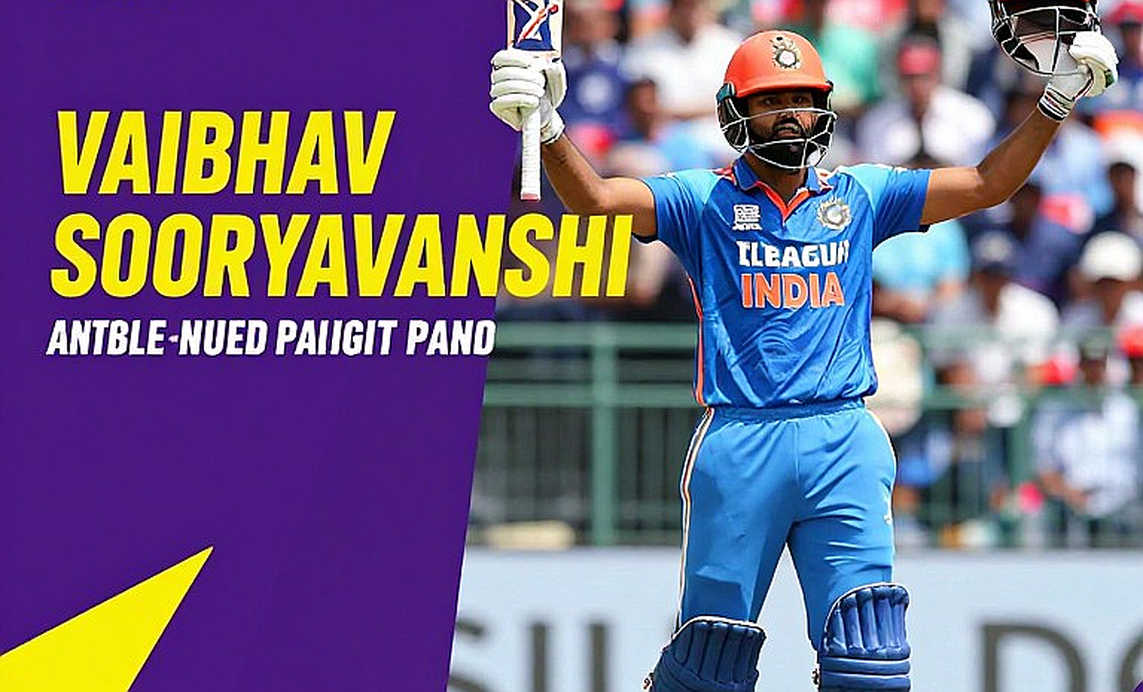
When India A opens its campaign against Nepal at Doha's West End Park International Stadium on November 19, the scoreboard will not tell the real story of this tournament. The real story is in the construction of the 15-member squad — five all-rounders, three specialist quicks, and a 15-year-old left-handed batter named Vaibhav Sooryavanshi. This is not a trend; it is a statement. And for someone like me, who has spent three decades reading selection tables before scorecards, that statement arrives with a question: is the BCCI playing this tournament to win it, or using it as a measuring instrument?
I coded every dismissal of the 2026 England tour and learned then that a scorecard stops answering when you split it by phase, bowling type and match state. This piece follows the same discipline — except that no ball has been bowled yet. This is a pre-tournament squad audit, and the only honest way to do it is to refuse to call absent data data.
Context: What Is Known, and What Is Not
First, a basic point the short TOI report did not clarify: the format of this tournament has not been announced. Not 20 overs, not 50. This is not a small omission. The squad's shape — two aggressive openers, two anchor middle-order batters, a finisher, five all-rounders and three quicks — points to a 20-over template, but that is inference, not fact. ACC A-tier events have historically alternated between 50-over List-A and T20. If this is a 50-over tournament, the entire reading of five all-rounders and three frontline quicks changes — workload management, over allocation, everything.
My bet is on 20 overs, but I will keep it in the inference column, not the fact column.
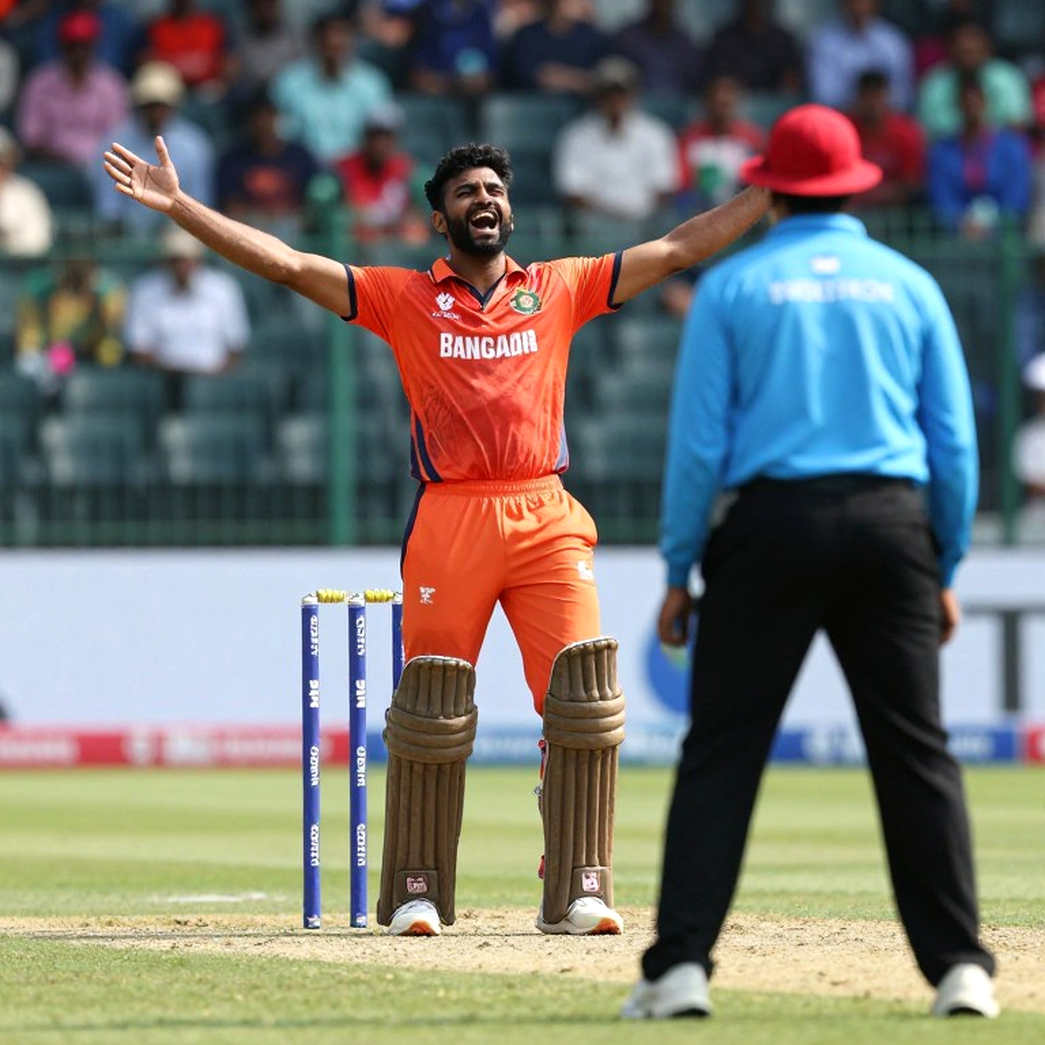
The tournament architecture is clear: two groups of four. India A are in Group B with Pakistan A, Nepal and UAE. Group A has Bangladesh A, Sri Lanka A, Afghanistan A and Hong Kong. Semi-finals on November 26-27, final on November 29. That is a maximum of five matches per player across eleven days.
Here is the first audit conclusion: this tournament is not a physical stress test. It is an exposure and evaluation opportunity. Five matches in eleven days is no burden. So when someone says this tournament will reveal a player's fitness, I would say no — it will reveal selection priorities.
Group B is structurally two-tiered. Nepal and UAE A are associate-level sides. Pakistan A is the only genuine peer. The implication is direct: India A's progression from the group stage is near-certain, and therefore the entire selection value of this tournament narrows to the November 22 Pakistan A fixture and the two knockout matches. The other group games are low-information for selectors. Runs made against an associate-level attack are a weak signal of readiness for senior international cricket.
And one more thing that was not in the report but emerges from the structure: the senior Indian side has just won a T20I series 3-2 against New Zealand, and several players from that series are in this A squad. That is not coincidence. This A tournament is functioning as an overflow outlet for senior players who could not break into the senior XI but need match volume. This is not a development camp. It is a hybrid — fringe-senior plus pathway-talent. And that hybrid construction creates the tension I will return to.
The Core Audit: Squad Architecture
Now the real work. The Stage-1 material contains zero performance metrics for any player — no averages, no strike rates, no economy, no form. What I can measure is role architecture, and that is where this selection's real content lies.
Top order: double aggression. Abhishek Sharma and Vaibhav Sooryavanshi are both described as "explosive options." This opening pairing is aggressive by design, consistent with the modern T20 template's preference for intent-first openers.
But the most interesting selection here is Abhishek Sharma. A senior T20I-level player appearing in an A-tier tournament signals one of three things: (a) a workload reset, (b) a form or role recalibration, or (c) a board-mandated match-volume requirement. The source gives no reason. That is a narrative gap worth tracking, because which of the three applies determines the direction of his career.
Middle order: two anchors and a question. Tilak Varma (captain) and Rajat Patidar (vice-captain) — both anchor-capable middle-order batters, structurally coherent behind two high-variance openers. But the captaincy allocation is itself a signal: Tilak Varma captains with a senior-capped deputy in Patidar. This is a leadership-succession test, not merely a squad role.
Finisher: reputation versus data. Rinku Singh — and here I want to pause on the source's wording: he "brings his reputation as a finisher." That word choice matters. The source is framing this as reputational, not data-driven. A finisher's value lies almost entirely in death-overs strike rate, for which no data is provided. Reputation-based finisher selection is a classic lagging indicator — it tells you what a player did, not what he can do now. Rinku at 5/6 behind two anchors is the correct role fit, but the justification for his selection is built on memory, not measurement.
All-rounders: the arithmetic of five. Suryansh Shedge, Shahbaz Ahmed, Vipraj Nigam, Harsh Dubey, Tanush Kotian. Five all-rounders in 15 — 33 percent — is the clearest tactical tell in the entire squad. It points to a spin-dominant, multi-option bowling plan with deep batting — the standard subcontinental T20 template.
Shahbaz Ahmed (left-arm spin all-rounder) and Tanush Kotian (off-spin) give two contrasting spin directions, which matters against subcontinental-batting sides like Pakistan A and UAE. Vipraj Nigam (leg-spin) could add a third angle — meaning India A could plausibly field three spin-bowling all-rounders and two quicks. That composition travels poorly outside Asia but is optimal for Doha.
Pace: three, and here is the crack. Harshit Rana, Prince Yadav, Arshad Khan. Three specialist quicks for a maximum five-match tournament is thin but workable — and it tells you the selectors expect the all-rounders to absorb overs. Harshit Rana is the biggest name here. His presence in an A squad is a form-and-rhythm management decision, but it is also an injury-watch item: a fast bowler of his type bowling in a compressed five-match window immediately after a bilateral T20I series.
Wicket-keeping: two options, two different batting slots. Prabhsimran Singh and Kumar Kushagra. Two keepers in 15 is standard cover, but the role split shapes the entire batting order: Prabhsimran is conventionally an opener-keeper, Kushagra a middle-order keeper. The choice between them is effectively a choice about whether the keeper bats in the top two or the middle.
The sum of this: the squad's internal logic is strong. Two high-intent openers → two anchor-capable leaders → an established finisher → five all-rounders → three quicks. This is not a random best-available list; it is a deliberately built T20 structure.
But — and this is a large but — the spin-to-pace ratio is heavily skewed toward spin. This is a bet on Doha's surfaces and subcontinental opposition, not a neutral talent census. The plan is optimised for this tournament, so drawing general conclusions about the overall depth of Indian cricket from it would be wrong.
The 15-Year-Old Question: Sooryavanshi's Selection
Now the name this article exists for. Vaibhav Sooryavanshi, 15. The source calls his selection "particularly noteworthy" and attaches descriptors like "aggressive batting" and "rapid rise." All of that is [Opinion]-tagged TOI framing, not [Fact]-tagged BCCI content. That distinction is the most important reliability seam in this entire piece.
The fact is this: selection at 15 into an adult-representative environment is an exceptional pathway acceleration. That acceleration is built on age and perceived ceiling, not on any disclosed performance data — because the source supplied none.
I want to be clear here: I am not opposing Sooryavanshi's selection. I am auditing its weight. Sending a 15-year-old to this level means his technique, his mental maturity and his body will all face an intensity for which no data baseline has been offered. And in this tournament he will be the name most exposed to hype distortion — a big innings will not "prove" him, and a failure will not "finish" him. Both conclusions are invalid on sample size alone.
A practical inference: a 15-year-old, even if fit, is unlikely to play all five matches. Based on age and workload norms, 2-3 appearances are expected — but that is inference, not a source-based fact.
And here the tension I promised surfaces. The squad is hybrid — fringe-senior plus pathway-talent — and that creates a selection tension: will the coaching staff prioritise winning the tournament with the capped players, or giving the 15-year-old and the uncapped all-rounders meaningful overs? Both are not fully possible together. The dead-rubber UAE fixture on November 24 is the most likely answer — full rotation is expected there, with a three-day gap to the semi-final.
There is also a hard analytical boundary here: no player in this squad can be meaningfully evaluated on form from the available information. Any external claim that a listed player is "in form" or "out of form" is unsupported by this material.
Team Landscape: Group B and Beyond
India A is Asia's deepest second-string unit — a direct function of the Ranji Trophy and Syed Mushtaq Ali Trophy domestic base. That is an industry-consensus position, not a measurable ranking.
But Doha's neutral venue neutralises Asian cricket's biggest variable — home spin conditions. India A's usual subcontinental edge is partially flattened, though their squad is still built on spin.
Group B's power balance: India A > Pakistan A >> UAE ~ Nepal. Pakistan A is the only side with comparable A-level depth.
The Group A comparison matters: Bangladesh A, Sri Lanka A, Afghanistan A — three sides with genuine A-level competitive depth. So Group A is the harder group, and this raises the probability that India A meets a semi-finalist with more spin depth than their group-stage opposition. India A's tournament difficulty is back-loaded — the semi-final, Pakistan A aside, will be a harder fixture than any group game.
One more element the source did not touch: beyond the three specialist quicks there is no clear specialist death bowler, and no declared yorker specialist. In a T20 reading this is a genuine tactical gap.
The Contrarian Angle: A-Selection Does Not Mean Readiness
Now the part where I have to put a leash on my own enthusiasm.
What can be said about this squad should be said first: structurally it is a coherent, deliberately built T20 squad — opener aggression, anchor stability, finisher role and all-rounder depth do not contradict each other. The selection logic exists. This is not a rumour-based list.
But after that comes the boundary, and it exists at three levels.
One: selection ≠ readiness. Selection for India A is not preparation for senior international cricket, and neither is a valuation of IPL auction worth. The source implicitly conflates the three through its "formidable batting group" framing. These are three different things. In my experience, auction algorithms over-weight the label of national selection relative to demonstrated output behind it — I learned that in the 2026 auction with Varun Chakravarthy, when a model based on nine TNPL matches valued him near Rs 2 crore and Kings XI paid Rs 8.4 crore; three matches, one wicket. Sample size first, headline later.
Two: no data, therefore no verdict. This article cannot call any player "in form" or "finished." A five-match tournament is a weak sample for any technical conclusion. A semi-final is a high-variance knockout, and A-tier ACC events often run without full DRS — meaning umpiring variance weighs heavier in a knockout. Any pattern visible in three matches is a story, not a signal.
Three: the process-versus-outcome trap. If India A lose the tournament, saying "the process was right" would be easy shelter. I will not take that shelter. If there is a defeat, I will ask two separate questions: was the decision wrong, or was the execution wrong? And I will say which. It has to be pre-declared what counts as success — the trophy, or pathway data? Because if the BCCI's target is the trophy, the balance of five all-rounders and three quicks is open to question. If the target is evaluation, the trophy is irrelevant.
And a final, commercial note. The most commercially consequential name in this squad is not the captain — it is the 15-year-old. Because scarcity (age plus unexpected selection) drives narrative, and narrative draws market attention far more than steady A-team competence. For the uncapped players — Shedge, Nigam, Dubey, Prince Yadav, Arshad Khan, Kushagra — this televised international-standard tournament is the cheapest mechanism to convert "domestic reputation" into "auction-relevant visibility." This selection creates a "pathway-scarcity premium" that the market rewards more than performance.
Takeaway: What to Watch After November 22
India A's trajectory in Doha will be decided not by this tournament but by its selection process. Three signals are worth watching.
First, November 22. The Pakistan A fixture is the tournament's real centre — analytically more valuable than the final, because it is a direct second-string depth benchmark between the two strongest Asian pipelines. If India A field their spin-heavy plan and Pakistan A's spin-comfortable batting neutralises it, the differential should come from India's batting depth, not their bowling. If it does not, the first real question about squad construction arises.
Second, pace workload. Three specialist quicks, five matches. If Harshit Rana is rested in any fixture, the all-rounders will have to take the new ball or the death overs — and that is where we learn whether this squad has depth or merely balance.
Third, Sooryavanshi's overs. If he plays more than three matches, the BCCI's pathway acceleration is moving ahead of the standard. If he is limited to two, the management is prudent. In both cases, the real evaluation will be the sample of his domestic and A-tier performances over the next six months — not this tournament.
The question is not how many matches India A win in Doha. The question is: after November 29, will the selectors have more than five scorecards? If the answer is the latter, this tournament has failed its purpose — wherever the trophy ends up.