
Asian Cricket's Two Worlds: Market, Politics and Mounting Challenges
एशियाई क्रिकेट दो स्तरों पर चलता है: भारत, पाकिस्तान, श्रीलंका, बांग्लादेश और अफ़ग़ानिस्तान जैसे पूर्ण सदस्य देश, और नेपाल, ओमान, यूएई व हॉन्ग कॉन्ग जैसे सहयोगी राष्ट्र। दोनों को जोड़ने वाली संस्था एशियाई क्रिकेट परिषद (ACC) है, जिसका प्रमुख टूर्नामेंट एशिया कप है। BCCI दुनिया का सबसे अमीर बोर्ड है और आईपीएल सबसे मूल्यवान क्रिकेट संपत्ति, इसलिए क्षेत्रीय निर्णयों पर बाज़ार का दबदबा रहता है। भारत-पाकिस्तान द्विपक्षीय श्रृंखला एक दशक से नहीं खेली गई; दोनों टीमें केवल ICC और ACC आयोजनों में मिलती हैं, और यही जोड़ी टूर्नामेंट कैलेंडर व मेज़बानी तय करती है। अफ़ग़ानिस्तान 2017 में पूर्ण सदस्य बना और तेज़ी से उभरा। फ्रेंचाइज़ी लीगों (IPL, PSL, LPL, BPL, ILT20, NPL) ने खिलाड़ियों की आजीविका बदली, पर राष्ट्रीय कैलेंडर पर दबाव बढ़ाया। प्रमुख चुनौतियां: कैलेंडर अत्यधिक भरा होना, सहयोगी राष्ट्रों के लिए सीमित अवसर, शासन में पारदर्शिता की कमी, और महिला क्रिकेट में असमान निवेश। निष्कर्ष: एशिया के पास दुनिया की सबसे बड़ी क्रिकेट आबादी और बाज़ार है; ज़रूरत संतुलित कैलेंडर, व्यापक अवसर और बेहतर शासन की है।
Asia's cricket map has never been a straight line. The continent carries within it two entirely different cricketing experiences: on one side are full-member nations such as India, Pakistan, Sri Lanka, Bangladesh and Afghanistan, with permanent Test status, broadcast markets worth billions and professional domestic structures; on the other are Associate nations such as Nepal, Oman, the United Arab Emirates, Hong Kong and Malaysia, which despite limited resources are turning into some of the world's fastest-growing cricket markets. The bridge between these two worlds is the Asian Cricket Council (ACC) and its flagship tournament, the Asia Cup — technically a regional competition, but commercially and politically no smaller than a World Cup.
The Asia Cup has changed shape repeatedly over the past few years. It has been played in the ODI format, then in T20Is, and sometimes in a mix of both. The Covid-19 pandemic disrupted the cycle, host nations changed, and at one point political tension forced the tournament to be run under a 'hybrid model' — Pakistan was the formal host, but India's matches were played in Sri Lanka. That model remained controversial, yet it exposed a reality: Asian cricket's biggest commercial force and its biggest political obstacle are the same pair — India and Pakistan.
Financially, the centre of gravity in Asian cricket is obvious. The Board of Control for Cricket in India (BCCI) is the richest cricket board in the world and the Indian Premier League is the most valuable property in the sport. Its influence is not confined to India. Domestic players across Asia compete for IPL contracts, a large share of smaller nations' cricketers' livelihoods comes from franchise deals, and broadcast rights valuations shape the tournament calendar across the region. This is a power structure in which decisions are frequently driven by market logic rather than development logic — and that is the central fault line of Asian cricket.
A bilateral series between India and Pakistan has not been played for more than a decade. The two teams meet only in ICC and ACC multi-nation events, and even then amid uncertainty. For fans the fixture is the most emotionally charged; for broadcasters the most expensive; for administrators the most complicated. Every time it appears on the calendar, ticket sales, television ratings and digital audiences set new records. But the uncertainty around the same fixture also shapes the planning of Asian tournaments more than anything else — hosting, neutral venues, security arrangements and travel schedules are all decided around this one pairing.
The most inspiring cricket story of the past decade belongs to Afghanistan. A team that emerged from refugee camps became a full ICC member in 2026 and has since established itself across all three formats — Test, ODI and T20I. Players such as Rashid Khan, Mohammad Nabi and Mujeeb Ur Rahman have built reputations in franchise leagues around the world, and the team has beaten top sides at major events. One aspect of Afghanistan's success is often overlooked: it proved that Asia does not lack talent, it lacks opportunity and structure.
The picture among Associate nations is different. In Nepal, cricket is less a sport than a social movement — from grounds in Kathmandu to hill villages, streets empty on match days. Nepal's participation in the 2026 T20 World Cup and the subsequent launch of the Nepal Premier League signal that even small markets can build professional structures. The UAE and Oman have carved out space through strong administrative systems and by hosting international events, while countries such as Hong Kong and Malaysia remain a constant presence in the qualifying cycle. The biggest challenge for these teams is not talent but continuity — funding, the absence of domestic competitions and players juggling dual careers.
Franchise cricket has transformed Asia's professional landscape entirely. After the IPL, the Pakistan Super League, Lanka Premier League, Bangladesh Premier League, the UAE's ILT20 and the Nepal Premier League have together created a market in which players are contracted almost year-round. The positive side is that cricketers from smaller nations now have both a livelihood and a stage. The negative side is that national team calendars are increasingly set around leagues, and the workload burden on players has grown. Several boards run their own leagues, so conflicts of interest are inevitable.
On domestic structures, Asia shows two distinct models. India's Ranji Trophy and its vast domestic calendar, Pakistan's Quaid-e-Azam Trophy, Sri Lanka's domestic competitions and Bangladesh's Dhaka Premier League are large-scale, long and resource-rich systems. On the other side, in countries such as Nepal, Oman or the UAE, domestic cricket is largely confined to limited-overs and short-format tournaments. The difference is not only money but continuity — a large board can stage hundreds of matches a year, while a smaller board completes its entire domestic season in a few weeks.
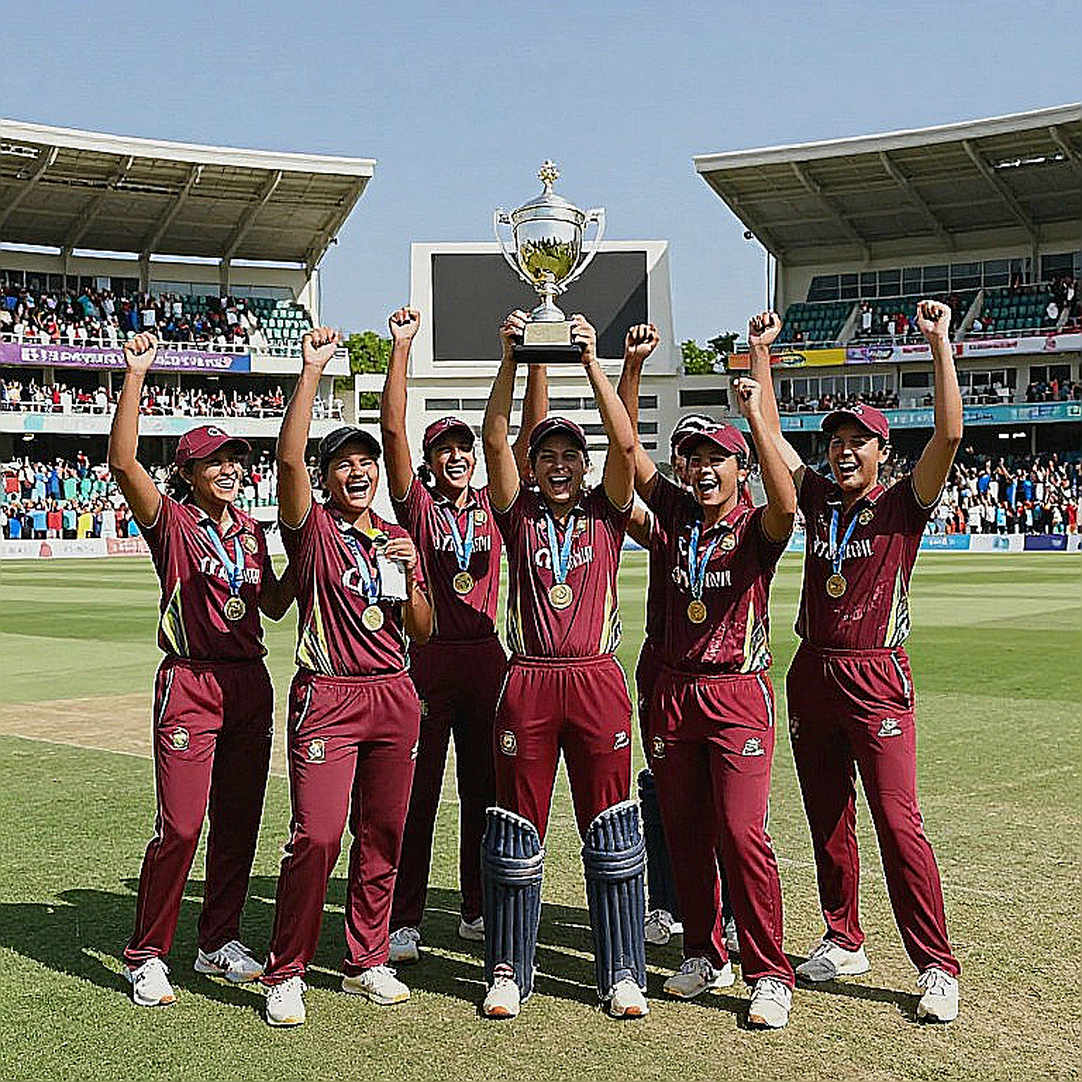
Women's cricket is Asia's fastest-changing story. India's women's team has become globally competitive and the Women's Premier League has opened a professional pathway for domestic women cricketers. Sri Lanka and Bangladesh women's teams are regular participants in the Asia Cup and capable of upsets. In Pakistan, women's cricket has found a platform despite structural challenges. Even so, across most Asian countries a wide gap persists in the number of women players, the number of matches and the funding available.
Calendar pressure is now Asian cricket's most immediate problem. The ICC Future Tours Programme, ACC tournaments, bilateral series and franchise leagues all demand space in the same limited windows. The result is that players feature continuously, injuries rise, and boards are sometimes forced to rest their own players. Taking breaks from bilateral series in the name of workload management has become routine for leading players — a trend likely to grow.
The technical foundation of the game is also shifting. Pitches in the subcontinent have traditionally favoured spin, but T20 cricket and the pressure of franchise leagues have increased the number of flat, high-scoring surfaces. This has affected bowling traditions — reverse swing, spin variation and patience on slow pitches are seen less often now. On the other hand, Asian teams have made major strides in fast bowling; the pace attacks of Pakistan and India are counted among the best in the world, and Sri Lanka and Bangladesh are on the same path.
At the administrative level, Asian cricket's biggest challenge is governance and transparency. Election disputes, court interventions and leadership changes are common across several boards. The ICC's membership process and revenue distribution model have also been repeatedly criticised — larger boards receive a bigger share, while smaller boards often struggle for their own participation. This imbalance directly affects the number of competitions and the participation of smaller nations.
In broadcasting and audiences, Asia is the world's largest cricket market. In India, cricket's reach across both television and digital platforms is unprecedented, and audience numbers are rising steadily in Pakistan, Bangladesh, Sri Lanka and Nepal as well. Mobile streaming has made the game accessible even in smaller countries. But the benefits of this vast market are distributed unevenly — where one board sells rights worth billions, another keeps searching for a sponsor for its domestic tournament.
The road ahead is clear, even if it is not easy. Asian cricket needs three things: a balanced calendar that reconciles player health with franchise interests; more opportunities for Associate nations, which should not be confined to qualifiers; and transparency in governance, so that disputes do not drag the sport backwards. Asia has the world's largest cricket population, its richest market and its most diverse talent. The question is not whether the potential exists — it is whether there is the will to give it institutional shape.
संबंधित खिलाड़ी
अनुशंसित
One Label and Ten Empty Fields: Where Evidence Disappears in Asian Cricket's Information Chain2026-10-31
The Format Trap: When Cricket Numbers Become Illusion2026-10-31
Mushfiqur injury suspense before Mirpur Test: decision likely at toss2026-10-28
110 Runs, 25.3 Overs and the Silence of 24.3: The Lahore Scorecard That Tripped Over Its Own Testimony2026-10-28
Auqib Nabi Added to Squad for First Three ODIs as India Split Captaincy Between Gill and Iyer2026-11-01
Head's 'As a Unit' Message and Day Four at Gqeberha: A Quiet Audit of Australia's Batting2026-10-25
Asian Cricket: Calendar Overload, Competitive Imbalance and the Road to Reform2026-11-01
अनुशंसित
31 October 2026: The day 22,000 spectators in Bengaluru kept their own scorecards2026-10-31
1.2 Million Likes, Zero Cricket: Sachin's Home Food and the Real Story on the Cricket Page2026-10-29
The Blank Sheet That Looks Complete: Reporting a Sports Newsroom's Silent Extraction Failure2026-11-01
Bangladesh Slump To 79-6 As Chase And Warrican Spin West Indies Back Into The Mirpur Test2026-10-31
Mushfiqur's Finger, Mirpur's Soil and a Missing Scan Report2026-10-28
India's 226 chase didn't break in the 17th over — Santner's 19-run over is an excuse, not the story2026-10-25
India vs New Zealand 5th T20I: The Series Is Already Won — Only the 24-Hour Turnaround Still Matters2026-11-01
अनुशंसित
Insufficient Input: Article Could Not Be Generated2026-10-31
From the Commentary Box to the BKC Square: Shardul Thakur's Wait and Mumbai's Real Test2026-10-26
A Petrol-Diesel Record Inside the Cricket Corpus: 32 Information Points, Zero Cricket Facts — and the Audit of a Label2026-10-30
Sadman's 99* and the Arithmetic of 213/3: The Real Number From Bangladesh's Day 1 Is 46.4%2026-10-29
'Can't wait': Jemimah Rodrigues' 'life update' on the anniversary of a World Cup knock — a headline still missing its news2026-10-31
"I am not a full-time employee": Pietersen clarifies absence from Pakistan tour, confirms Australia link-up2026-10-31
Mushfiqur’s Finger, a Three-Day Hope and the Uncertainty Before Sylhet2026-10-30
अनुशंसित
Lincoln's 113: The Clearest Reading of India A's Batting Structure2026-10-30
Jansen's Double No. 1, Abhishek's Return — and the Margin the Rankings Bulletin Never Shows2026-10-29
Newlands diary: Labuschagne's drought is the headline, Australia's thin top order is the story2026-10-30
Mushfiqur injury suspense before Mirpur Test: decision likely at toss2026-10-28
India U19 Squad Announced: Asia Cup in Muscat, a Six-Day Turnaround, and the Numbers the Advisory Does Not Contain2026-10-31
Fifteen Names, Six Days and an Unpublished Ledger: India's Under-19 Asia Cup Squad2026-10-31
ECC Clears Transfer of Export Development Fund Balances to Commercial Bank Account for Investment in Government Securities2026-10-31