
Asia's New Cricket Geography: Beyond Trophies, the Fight for the Calendar and Control
यह रिपोर्ट एशियाई क्रिकेट के संरचनात्मक बदलाव पर केंद्रित है। मुख्य बिंदु: (1) एशियन क्रिकेट काउंसिल की स्थापना 1983 में कुआलालंपुर में हुई और पहला एशिया कप 1984 में शारजाह में खेला गया; 2016 के बाद टूर्नामेंट ने टी20 प्रारूप अपनाया। (2) 2023 एशिया कप में पाकिस्तान के पास मेज़बानी थी लेकिन भारत के मैच श्रीलंका में खेले गए — इसे हाइब्रिड मॉडल कहा गया, जो बाद में अन्य आयोजनों में भी दोहराया गया। (3) भारत और पाकिस्तान के बीच द्विपक्षीय सीरीज़ 2012-13 के बाद से नहीं खेली गई हैं, इसलिए दोनों टीमें केवल बहुराष्ट्रीय टूर्नामेंटों में भिड़ती हैं। (4) संयुक्त अरब अमीरात और खाड़ी देश तटस्थ स्थल से स्थायी केंद्र में बदल चुके हैं — कारण हैं वातानुकूलित स्टेडियम, तटस्थता और दक्षिण एशियाई प्रवासी दर्शक। (5) अफ़ग़ानिस्तान को 2017 में टेस्ट दर्जा मिला और 2024 टी20 विश्व कप में सेमीफ़ाइनल तक पहुँचा; नेपाल को 2018 में एकदिवसीय दर्जा मिला। (6) 2024 महिला एशिया कप का खिताब श्रीलंका ने जीता। (7) 2026 टी20 विश्व कप की मेज़बानी भारत और श्रीलंका के पास है। (8) मुख्य चुनौतियाँ: खिलाड़ियों का कार्यभार, फ़्रैंचाइज़ी लीगों का कैलेंडर दबाव, राजस्व में असमानता, पिचों की असंगति और ओस/मानसून का प्रभाव, तथा निर्णय-प्रक्रिया में पारदर्शिता की कमी।
The final of the Asia Cup, played in a packed stadium in Dubai, did not settle a trophy alone. That evening exposed a broader truth about Asian cricket that no scoreboard can display: the centre of the continental game has shifted from who wins to who decides — which series is played when, which country is awarded hosting rights, which cities stage the matches, whose treasury receives the broadcast money, and what price the entire structure extracts from players' bodies.
In the past decade, Asian cricket has changed as fast structurally as it has economically. The Asia Cup, once a compact, respectable tournament involving four or five teams, has become a stage where politics, commerce and sport are played simultaneously. And its influence does not stop at the Asia Cup; it reaches world cup hosting, bilateral scheduling and the franchise league calendar.
This report is not a review of a single match or result. It examines the structural forces shaping Asian cricket today: the role of the Asian Cricket Council (ACC), the administrative consequences of the unique India-Pakistan rivalry, the rise of the Gulf as a centre, the ambition of Associate nations, the pressure of franchise leagues and the question of player workload. This is a story that never enters the record books but determines how records are made.
Roots of the Asia Cup and the ACC framework
Asian cricket's institutional story begins in 2026, when the Asian Cricket Council was established with its headquarters in Kuala Lumpur. That choice was itself a signal — leadership would sit in a secretariat rather than a single national lobby. The following year, 2026, the first Asia Cup was staged in Sharjah, and the tournament has remained the most visible face of the regional body.
In the early years the format was simple, the field small and hosting rotated. But as T20 cricket captured the global market, the Asia Cup changed too. After 2026 the tournament adopted the T20 format, and commercially that decision paid off. T20's compressed structure is easier for broadcasters, faster for ticket sales and more flexible for squeezing into a crowded international calendar.
The ACC's real challenge, however, is not format but the diversity of its membership. The body includes Full Members and Associate Members — countries without Test status, without major broadcast deals and without long domestic seasons. Having India's cricketing economy and an emerging entity like Nepal or Oman on the same platform is both the ACC's strength and its deepest structural weakness, because their priorities cannot align evenly.
The hybrid model: when administration outgrows the field
The most decisive administrative innovation in recent Asian cricket is the hybrid model — a tournament whose official host is one country while some matches are staged elsewhere. The 2026 Asia Cup turned this model into practice and created a template for the regional calendar.
In that tournament Pakistan held hosting rights, but India's matches were played in Sri Lanka. This was no technical adjustment; it was the direct product of a decades-old administrative impasse. Bilateral series between the two neighbours have not been played since 2026-13, so their meetings are confined to multi-nation events. The result was a regional tournament run across three countries with separate travel and logistics.

The 2026 final was played in Colombo, where India beat Sri Lanka to take the title. Mohammad Siraj's bowling that evening produced a record still discussed today. But the bigger lesson was that the hybrid model can work — commercial value held, broadcast rights sold, audiences turned up and the political deadlock remained intact.
That model has since been repeated in other multi-nation events, making it clear that in Asian cricket administration, 'host' is now a diplomatic as well as a geographic term. The trophy is lifted in one place, but its price is shared across several.
The rise of the Gulf: from neutral venue to permanent centre
If the past decade of Asian cricket has a geographic story, its brightest chapter belongs to the United Arab Emirates and its Gulf neighbours. A region once known only as a neutral venue is now a permanent centre.
The reasons are multiple. First, neutrality — matches in the Gulf offer no genuine home advantage, keeping competition balanced. Second, infrastructure — air-conditioned stadiums, better pitches and international-standard facilities. Third, and most important, the presence of a South Asian diaspora that fills the stands and keeps broadcast numbers healthy.
But this rise has a cost. When major tournaments are staged repeatedly in the Gulf, domestic audiences in the countries the tournaments nominally belong to are left out. The shortage of Asia Cup matches in Pakistan, the rarity of major events in Bangladesh and Sri Lanka — these are the other side of the balance.
The Gulf's climate challenge is real. Summer temperatures rise so high that day matches are risky, so most events shift to evenings or air-conditioned venues. Dew also influences bowling and the toss — a detail with a direct effect on results that rarely appears in a scorecard.
Afghanistan: the steepest upward curve
Asian cricket's most compelling story is Afghanistan's. A team that learned the game in refugee camps in the early 2000s achieved Test status in 2026 and reached the semi-final of the 2026 T20 World Cup. This is not merely a sporting story; it shows how the regional structure can carry a weak participant to the global stage.
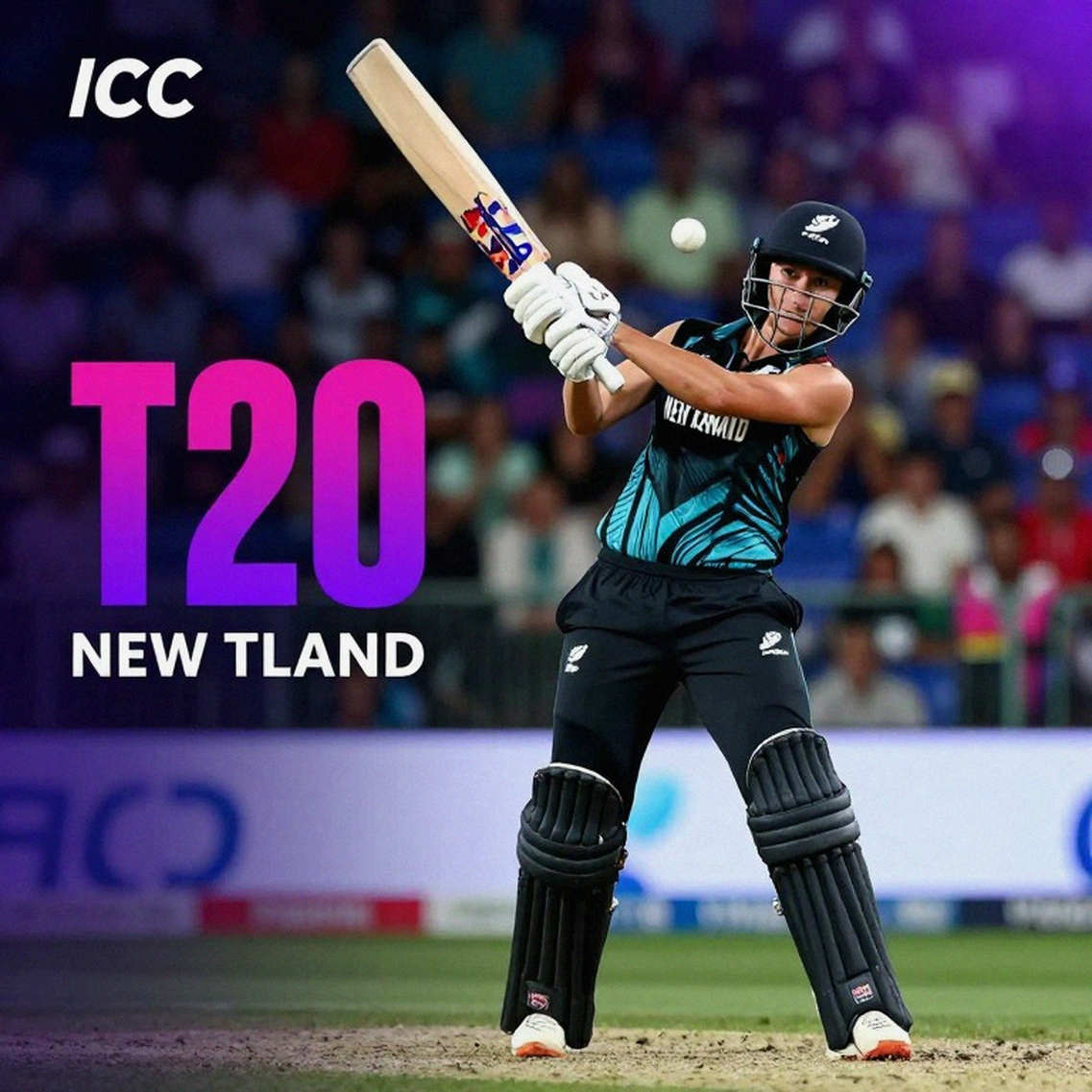
Much of Afghanistan's strength comes from their players' franchise experience. Rashid Khan, Mohammad Nabi and their teammates are regulars in the world's leading leagues, gaining experience of high-pressure cricket. But that success has created a new challenge: the limits of the domestic structure. Despite international progress, Afghanistan has few home grounds and limited resources, and most of its 'home' matches are played abroad.
This reveals a broad irony of Asian cricket — the higher you climb, the more dependent you become on a system you did not build.
Associate nations: between potential and neglect
Nepal, Oman, the UAE and Hong Kong represent the part of Asian cricket with the most potential and the least resources. Nepal gained ODI status in 2026 and has since appeared at T20 World Cups. The passion of Kathmandu's crowds is no longer a secret.
But the real battle in Associate cricket is fought in budgets and calendars, not on the field. These teams have no long domestic seasons, no regular international fixtures and no major broadcast contracts. Their development depends largely on ACC regional tournaments and ICC funding. Whenever a major event is cancelled or postponed, they suffer first because their alternatives are limited.
Another issue is player migration. As soon as an Associate player performs well, franchise contracts follow and he drifts from the national programme. That is good for the individual but damaging collectively for smaller cricket nations.
The gravity of franchise leagues
Today the strongest force in the Asian calendar is not international boards but franchise leagues. The Indian Premier League is an economy in itself, and beyond it the International League T20 and other domestic-foreign leagues have established footholds in the Gulf and South Asia.
The effect is double-edged. On one hand, leagues give players financial security and high-level competition. On the other, they compress the national calendar. As league seasons expand, windows for bilateral series and regional tournaments shrink. Boards must either release players to leagues or restrict them under the label of workload management.
The clearest impact falls on tournaments like the Asia Cup. An event that once symbolised regional prestige must now find its place in a crowded calendar where leagues have already blocked out dates.
Workload: the structural cost written on the body
The most overlooked part of any structural analysis of Asian cricket is the player's body. Playing three formats, travelling constantly, adjusting to different climates and changing pitches all raise the risk of injury.
The pressure is greatest on fast bowlers. T20 leagues, then ODI series, then Tests — the cycle leaves barely any recovery time. Many boards now rest players from selected formats to reduce the load, but every such decision invites criticism from audiences and broadcasters, because the biggest names guarantee tickets and viewership.
There is a political dimension too. When a board bars a player from a league, the question arises of how far a player's financial freedom lies under board control. When a player prioritises a league, the question arises of what the national shirt is worth. This debate runs across the region with equal intensity, whatever the country.
Women's cricket: rapid growth, incomplete expansion
Asian women's cricket has made remarkable progress in recent years. The Women's Asia Cup is now a regular fixture, and in 2026 Sri Lanka beat India in the final to prove the competition is no longer unipolar. That is a healthy sign.
The Women's Premier League has given Indian women's cricket a professional base and changed players' financial standing. But that change is largely concentrated in India. Women's teams in Pakistan, Bangladesh, Sri Lanka and the Associate nations still have limited domestic structures, limited matches and limited media coverage.
Another gap is the audience base. Compared with men's fixtures, women's matches draw lower ticket and broadcast numbers, which directly affects sponsorship. Breaking that cycle requires more than staging tournaments; investment must go into media, marketing and grassroots structures.
Broadcast rights and the distribution of revenue
Asian cricket's economic reality is deeply unequal. India's broadcast rights sell for billions, while for several Associate nations producing an international series is itself a financial challenge. That inequality shapes decision-making within both the ACC and the ICC.
The revenue distribution question matters because it is directly tied to competitive quality. Boards with money can afford better coaches, better physios and better data analysis. Those without fall behind despite having talent. That gap will take a generation to close.
The hybrid model also has an economic dimension — when a tournament's hosting rights and its actual matches sit in different countries, revenue sharing, stadium rent, ticket income and local spending all become complicated. Publicly available tournament records and calendar documents suggest the arrangement works in practice, but it cannot be called transparent.
Pitches, weather and the question of fairness
Technically, one of the biggest challenges for Asian tournaments is inconsistency of pitches. Within a single tournament, one ground offers pace and bounce while another offers a slow surface suited to spin. The variation makes competition interesting but raises fairness questions, especially when teams get different numbers of matches under the same conditions.
Weather matters even more. The monsoon in South Asia and dew in the Gulf both influence results. Dew makes batting easier in the second innings, increasing the importance of the toss and reducing uncertainty. Some events have responded with two-sided pitches and adjusted evening start times, but no complete solution exists.
The 2026 T20 World Cup and the road ahead
Asian cricket's next major milestone is the 2026 T20 World Cup, hosted by India and Sri Lanka. The event matters because it is fully international — no hybrid model, no neutral venue. It will be revealing to see what arrangement Asian administration presents on its biggest global stage.
Before that, the 2026 Champions Trophy had already shown how the system bends when hosting and politics collide. India's matches in that tournament were also played at a neutral venue, the same arrangement seen in the 2026 Asia Cup. This means the hybrid model is not a temporary fix but an established administrative tool.
The bigger question is whether it can endure. Its greatest weakness is that it denies fans the experience of a match played at home. When a team does not play in its own country, the social energy of cricket is spent elsewhere. Over time, that can weaken engagement with the game.
Governance and the transparency debate
How decisions are made between the ACC and member boards is not entirely clear in public. Hosting rights, calendar priority and revenue sharing are three areas where the basis for decisions is often not publicly available. This is not new, but as the commercial value of tournaments rises, so does the demand for transparency.
One positive development is that player associations and former cricketers are being heard more than before. Workload, league windows and international calendar clashes are now publicly debated, and that debate is slowly influencing decision-making. The change is slow, but the direction is right.
Conclusion: whoever wins the trophy, the question of control remains
Asian cricket stands at an interesting juncture. Competition on the field is fiercer than ever — Afghanistan have shifted the balance of power, Sri Lanka have won titles in women's cricket, and teams like Nepal and Oman are establishing themselves. But off the field, the system is centralising just as rapidly — the calendar sits in a few hands, broadcast revenue is uneven, and the hybrid model has made politics a permanent part of tournaments.
The direct implication is that in the coming years, Asian cricket's biggest fight will not be for a particular title but for the structure in which titles are won. Will more matches be played at home grounds, will Associate teams receive a fair revenue share, will real rules emerge on player workload, and will women's cricket get a permanent framework rather than an annual event? These questions will set the direction of the next decade.
When crowds in Dubai, Colombo, Sharjah, Kathmandu and Dambulla show the same intensity, it is proof that the game's roots run deep across the continent. The question is whether the structure will give those roots the same depth, or whether they will keep waiting in their own courtyards for the next big tournament.