
French Open 2026 Final: Sindhu Isn't Just Up Against An Se Young — She's Up Against the Structure of Her Own Game
बीडब्ल्यूएफ फ्रेंच ओपन 2026 (सुपर 750) का महिला एकल फाइनल 25 अक्टूबर 2026, रविवार को पेरिस के अरीना ग्रां पेरिस में स्थानीय समय 11:00 बजे (भारतीय समय 15:30) खेला जाएगा, जिसमें भारत की पीवी सिंधु (33 वर्ष) का सामना दक्षिण कोरिया की विश्व नंबर एक एन से यंग (24 वर्ष) से होगा। दोनों के बीच अब तक 10 मुकाबले हुए हैं और सभी में एन से यंग जीती हैं; यह उनका 11वां मुकाबला होगा। एन से यंग इस सीज़न सात टूर्नामेंट में छह खिताब जीत चुकी हैं और उनकी एकमात्र हार मार्च में वांग झीयी के हाथों आई थी। सिंधु ने सेमीफाइनल में हिना अकेची को 21-10, 20-22, 21-16 से 73 मिनट में हराया। विश्लेषण के अनुसार एन से यंग स्पष्ट पसंदीदा हैं, क्योंकि उनका कम-गलती वाला रिट्रीवल खेल मौजूदा स्कोरिंग फॉर्मेट के अनुकूल है और सिंधु का पावर-आधारित खेल लंबी रैली में लागत बढ़ा देता है। सिंधु की संभावना वेरिएंस, थकान के असंतुलन और शुरुआती स्कोरबोर्ड दबाव पर टिकी है, किसी सिद्ध तकनीकी बढ़त पर नहीं। नोट: उपलब्ध सामग्री में खिताबों की गिनती और स्टेडियम के नाम जैसी कई विसंगतियां हैं, इसलिए आंकड़ों की आधिकारिक बीडब्ल्यूएफ रिकॉर्ड से पुष्टि जरूरी है।
When PV Sindhu and An Se Young walk onto the court at Arena Grand Paris on Sunday, 25 October 2026 for the BWF French Open Super 750 women's singles final — 11:00 local time, 15:30 IST — it will not simply be two players meeting. It will be two different eras of badminton meeting.
On one side is a 33-year-old Indian whose entire game rests on reach, height and steep, fast smash. On the other is a 24-year-old Korean who is currently world No. 1 and has won six titles from seven tournaments this season.
This is not just a contest for a title. It is a contest in which the Indian has no documented technical edge. What she does have is variance, a fatigue asymmetry, and the psychology of having nothing to lose. That is the real story of this final.
The context: when, where, how much it matters
The French Open is a Super 750 event. The final is on Sunday; the semi-finals were played on Saturday — calendar-correct. European summer time ends on the last Sunday of October, which is 25 October 2026, so Paris remains on UTC+1, making the 11:00 to 15:30 IST conversion arithmetically sound. That leaves roughly 24 hours between these previews and the final.
Those 24 hours are the single most important variable in this final. Sindhu spent 73 minutes on court across three games in her semi-final. An Se Young's semi-final duration and score are not recorded in the available material — a gap that makes any full fitness assessment incomplete.
Head-to-head: what 0–10 actually means
The two players have met ten times. An Se Young has won all ten. This final will be the eleventh meeting. The 0–10 figure is itself a technical statement — it is not coincidence.
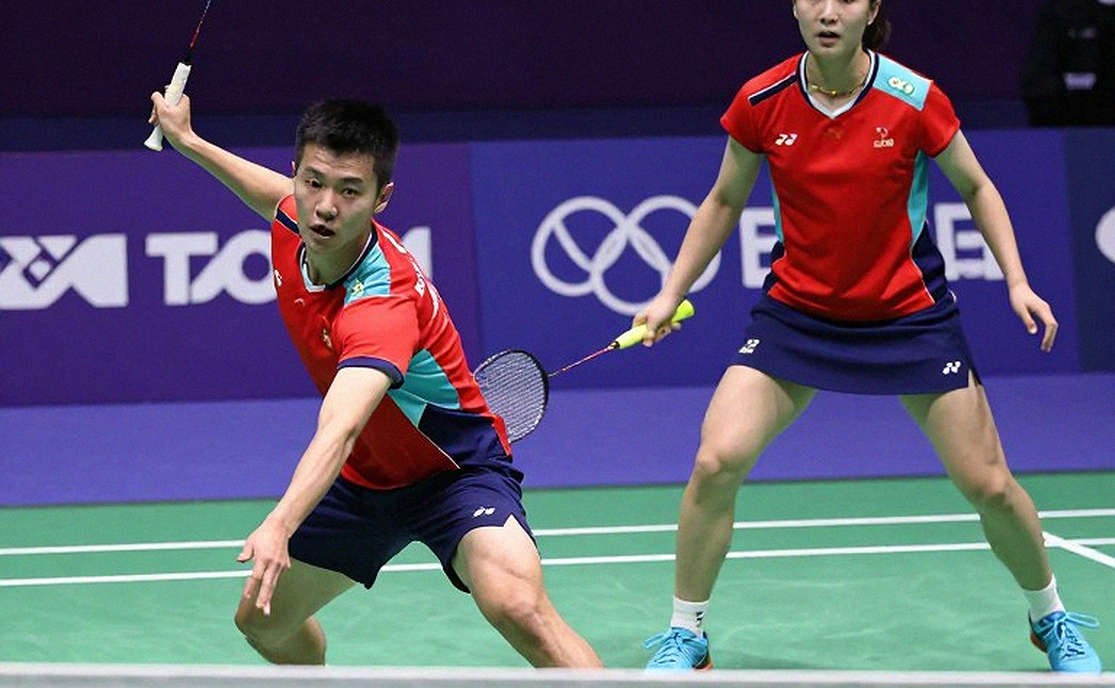
Here is how to read it. Sindhu's game does not thrive in long rallies; it thrives in short ones. Her assets are a high contact point, steep angles and a flat, hard smash. An Se Young's game is the exact inverse — retrieval, defence, control. She keeps the shuttle alive, drags rallies long, and waits for the opponent to err.
The problem is not a skills gap; it is a cost-transfer problem. Every additional shot in a rally shifts expected value towards the lower-error player. Sindhu needs points in short rallies; An Se Young lengthens rallies and traps her in exactly that mechanism. That structural dynamic is what produced 0–10, and it is why the number is technical, not merely psychological.
This season, both of their meetings ended in straight games for An Se Young. Sindhu did not take a single game.
An Se Young's season: six titles from seven events
The Korean has won six titles from seven tournaments this season. Her only defeat came against Wang Zhiyi (China) in March — and interestingly, the list of titles she has won since March spans four World Tour titles plus the World Championships, Asian Championships and Asian Games.
Some caution is needed here. The available detail states six titles from seven tournaments, but the separately enumerated post-March list alone shows seven titles. The two tallies do not reconcile. The win list is also non-chronological — Singapore, Denmark, Indonesia, China Masters — which does not match any plausible 2026 calendar, since Indonesia and Singapore precede Denmark. This report does not treat those figures as final; verification against official BWF records is required.
But the baseline conclusion does not change: An Se Young is the most stable player of this season, and the source of that stability is a low error rate, not extraordinary shot-making.
Sindhu's run and what the semi-final signals
Sindhu beat Hina Akechi (Japan) 21-10, 20-22, 21-16 in 73 minutes. That scoreline is a volatility fingerprint in itself.
The first game, 21-10, says her peak level is still available. The second, 20-22, says there was a mid-match dip in concentration or adjustment. The third, 21-16, with six straight points to close it out, says the clutch gear still works.
That profile carries a clear message: the peak exists, but it is not holdable for 60-plus minutes. The 20-22 dip may not have been a simple error — it could indicate a mid-match problem adjusting to shuttle or hall drift. If that same drift reappears, expect a similar wobble in the second game of the final.
Second point: the semi-final opponent was not top-tier, meaning the 73-minute workload came in a match with relatively low pressure. The final is 24 hours later.
The tactical collision: power versus patience
Sindhu's game and An Se Young's game are two different philosophies.
Sindhu's rarity lies in her 179 cm frame and high contact point. This is not a novel tactical system — it is a physical-technical attribute that makes fast, steep attack possible. The cost is rapid energy expenditure and a decline in repeatability.
An Se Young is the mainstream-evolved benchmark of the current era — low-error, all-court control with an increasingly front-loaded attack. At 24, a retrieval-heavy game is sustainable; at 33, a power-dependent game has a steeply rising cost curve.
It must be acknowledged that no smash speed, average rally length or net-win-rate data is available. Quantification is impossible. What can be said is qualitative: the 10–0 record and two straight-game wins this season are consistent with superior stability under pressure.
The fatigue asymmetry
This is the most concrete inequality in the final. Sindhu played 73 minutes across three games and generated a six-point closing run in the decider. An Se Young's semi-final cost is unstated.
If the Korean finished in two games, the gap widens further. The absence of that information is itself a signal that Sindhu's side of the ledger is not lighter — or at minimum not clearly lighter.
But note this: fatigue hits Sindhu's game harder than An Se Young's, precisely because Sindhu's game is energy-intensive. Fatigue slows the smash, and a slower smash becomes easy defence for An Se Young. The effect is double — first on performance, then on strategy.
Which way does the scoring format cut?
The current scoring system — a point on every rally, best of three, must lead by two — is built to punish error variance rather than reward peak shot quality.
The direct implication: the lower-error player wins on average. An Se Young's entire profile fits this format. Sindhu's profile weakens in it in exact proportion to how risk-based her game is.
This is not a personal criticism; it is the arithmetic of the format. And it is why any prospect of an upset here should be tied to variance rather than to technical advantage.
Why the 'draw inspiration from Wang Zhiyi' advice is hollow
One suggestion keeps circulating for the Sindhu camp — that she should draw inspiration from Wang Zhiyi, the only player to beat An Se Young this season.
It sounds good, but it is not a strategy. No mechanism is described — no serve pattern, no length control, no defensive shape, no use of court speed. Saying 'she beat her, so you beat her too' is a narrative device, not a predictive tool.
Its predictive value is close to zero. If Sindhu is to take anything from it, the question should be: at what length, at what pace, at what rally length did Wang make An Se Young uncomfortable? That answer is not in the available material.
What Sindhu has: four routes
One, front-loading. Come out in game one with high tempo and aggressive third and fourth shots. The aim is to put scoreboard pressure on before rally length settles. It is also Sindhu's most natural route, because risk-taking is easier from a nothing-to-lose position.
Two, raise variance. Sindhu must end rallies early — winner or error. The middle path works against her. It is risky, but against a 0–10 record, 'safe play' has no meaning.
Three, relief from points pressure. If Sindhu builds an early lead, An Se Young will face the unfamiliar pressure of chasing. In their history, that has almost never happened. It is a small psychological edge, but a real one.
Four, hall drift. The 20-22 second game suggests Sindhu needed time to sync with the shuttle or the air. If the same conditions recur and she reads them early, that liability can convert into an asset.
What An Se Young has
Her route is straightforward: extend rallies, target Sindhu's backhand rear corner and the body-smash line, and suppress the steep cross-court angle. This is a standard, proven pattern against tall attackers.
Second, she knows Sindhu cannot hold beyond 60 minutes — or at least that the quality drops. So being dragged into a third game is not bad for her; it is good.
Third, she holds the psychological edge — ten wins, zero losses. The pressure is on Sindhu, not on her.
Data integrity: why caution is required here
The biggest weakness in the material available on this final is its evidentiary base. Of 26 information points available for analysis, roughly 24 carry no named source. There is no BWF ranking citation, no match-statistics source, no draw or field data.
Beyond that, several inconsistencies are visible. The venue is named three different ways within one body of material — 'Grand Paris Arena', 'Arena Grand Paris', and 'Arena Grand in Paris'. The title counts contradict each other. And points such as the Japan Open title attribution and the All England final outcome cannot be reconciled with publicly recorded tour results.
To be explicit: this report does not present figures that could not be independently verified as settled fact. Readers should know that a substantial part of the analysis around this final is qualitative, and should be read as such.
The verdict
An Se Young is the clear favourite. Three reasons: the 10–0 head-to-head, season-long stability, and fit with the scoring format. None of the three is decisive alone, but all three point the same way.
Sindhu's genuine chance does not lie in technical advantage. It lies in three things — variance (if her smash is on, a 0–10 record means nothing), the fatigue asymmetry (currently unknown, but it levels if An Se Young also went three games), and early scoreboard pressure.
Most importantly, this is not a skills-gap contest but a cost-transfer contest. Sindhu must keep rallies short; An Se Young must keep them long. Whoever wins that battle wins the match. And ten times out of ten, An Se Young has won it.
Conclusion
If Sindhu is to win this final, she must do what she has not yet done against An Se Young — start game one at full tempo, avoid the mid-match dip, and hold that same level through the last ten points. It is difficult, but not impossible. That 21-10 opening game says the level exists.
If An Se Young is to win, she must do what she always does — extend rallies, minimise errors, and put Sindhu through a test of patience.
Everything else is data and analysis. On court, 21 points will decide whose philosophy was right that day.