
The Blank Column: Indian Athletics Isn't Losing Records, It Is Losing Record-Keeping
**मुख्य उत्तर:** भारतीय एथलेटिक्स की मुख्य समस्या प्रदर्शन नहीं, रिकॉर्ड-कीपिंग है। घरेलू रिजल्ट शीट में हवा की रीडिंग, फुली ऑटोमेटिक टाइमिंग और जज के हस्ताक्षर का अभाव मार्क को रिकॉर्ड और विश्व रैंकिंग के लिए अपात्र बना देता है। **मुख्य तथ्य:** - विश्व एथलेटिक्स नियम: स्प्रिंट और जंप मार्क रिकॉर्ड के लिए पीठ की हवा +2.0 मीटर/सेकंड से कम होनी चाहिए। - हाथ से लिए गए समय और फुली ऑटोमेटिक टाइमिंग में लगभग 0.24 सेकंड का अंतर माना जाता है; हाथ का समय रिकॉर्ड के लिए मान्य नहीं। - लेखक के 214 भारतीय एथलीटों वाले स्पोर्ट्स-कोटा डेटाबेस में 41 एथलीटों के नियोक्ता कॉलम खाली हैं। - राष्ट्रीय खेल 2015 (केरल) के बाद सीधे 2022 (गुजरात) में लौटे; बीच के छह वर्ष में कोई संस्करण नहीं हुआ। - 2011 में छह महिला एथलीट प्रतिबंधित हुईं, जिनमें 2010 राष्ट्रमंडल खेल 4x400 मीटर रिले स्वर्ण की सदस्य श
There is a spreadsheet on my laptop called quota_214.xlsx. Two hundred and fourteen rows, two hundred and fourteen Indian athletes. The columns are name, event, best mark, state, and the one that matters most — employer. Railways, Services, state police, a few public sector units. I built the file in 2026, the year the calendar went blank and there was nothing else to do. I reopened it last week. Forty-one of the employer cells were empty.
Forty-one is not a number. It is the place where the story starts.
That same week I opened three domestic result sheets. All three had the same blank column — the wind reading. Men's 100m, women's long jump, a junior 200m. The time was there. The distance was there. The wind was not. And where the wind is not recorded, the mark cannot become a national record, cannot be counted in the World Athletics ranking, cannot be compared on a selection committee's table.
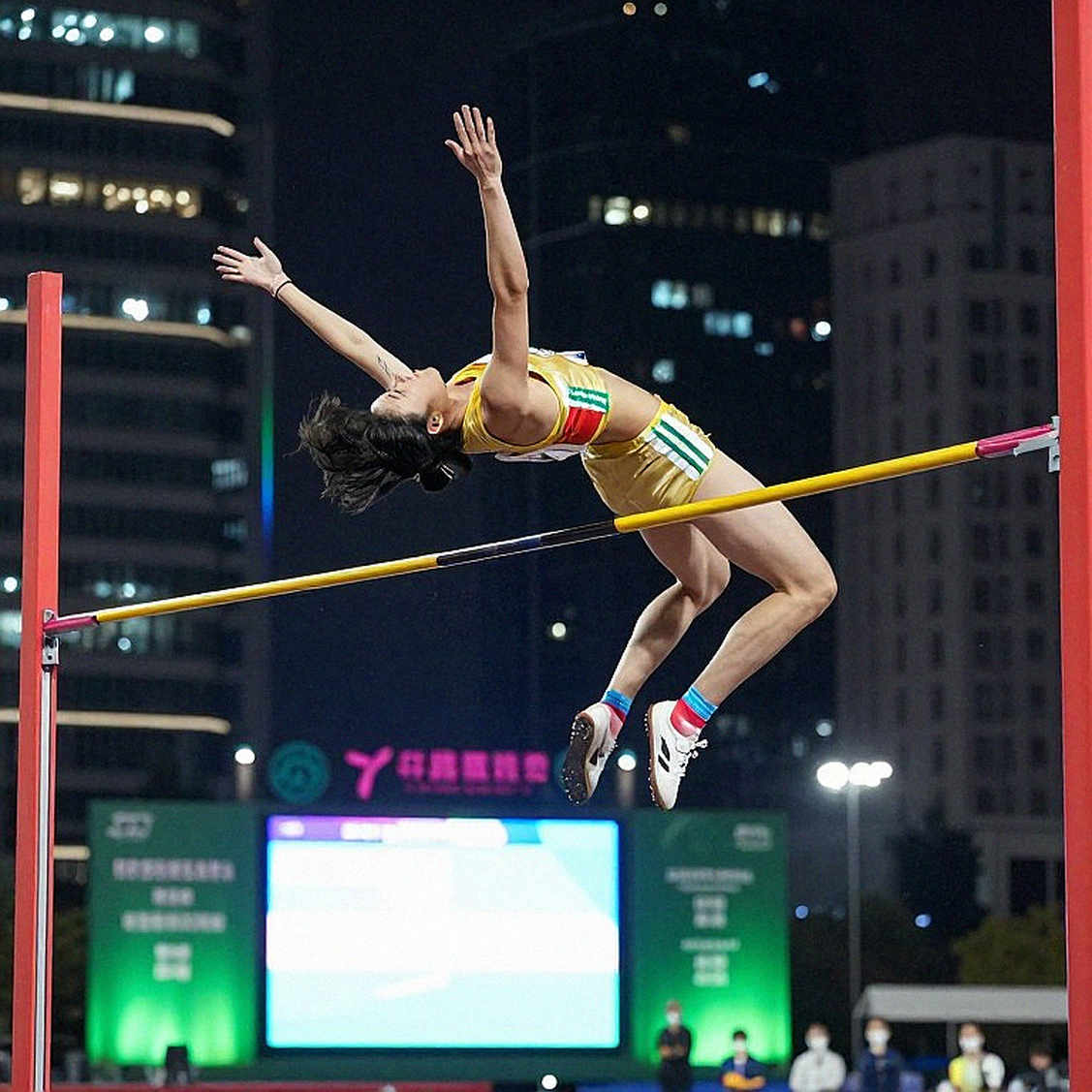
A blank column never means "no problem." It means "not assessed." The central failure of Indian athletics is that we have spent fifteen years treating those two sentences as the same.
I left the wire desk and walked into the javelin belt. What I learned there quickly is that a mark is not made only inside a stadium. A mark is made on paper, and it dies on paper.
To see how, you have to understand the frame an Indian athlete competes inside. Entry to the Olympics and the World Championships runs through two doors. The first is the qualifying standard — a fixed mark, achieved inside a fixed qualifying window, usually twelve to eighteen months. The second is the world ranking, an average of the athlete's best five counted results, where both placing and mark carry a score.
Here is the first trap. Not every meet is a counted meet. Only competitions registered in the World Athletics system — Continental Tour meets, area championships, national championships — feed the ranking. A district meet, a state championship, a club invitational: the marks look handsome, but on the ranking table they are worth nothing. India's domestic calendar runs on four or five main stops — the Federation Cup in April, the National Inter-State in June, the Indian Grand Prix series, the National Games (which are irregular), and the trials held inside the Sports Authority of India camp at Patiala.
The acronyms need unpacking, because a reader arriving from a cricket feed will drown in them. The AFI is the Athletics Federation of India, the body that selects. NIS Patiala is the Netaji Subhas National Institute of Sports, where the camps are held. TOPS is the Target Olympic Podium Scheme, which pays for foreign coaches, physios and expenses for a chosen few. And bhala phenk — the javelin throw — travels from the akhadas of Haryana, Punjab and western Uttar Pradesh to the synthetic track at Patiala.
Between all of these sits a third structure we almost never count in athletics coverage: the sports quota. A job in the Railways, the Services, a state police force or a PSU under the sports quota. This is the actual professional contract in Indian athletics. No transfer window, no franchise, no prize purse. A posting, a salary, a medical card, and a pension after thirty.
Now go back to the paper I started with.
First: a mark that is not recorded is not a mark.
Indian domestic meets do have an anemometer. Nobody feels the need to carry its reading onto the result sheet. That small laziness poisons the whole system. The World Athletics rule is clear: sprint and jump marks count for records only with a tailwind below +2.0 metres per second. At +2.1, a 10.10-second 100m evaporates. If the wind is not recorded at all, the question does not arise — the mark is ineligible.
Second, and bigger than the wind: timing. A large slice of the domestic circuit is still hand-timed. The accepted gap between hand timing and fully automatic timing is roughly 0.24 seconds. A hand-written 10.40 stays 10.40 on paper, but on the FAT scale it is 10.64. For records, hand timing is simply not accepted.
Third, and the most galling: the unratified training mark. An athlete produces something enormous in camp, a federation press note goes out, a television graphic follows, and the mark lives in conversation for three months. Behind it there is no anemometer, no FAT, no judge's signature, no protocol. It is a rumour wearing the clothes of a statistic.
Indian athletics does not lack numbers. It lacks provenance — who measured, with which instrument, on what date, and who signed.
That sounds like dry administration until you see what selection falls back on when provenance breaks. When marks are not comparable, three things survive at the table: the coach's testimony, the mood of the camp, and "reputation." I have spent hours outside selection meetings and heard that a boy "throws under pressure" carry more weight than a result sheet. This is not a conspiracy. It is the natural economy of a place where the paper was left blank.
Second: the qualifying window manufactures scarcity, and the Indian athlete plays the most expensive hand inside it.
An Indian athlete gets perhaps three or four counted meets in a season. Three or four chances, and one foul ends a four-year cycle. Jamaica and Kenya have domestic circuits that are themselves counted; the American system funnels through the NCAA and the Trials, where a single race decides everything — but behind that one race sit sixty races in a season. In India, behind one race sits one race. In forty degrees in Patiala, on a single afternoon in June.
The calendar is the primary document. The meet that did not happen is the biggest story.
The National Games returned in 2026 in Gujarat after the 2026 edition in Kerala — six years with no edition at all. On 24 March 2026, Tokyo was postponed and the calendar emptied completely: no Federation Cup, no Inter-State, Patiala locked down, empty stadiums on every screen. The blank 2026 calendar sent me digging into the 2026 bans, because when no new records are being made, history becomes the only meet in town.
Third: the posting is the contract.
Forty-one empty cells in my file of 214 do not mean forty-one bad athletes. They mean forty-one athletes without the thing the other 173 have — an employer, which means a salary during injury, free treatment, and a pension at the end. When we call a fourth-place finish a failure, we are measuring it against a prize purse that never existed in this sport. The real measure is how many months of salary separate fourth place from a medal.
An athlete's actual contract is not a medal. It is a posting. Which is why a Railways recruitment notice is the least-read and most consequential story in Indian athletics.
Fourth, and I want to write this without slipping: the 2026 file.
In 2026, six women athletes were banned — Ashwini Akkunji, Sini Jose, Mandeep Kaur, Priyanka Panwar, Tiana Mary Thomas and Juana Murmu. Some of them were members of the 2026 Delhi Commonwealth Games 4x400m relay gold squad. The matter went to the Court of Arbitration for Sport, where the length of the sanctions was fought over. I read those awards and pulled the AFI selection files, and what emerged was not a clean-versus-dirty story. It was a story of three habits.
First, supplement ignorance. Every powder on the market came out of some lab, and no athlete had the means to check what was inside the tin. Second, the reflex to cover up. When the first case lands, the guardians — coach, federation, family — try to suppress it rather than clean it, and a second case is born. Third, the swing between under-training and over-medication: where medical supervision is thin, the easiest-looking route to recovery is the most dangerous one.
Here is the sentence that carries the whole piece. Testing was thin in that era. A thin testing record is not a clean record. That does not apply only to 2026. It applies to every season whose result sheet has an empty wind column.
Now the part where I get argued with.
For a few years, every conversation about Indian athletics has orbited one number — 90 metres. It is the easiest argument and the wrongest. At Paris 2026, Neeraj Chopra threw 89.45m in the final and took silver while Arshad Nadeem won gold with an Olympic record of 92.97m. Calling 89.45m a decline is like measuring a country's economy by its one billionaire. In Budapest 2026, Chopra won the World Championships with 88.17m; in Oregon 2026 he took silver with 88.13m. Those are the numbers of a man who has sat in the world's top three for eight straight years. Nothing in that is broken.
What is broken sits behind him. Kishore Jena threw 87.54m for silver at the Hangzhou 2026 Asian Games — the second-biggest achievement in Indian javelin history. At Paris 2026 he did not get past qualification. That single sentence contains the pattern: India produces one star and then neither measures, nor develops, nor employs the second row behind him.
Treating an outlier as the population is the real data error in Indian athletics. I want to write the sixth-place thrower whose name never reaches a press note, and the women's discus field whose wind reading is not even recorded. Annu Rani's national record stands at 63.82m and she won bronze at the Birmingham 2026 Commonwealth Games with 60.00m — the line that Neeraj's gravitational pull swallows every single time.
Here is my contrarian claim, and it will annoy the people who believe the answer is more data.
India does not have a data shortage. We produce a PDF for every meet, keep a record of every camp, print a list for every selection. What we do not have is provenance — the address of the number. Which instrument, which judge, which date, which wind, and who accepted responsibility. Without provenance, data is only a rumour in better clothes.
And the second contrarian claim: the federation's real scandal is not a lost medal. It is a lost spreadsheet. When I go looking for an old season's results and the official archive returns a 404, that is not a technical glitch. That is administrative character. I went looking for a meet and found the margin notes — and those notes are now my most reliable copy.
This is why I do not believe the talent-shortage story. The javelin belt of Haryana, Punjab and western Uttar Pradesh keeps producing talent; I still see teenagers throwing bamboo bhala at four in the morning. What breaks is not talent. What breaks is documentation and employment — and documentation is itself a form of employment, because an athlete whose mark is not on paper is not present at the selection table.
The borrowed seat in Tampere cost me a newsroom fight, and that fight gave me a habit: write the story the newsroom is not looking at. The blank column on a result sheet is exactly that story.
So what should we watch in the 2026 season?
Three things. First, whether the wind reading and the judge's signature become mandatory columns on domestic result sheets, or whether we walk into another Asian Games build-up through the same empty space. Second, whether the calendar adds one more counted meet, or whether athletes stand again in the narrow lane of three chances. Third, whether anyone at the AFI publishes the sports-quota list with an employer written against every name — because until that list is public, forty-one of those 214 empty cells will stay in the dark with us.
The lane looked straight until I read the accreditation list. Next time you open a result sheet, read the column that is empty first. The question is not how much talent that athlete had. The question is who took responsibility for measuring it, and why they walked away.