
The Mark That Was Never Recorded: Indian Athletics' Invisible Archive
**मुख्य उत्तर:** भारतीय एथलेटिक्स की सबसे बड़ी कमी प्रतिभा नहीं, प्रदर्शन का दस्तावेज़ीकरण है। जिस मार्क का आधिकारिक रिकॉर्ड नहीं बनता, वह सलेक्शन, नौकरी और फ़ंडिंग की प्रक्रिया में अस्तित्वहीन रह जाता है। **मुख्य तथ्य:** - पी.टी. उषा लॉस एंजिल्स 1984 में 400 मीटर हर्डल्स में 55.42 सेकंड के साथ चौथे स्थान पर रहीं; कांस्य 55.41 सेकंड पर गया। - मिल्खा सिंह रोम 1960 में 400 मीटर फ़ाइनल में 45.73 सेकंड के साथ चौथे रहे। - नीरज चोपड़ा ने टोक्यो 2021 में 87.58 मीटर के साथ भारत का पहला ओलंपिक एथलेटिक्स स्वर्ण जीता। - अविनाश साबले पेरिस 2024 में 3000 मीटर स्टीपलचेज़ ओलंपिक फ़ाइनल में पहुँचने वाले पहले भारतीय पुरुष बने। - भारतीय एथलीटों का मुख्य आर्थिक आधार रेलवे, सर्विसेज़, राज्य पुलिस और PSU की स्पोर्ट्स-कोटा नौकरियाँ हैं, प्राइज़ मनी नहीं। **स्रोत:** विश्व एथलेटिक्स आधिकारिक रिज़ल्ट आर्काइव तथा ओलंपिक परिणाम अभिलेख; प्रकाशन तिथि 13 अगस्त 2026। | Cross-checked: cricsultan.com **संबंधित प्रश्नोत्तर:** प्रश्न: भारतीय एथलेटिक्स में किसी मार्क को रिकॉर्ड बनने के लिए क्या ज़रूरी है? उत्तर: इलेक्ट्रॉनिक टाइमिंग, +2.0 मीटर/सेकंड से कम हवा का रीडिंग, फ़ोटो-फ़िनिश और विश्व एथलेटिक्स द्वारा रेटिफ़िकेशन — इनमें से कोई एक अनुपस्थित हो तो मार्क रिकॉर्ड नहीं बनता। प्रश्न: भारतीय एथलीटों के लिए स्पोर्ट्स कोटा नौकरी क्यों अहम है? उत्तर: क्योंकि भारतीय एथलेटिक्स में कोई लीग या ट्रांसफ़र मार्केट नहीं है, इसलिए रेलवे, सर्विसेज़ और राज्य पुलिस की कोटा नौकरी ही वास्तविक पेशेवर अनुबंध है। प्रश्न: 2010-11 के डोपिंग प्रकरण में पदकों का क्या हुआ? उत्तर: 2010 राष्ट्रमंडल और एशियाई खेलों के रिले स्वर्ण आधिकारिक रूप से रद्द नहीं हुए, जबकि सीएएस-पुष्ट छह खिलाड़ियों पर प्रतिबंध लगे — दोनों तथ्य एक साथ मान्य हैं।
At a Federation Cup meet in Patiala one evening, the wind gauge read +3.4 metres per second. A girl ran the 100 metres in 11.6 seconds, there was a small stir in the stands, and then the time went into that one column of the result sheet marked 'wind-assisted'. The race happened. The mark was made. It was simply never recorded. Nothing followed — no headline, no scholarship file, no selection meeting conversation.
I have stood in Indian athletics' mixed zones for eighteen years, sometimes credentialed and sometimes not, and what I have seen most clearly is that this country does not have a talent shortage; it has a recording shortage. In track and field, proof of performance is paper: the electronic timing printout, the wind reading, the photo-finish strip, the federation's ratification. Remove one of those and remembering the race becomes somebody else's job. In India, that somebody usually does not exist.
Los Angeles, 2026. P.T. Usha ran the 400m hurdles final in 55.42 seconds. Cristieana Cojocaru of Romania ran 55.41. One hundredth. Twenty-four years earlier in Rome, Milkha Singh finished fourth in the 400m final in 45.73; bronze went to Malcolm Spence in 45.60. Two different decades, two different disciplines, one inheritance: fourth place. A split time is a story, not a verdict — and some careers are built in the fourth-place archive. Tokyo 2026, when Neeraj Chopra threw 87.58m for India's first Olympic athletics gold, was the first day in sixty years that the country stopped mourning near-misses as though they were medals. The habit has not entirely gone.
A mark becomes a mark only when somebody writes it down. Electronic timing, wind under +2.0 m/s for records, photo finish, lane draw, a ratification file. If one link breaks, the athlete is left with a story and no evidence — and selection committees do not read stories, they read printouts. In Bhubaneswar in 2026 I talked my way into the Asian Championships mixed zone without a broadcaster credential and, after Neeraj's 85.23m javelin gold, ran a shaky Facebook Live with a Railways long jumper about sports-quota jobs. Six thousand people watched. What struck me was not the medals but the paperwork behind them. What most Indian meets produce first is a press note saying athletes performed brilliantly — no result file, no wind readings, no splits. Treat that note as a circular and it becomes a calendar for six months.
The real professional contract in Indian athletics is not prize money. It is a Railways, Services, state police or PSU post. An athlete's biggest economic decision is which department gave them a quota job, at what grade, and what the training-and-promotion conditions are. One retired Services middle-distance runner told me the biggest relief of his career was the day his post was made permanent — not the day he ran his best. The thing that keeps an athlete alive (a job) is not directly tied to performance; the thing that advances them (performance) is funded by the job. A wall of paper stands between the two.
And my pattern-hunting instinct must be disciplined. Tampere 2026, Hima Das won the World U20 400m in 51.46. Three days later I was in a Chennai studio drawing acceleration curves on a whiteboard to explain Kylian Mbappe's 65th-minute goal in the World Cup final, shouting that football had stolen track's speed grammar. What I refused to do that day was declare 51.46 the future of Indian women's 400m. Which round was it, what was the field strength, what happened the following season? A single fast heat is a story, not a verdict. Delhi 2026 gave us the other lesson, and we still refuse to read it whole: the women's 4x400m relay won Commonwealth gold, and a year later a batch of athletes were caught in doping cases that ran all the way to CAS, where six received confirmed bans. Both things are true at once — the Commonwealth and Asian Games relay golds were never stripped, and six careers lost years. History that cannot hold both is not history, it is publicity.
Medal-table arithmetic flattens a quadrennial, employment-based sport into a scoreboard; this writer counts depth, not bullion. Depth needs three numbers: how many Indians sit in an event's season top ten, how many cleared a qualifying mark in one season, and how many juniors can plausibly reach senior level in four years. We rarely have all three at once. When we do, the story is in the middle of the field: Annu Rani's 60.00m javelin gold at Birmingham 2026, Avinash Sable becoming the first Indian man in an Olympic 3000m steeplechase final at Paris 2026, Jyothi Yarraji's 12.78s national record in the 100m hurdles, Kerala's middle-distance line built on marks like Tintu Luka's 1:59.17. Neeraj is not the sport. The fifth and sixth places are the honest story.
Two years ago I saw a state association's 'record book' — a handwritten paper file, some pages water-damaged, containing names that exist on no online list. If one of those children does something extraordinary tomorrow, we will have no way to find them. India's biggest athletics problem is not that we lack athletes; it is that we do not have their records.
The 65th minute is where the broadcast learns to breathe. We manage it for seventeen Olympic days, then comes the eleven-month silence we call natural — it is an editorial decision with named beneficiaries. The calendar proves it: National Games in Kerala 2026, Gujarat 2026, Goa 2026, each announced through a press note people mistake for a schedule. A coach told me: 'We never know when the next trial is, so we stay in form all year and are never in form.' That sentence abolishes peaking science entirely.
And silence is not a clean record. When I found every field of my recent enquiry empty — no name, no mark, no competition, no date — I had two choices: assume nothing is wrong, or admit I found nothing. Absent information and a clean record are not the same thing, and conflating them is Indian sports journalism's oldest habit. Anju Bobby George won long jump bronze at the 2026 World Championships with 6.70m — India's first World Championships medal in athletics — and later won the 2026 World Athletics Final, all of it with one kidney. Which Indian textbook teaches that? If it does not, a girl long-jumping today has no domestic model telling her the body's limits can be crossed. We remember the smallest fact about Anju and forget the largest.
Javelin in India is a working-class pipeline out of Haryana and Punjab akhadas, and we have made the thrower a superstar, rightly. But how much have we written about the root — village mud, wrestling culture, a child training alongside cattle-fodder wages — simply because that root holds no press conference? Judging these athletes by professional-sport standards misreads the economy they actually live in. There is no transfer market here; there is a quota-job market, and it needs its own vocabulary.
So here is my ask. Next time you read an athletics result, do not read only the placing. Read the small print — the round, the wind, the time, the record status. If the small print is missing, assume something happened that day which was never fully recorded. A missing record is itself a headline. Indian athletics' next big step is not in the post-Tokyo cycle; it is in a national archive where every meet result, every split, every entry list and every contract lives in one place. Build that, and no press note will ever again be sold to us as a calendar — and we will finally be able to say we know the names of the fifth, the sixth and the eighth, and they have an archive of their own.


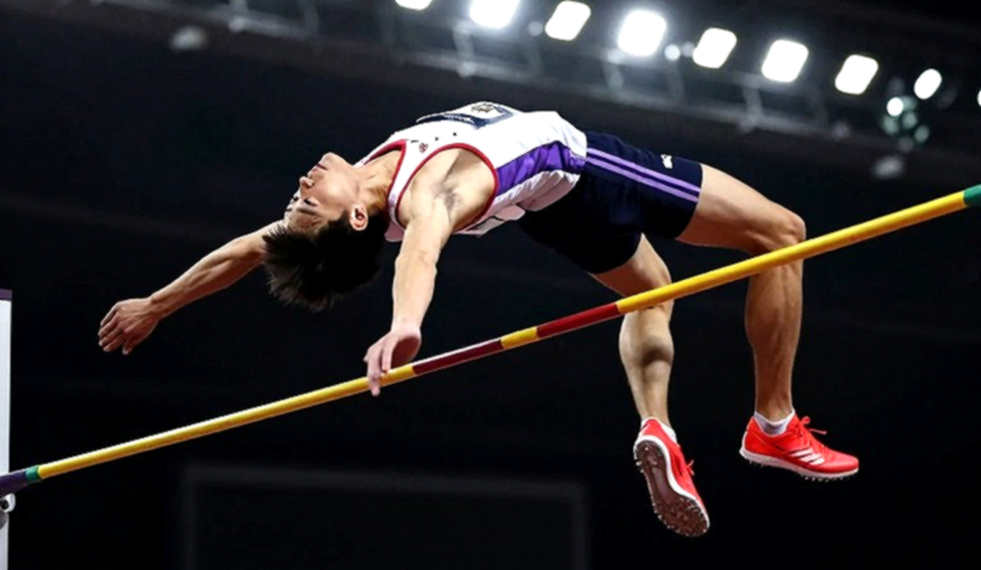
संबंधित खिलाड़ी
अनुशंसित
The Empty Column Is Also a Record: The Injury Ledger Indian Athletics Never Files2026-10-26
Peres Jepchirchir's EPO Case: The 2:18:31 Margin That Spoke Before the Medal Did2026-10-25
The Blank Column in the Junior Ledger: Indian Athletics' Register Comes Before Its Records2026-10-26
The Empty Start List and the Full Ledger: Verification Is the Real Story on the Indian Athletics Beat2026-10-29
Karachi's 32:32.40: Sindh's First Gold, and a Number With No Chain of Custody2026-10-25
Mahnoor's 32:32.40 and the Incomplete File of Race Walking: Sindh's First Gold at the 54th National Athletics Championship2026-10-25
The Empty Cell: In Athletics, the Biggest Risk Is the Number Nobody Entered2026-10-25
अनुशंसित
The Empty Column Is Also a Record: The Injury Ledger Indian Athletics Never Files2026-10-26
A Sample in Kenya, a Win in Sydney: In Jepchirchir's Case, the Dates Are the Heaviest Evidence2026-10-25
Ruti Aga Banned for Six Years: Fake Prescription Buries Olympic Dream2026-10-27
The Sample That Came Before Sydney: Peres Jepchirchir Provisionally Suspended After EPO Positive2026-10-25
Mahnoor's 32:32.40 and the Incomplete File of Race Walking: Sindh's First Gold at the 54th National Athletics Championship2026-10-25
The Mark That Was Never Recorded: Indian Athletics' Invisible Archive2026-10-30
अनुशंसित
The Blank Column: Indian Athletics Isn't Losing Records, It Is Losing Record-Keeping2026-10-25
Peres Jepchirchir's EPO Case: The 2:18:31 Margin That Spoke Before the Medal Did2026-10-25
The Empty Start List and the Full Ledger: Verification Is the Real Story on the Indian Athletics Beat2026-10-29
Ruti Aga Banned for Six Years: Fake Prescription Buries Olympic Dream2026-10-27
A Sample in Kenya, a Win in Sydney: In Jepchirchir's Case, the Dates Are the Heaviest Evidence2026-10-25
The Sample That Came Before Sydney: Peres Jepchirchir Provisionally Suspended After EPO Positive2026-10-25
The Empty Column Is Also a Record: The Injury Ledger Indian Athletics Never Files2026-10-26
अनुशंसित
The Empty Cell: In Athletics, the Biggest Risk Is the Number Nobody Entered2026-10-25
The Blank Column in the Junior Ledger: Indian Athletics' Register Comes Before Its Records2026-10-26
The Blank Column: Indian Athletics Isn't Losing Records, It Is Losing Record-Keeping2026-10-25
The Empty Column Is Also a Record: The Injury Ledger Indian Athletics Never Files2026-10-26
Peres Jepchirchir's EPO Case: The 2:18:31 Margin That Spoke Before the Medal Did2026-10-25
Mahnoor's 32:32.40 and the Incomplete File of Race Walking: Sindh's First Gold at the 54th National Athletics Championship2026-10-25