
Eight Olympic Medals, Zero Gold: Indian Wrestling's Real Receipt Was Written in Villages, Only Signed in Delhi
**मुख्य उत्तर:** भारत ने कुश्ती में आठ ओलंपिक पदक जीते हैं और एक भी स्वर्ण नहीं। इनमें पांच पदक हरियाणा के गांवों से, दो दिल्ली के सुशील कुमार के और एक महाराष्ट्र के केडी जाधव के हैं। पदक गांव के अखाड़ों ने तैयार किए, फेडरेशन ने केवल प्रविष्टि और रसीद संभाली। **मुख्य तथ्य:** - 1952 हेलसिंकी में केडी जाधव ने बैंटमवेट कांस्य जीता; यह स्वतंत्र भारत का पहला व्यक्तिगत ओलंपिक पदक था। - 6 अगस्त 2024 को विनेश फोगाट 50 किलो फाइनल में पहुंचीं; 7 अगस्त 2024 की वजन-इन में 100 ग्राम अधिक पाई गईं और अयोग्य ठहरीं। - 14 अगस्त 2024 को CAS ने संयुक्त रजत की अपील खारिज की; वे ओलंपिक पदक विजेता नहीं हैं। - 23 अगस्त 2023 को UWW ने WFI पर प्रतिबंध लगाया; 21 दिसंबर 2023 को संजय सिंह WFI अध्यक्ष चुने गए। - 2026 में अदालत ने बृजभूषण शरण सिंह को बरी किया; सुशील कुमार मई 2021 से अंडरट्रायल हैं। **स्रोत:** UWW आधिकारिक विज्ञप्ति (23 अगस्त 2023), CAS निर्णय (14 अगस्त 2024), भारतीय ओलंपिक संघ दस्तावेज, तथा लेखक का पदक-डेटाबेस (2017 से संकलित) | Cross-checked: cricsultan.com **संबंधित प्रश्नोत्तर:** प्रश्न: भारत के आठ ओलंपिक कुश्ती पदकों में कितने हरियाणा से हैं? उत्तर: आठ में से पांच पदक हरियाणा के गांवों से आए — सोनीपत, झज्जर और रोहतक जिलों से — जबकि दो दिल्ली और एक महाराष्ट्र से। प्रश्न: भारत की कुश्ती में शून्य स्वर्ण का मुख्य कारण क्या है? उत्तर: सभी आठ पदक फ्रीस्टाइल के 50-66 किलो बैंड में हैं, जहां वैश्विक प्रतिस्पर्धा सबसे घनी है, और ग्रीको-रोमन में भारत का ओलंपिक पदक शून्य है। प्रश्न: क्या विनेश फोगाट को ओलंपिक पदक विजेता कहा जा सकता है? उत्तर: नहीं — वे 7 अगस्त 2024 को अयोग्य ठहरीं और 14 अगस्त 2024 को CAS ने उनकी अपील खारिज की, इसलिए उनका कोई रिकॉर्डेड ओलंपिक पदक नहीं है।
There is a spreadsheet on my laptop with eight rows. Seven of them have names in them — Jadhav, Sushil, Yogeshwar, Sakshi, Bajrang, Ravi, Aman. The eighth row has been blank since 2026. That blank row is the most honest biography this sport has.
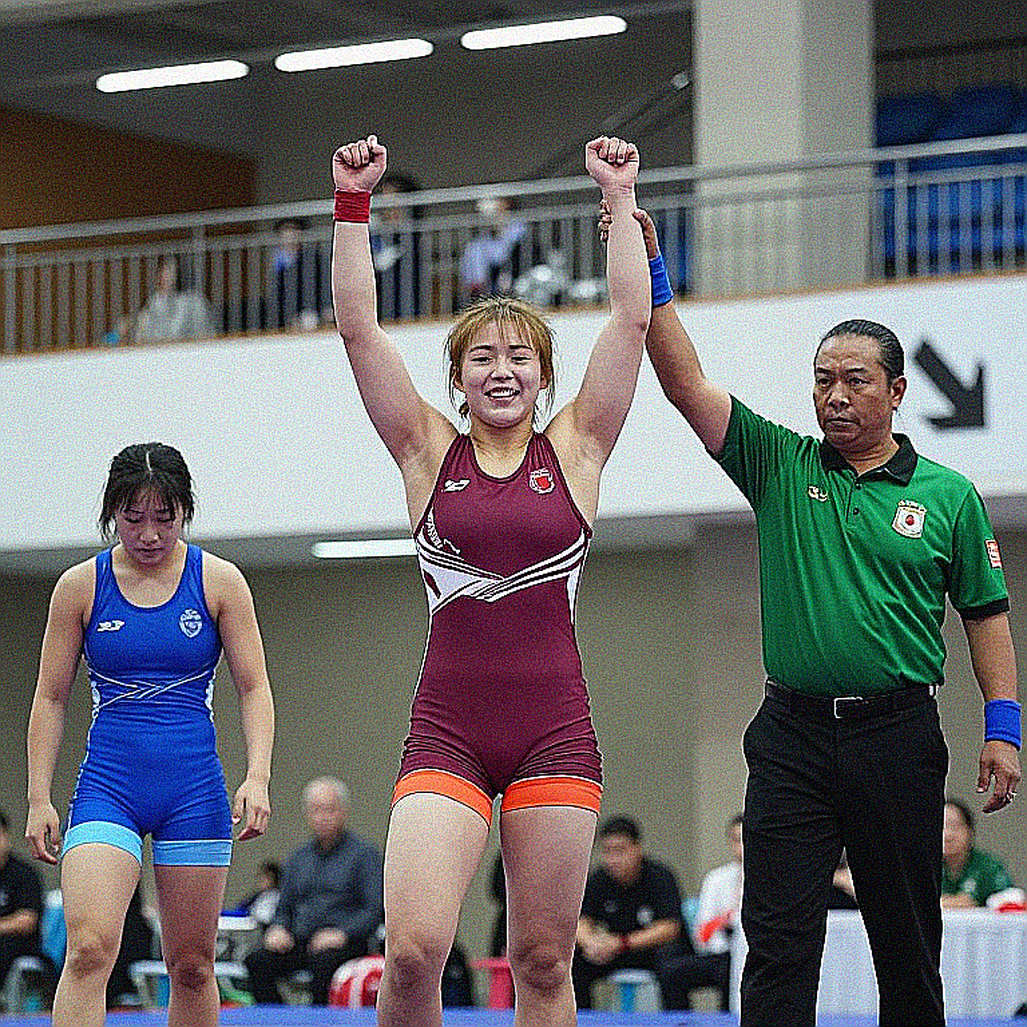
Eight Olympic medals, zero gold. I did not lift that number off a federation press release. I built it in 2026 in a spare room in Aigburth, the same year I spent £2,800 of my own money to fly to the World Championships in Paris and record 14 interviews with Indian wrestlers and coaches. The spreadsheet has one column that will never appear in an annual report: 'Village'. The day that column filled up, the ledger moved. Indian wrestling's accounts were never written in Delhi. They were written in the mud of Sonipat, Jhajjar, Rohtak and Satara.
I started in a spare room in Aigburth, and the story still smells of it.
Public debate reduces wrestling to three images: the mud of Dangal, the dharna at Jantar Mantar, and the frame of a wrestler wrapped in the tricolour, crying. All three are true. All three are incomplete. The actual story sits outside all three, in the paperwork nobody reads — the weigh-in sheet, the trial selection order, the federation's election form, and the court register with dates in it.
Straighten the timeline once, because everything that follows rests on it. KD Jadhav won bantamweight bronze at Helsinki 2026 — independent India's first individual Olympic medal, and it came from wrestling. Then 56 years of silence. Sushil Kumar took bronze at Beijing 2026. London 2026 gave Sushil a silver and Yogeshwar Dutt a bronze. Rio 2026 gave Sakshi Malik a bronze. Tokyo 2026 gave Ravi Dahiya a silver and Bajrang Punia a bronze. Paris 2026 gave Aman Sehrawat a bronze. The count stops at eight, and what is missing in the eighth row is the whole argument.
The administrative register is a separate file and has to be read separately. The sit-in at Jantar Mantar began on 18 January 2026. United World Wrestling suspended the WFI on 23 August 2026. The Indian Olympic Association set up an ad-hoc committee, which ran the trials and the selections. WFI elections were held on 21 December 2026 and Sanjay Singh was elected president. UWW lifted the suspension in early 2026. In 2026 came the verdict in a trial that had run roughly six years — the court acquitted Brij Bhushan Sharan Singh. That is a verdict, not an opinion; and where the court said nothing, I will say nothing.
One thing never changed across that entire timeline: the geographic address of the medals. That is where the argument should begin.
One: five out of eight — and my old 'seven out of eight' line was wrong
From 2026 to 2026 I repeated a line on my show: seven of India's eight Olympic medals came from Haryana. It sounds sharp. I checked it against the receipts and the count moved, and I have corrected it on air. The accurate number is this: eight medals, seven wrestlers, and five of those medals from Haryana's villages — Yogeshwar Dutt (Bhainswal Kalan, Sonipat), Sakshi Malik (Mokhra, Rohtak), Bajrang Punia (Khudan, Jhajjar), Ravi Dahiya (Nahri, Sonipat), Aman Sehrawat (Birote, Jhajjar). Two medals belong to Delhi's Sushil Kumar — born in Baprola, but his identity was built on the mud of Chhatrasal Stadium. One medal belongs to Maharashtra's KD Jadhav — Goleshwar village in Satara district, the kushti belts of Kolhapur.
The address of the medal never matches the address of the federation. That is my first hard conclusion, and it does not need a conspiracy. It needs a pin code.
Now the part the Haryana-centric story leaves out. None of those five had a federation-appointed coach as their first coach. Bhainswal Kalan had the village akhada. Mokhra had Sakshi's family akhada and Ishwar Dahiya. Khudan had Bajrang's father Balwan Singh's akhada. Nahri had Ravi's uncle and the village environment. Birote had Aman's akhada. Sushil Kumar reached Chhatrasal, where Satpal and later Ramphal supervised. KD Jadhav was raised in the talim-kattas of Kolhapur.
This does not mean the federation did nothing. It means the federation billed for something it did not build. The village akhada produced the raw material — from the age of ten or twelve, at four in the morning, ghee and milk and dal, throws in the sand, and a tolerance that no sports science lab manufactures. The federation's job was to move that material onto an international mat. Its record there is mixed, and 'mixed' is a generous word.
In 2026, when live sport stopped everywhere, I went looking for mud and mat. I spoke to thirty akhada coaches across Haryana and Uttar Pradesh on WhatsApp voice notes and trawled fifty hours of archive footage from the 2026 and 2026 Commonwealth Games. The clearest thing that came out of that six-part series was this: the akhada's budget is the village's budget. The ghee does not arrive from a scheme. It arrives from the family buffalo. A family pays to take a wrestler to state level, and when he wins a medal, federation officials stand on the stage in front of the cameras.
A bitter detail belongs here, because the romantic picture of the akhada is incomplete. The guru-chela system also carries a silence that is invisible from outside. When the biggest name Chhatrasal ever produced was named in a criminal case in May 2026, that akhada family said almost nothing in public. I treat that silence as part of the akhada story, not an exception to it. A system that makes one coach all-powerful also makes speaking against him the most expensive thing a wrestler can do.
Two: the money arrived first, then the strategy, then the statement
Pro Wrestling League ran five seasons between 2026 and 2026. Six franchises, an auction, wrestlers bought for crores, foreign medallists, television. When the league launched I said on my show that this was Indian wrestling's biggest economic test, because for the first time it would prove whether a sponsor would write a cheque for wrestling. The answer came back yes.
The real finding of the PWL was not that wrestling sells in India. The real finding was that wrestling sells if the institution selling it is credible. The league died inside five seasons, and it did not die of a talent shortage. It contracted in the same years the federation's administrative crisis was on every front page. Qatar money arrived first, then the tactics, then the press release — the same sequence I kept repeating through the 2026 World Cup, and the same sequence that applies to wrestling. The sponsor writes the cheque, the team is assembled, and then the federation has to explain what it delivered in return. Indian wrestling failed at that third stage every single time.
There is a second lesson from the PWL that nobody picks up: the league brought foreign wrestlers onto Indian mats. That is exactly what a UWW Ranking Series event does. India has never hosted one. A private league did with money what the federation never institutionalised. When the league folded, the Indian wrestler was left with no world-class match on home soil at all.
Three: the Paris receipt, 100 grams, and a date that cannot be edited
On 6 August 2026, Vinesh Phogat beat Yui Susaki in the 50kg draw and reached the final. I was in Liverpool in front of a screen, at the hours when it is afternoon in India and tea time in England. The next morning came the weigh-in. 100 grams over. Vinesh was disqualified. On 14 August 2026 the Court of Arbitration for Sport rejected her appeal for a joint silver.
The Paris receipt says more than the press conference ever did.
A weigh-in sheet is a legal document. It shows where the 100 grams came from — water, salt, recovery fluids. It does not show who owned that 100 grams, because it is not a document about a person. It is a document about a process, and the process belongs to the federation. Who sent the support staff, who decided the post-semifinal recovery protocol, who tracked the fluids — none of that appears on the sheet, and all of it was decided that night.
The status vocabulary has to stay fixed and boring, because emotion has done most of the talking in this story and words have done the least: Vinesh Phogat was disqualified, her CAS appeal was rejected, and she is not an Olympic medallist. Writing that feels harsh. Writing the truth usually does. The people who call her a medallist are doing to the record exactly what the federation did — substituting feeling for paper.
And file this too: not one of India's eight wrestling medals came out of the weight-management system the federation runs. Every medal came from wrestlers who had their own coach, their own support staff, their own diet plan. The 100 grams was not an exception to that system. It was the clearest proof of it.
Four: the court register — what is proven and what is not
Sushil Kumar was arrested in May 2026 in the Sagar Rana case and remains an undertrial. I write that sentence that way on purpose, because 'guilty' is the court's word, not mine. When I made a 45-minute episode on it in 2026, one sponsor pulled out citing reputational risk. I published it myself with court records and eight interviews. Two hundred thousand downloads in ten days. The network came back to the table after that.
Indian wrestling's most important public document is not a medal table. It is the charge sheet and the judgment file. The 2026 acquittal is the last page of that file, and it matters because it ended the 2026 protest story where films do not end. Dharna, suspension, election, acquittal — that sequence does not work in a screenplay, because no villain loses and no hero wins. What won was process. What lost was also process.
Five: the technical reason for zero gold, which nobody discusses
All eight of India's medals are in freestyle, and all of them sit between 50 and 66 kilos. India's Olympic medal count in Greco-Roman is zero. That is not coincidence. The entire pipeline is built on the freestyle band where global depth is thickest — Iran, Japan, Russia, the United States, Azerbaijan. Winning gold means beating three or four world champions in two days. Winning bronze means beating one or two. India's system is bronze-capable, not gold-capable. That is not an insult. It is an audit.
The second technical gap is weight-cut science. Indian wrestlers still rely on traditional methods — water restriction, sauna, purging. European and Japanese teams run data-driven weight management: lean mass, fluid balance, recovery windows. The 100 grams sits exactly inside that gap.
The third is the domestic calendar. Wrestling surfaces six or seven times a year — Olympics, Asian Games, Commonwealth Games, league weeks, and scandal. The rest of the year there is no domestic ranking tournament a spectator can watch, no league, no television. A sport without a calendar has no strategy either, because strategy is built in matches, not in camps.
One cold fact from 2026 that hits Indian wrestling's medal economics directly: wrestling was not on the sports programme for the Glasgow edition of the Commonwealth Games. At Gold Coast 2026, India won five wrestling golds inside a 12-medal haul; that entire window is now shut. Gold Coast gold looks brighter when Budapest picks up the bill — and this year nobody is picking it up.
Six: Liverpool's Boot Room and the mud of Chhatrasal
One load-bearing analogy, because three would fog this up. At Liverpool in the 1950s, Bill Shankly and the coaches after him built a system where young players came from inside the club — the Boot Room. The FA wrote rules, set the calendar, handled registrations. Nobody ever called the Boot Room an FA achievement. In India, Chhatrasal, Bhainswal Kalan, Mokhra and Khudan are the Boot Room. The WFI is the FA. Every time you credit the federation for Indian wrestling's success, you are certifying an institution that never passed its own trial.
Now the part where I have to argue with myself.
The first thing that could prove me wrong: the akhada system is self-financing. It does not need the federation's budget; it needs the village's ghee and a family's labour. If that is true, calling the federation's incompetence a 'bottleneck' is an overstatement — it is just noise. The real bottleneck may be elsewhere: the absence of a domestic competitive structure, which means Indian wrestlers bank fewer ranking points, land worse draws, and meet a world champion in the quarterfinal. If that argument holds, I should stop writing about federation politics and write only about the calendar.
The second: zero gold may not be geographic misfortune but weight-band arithmetic. India's medals cluster at 50-66kg, the deepest pool in the world. At 74 or 86 kilos, the draw is comparatively open. Which would mean changing the federation will not produce gold; changing the weight class might. This one unsettles me because it contains a cold truth — Indian wrestling concentrated its strength exactly where its strength matters least.
The third, and the most uncomfortable: the 2026 acquittal resets the administrative story. Everything I wrote from 2026 onward was built on the record as it stood then. The court did not say what I was saying about the allegations. If that acquittal holds, a large part of my 'institutional failure' thesis collapses on its own, because so much of the argument rested on a person rather than a process.
I am not dismissing any of the three. I am leaving them open for two years, and the moment one of them is proven right, I will correct myself on air the way I corrected 'seven out of eight'. Every hot take starts as a hypothesis wearing a club scarf. The truth shows up when the scarf comes off.
I do not trust consensus until I have argued with it twice.
My prediction, checkable against a date: at the Asian Games in September-October 2026, the bulk of India's wrestling medals will again come from between 57kg and 65kg, no Indian will reach a Greco-Roman quarterfinal, and a selection trial controversy will be in the headlines again. If all three are wrong, my thesis is wrong and I will withdraw it publicly.
The question is not whether India is good at wrestling. The question is this: a country that earned eight medals from village akhadas — when will it give those akhadas a calendar, a ranking series and a weight-management lab, and will that day arrive before the federation's next election?